Representative Robert Anthony Hatcher
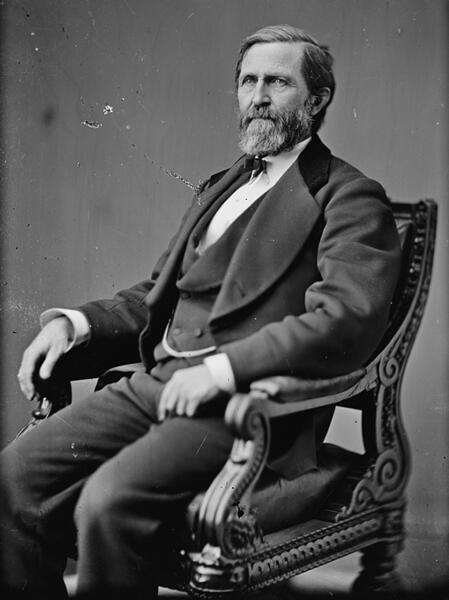
Here you will find contact information for Representative Robert Anthony Hatcher, including email address, phone number, and mailing address.
| Name | Robert Anthony Hatcher |
| Position | Representative |
| State | Missouri |
| District | 4 |
| Party | Democratic |
| Status | Former Representative |
| Term Start | December 1, 1873 |
| Term End | March 3, 1879 |
| Terms Served | 3 |
| Born | February 24, 1819 |
| Gender | Male |
| Bioguide ID | H000341 |
About Representative Robert Anthony Hatcher
Robert Anthony Hatcher (February 24, 1819 – December 4, 1886) was an American lawyer, Confederate officer, and Democratic politician who served in the Missouri House of Representatives, the Second Confederate Congress, and the United States House of Representatives. He represented Missouri in the U.S. Congress from 1873 to 1879, serving three consecutive terms in the House of Representatives during a significant period in American history following the Civil War and Reconstruction.
Hatcher was born in Buckingham County, Virginia, on February 24, 1819. He received his early education in Lynchburg, Virginia, where he pursued classical studies before turning to the law. After studying law, he was admitted to the bar in Kentucky. In 1847 he moved west to New Madrid, Missouri, where he established a law practice. In Missouri he also served as a circuit attorney, building his professional reputation in the legal community and laying the groundwork for his later political career.
Hatcher entered public office in 1850, when he was elected to the Missouri House of Representatives. He served in that body until 1851, participating in state legislative affairs during a period of growing sectional tension in the United States. Continuing his legal work alongside his political activities, he became a recognized figure in southeastern Missouri’s public life in the decade leading up to the Civil War.
With the outbreak of the American Civil War, Hatcher cast his lot with the Confederacy. He joined the Confederate States Army and attained the rank of major. He served as assistant adjutant general on the staffs of Generals Alexander P. Stewart and Henry D. Clayton, performing important administrative and staff duties in support of Confederate field operations. In 1864, he was elected to represent Missouri in the Second Confederate Congress. In that body he served on the Committees on Ordnance and Ordnance Stores and on Enrolled Bills, participating in the legislative oversight of military supplies and the formal enrollment of Confederate legislation during the final phase of the war.
After the war, Hatcher resumed his legal and political life in Missouri. A member of the Democratic Party, he was elected to the United States House of Representatives from Missouri’s 4th congressional district. He served three terms in Congress from March 4, 1873, to March 3, 1879. His tenure in the House occurred during the turbulent postwar era, when issues of Reconstruction, economic development, and federal expenditures were central to national debate. As a Representative, he participated in the democratic process and represented the interests of his Missouri constituents in the federal legislature.
During his service in the U.S. House of Representatives, Hatcher served on several committees, reflecting both regional and national concerns. He was a member of the Committee on Agriculture, the Committee on Missouri Levees, and the Committee on the Census. In the 45th Congress he held a leadership role as chairman of the Committee on Public Expenditures, where he was involved in oversight of federal spending. After three terms in office, he declined to seek renomination in 1878 and left Congress at the conclusion of his term in March 1879.
Following his retirement from national office, Hatcher returned to private life and resumed the practice of law in Charleston, Missouri. He continued to be a respected figure in his community until his death in Charleston on December 4, 1886. In later years, he has occasionally been confused with Robert A. Hatcher, M.D., M.P.H. (1939–2020), a 20th-century physician and expert in reproductive health; the two men are unrelated.