Senator Robert Young Hayne
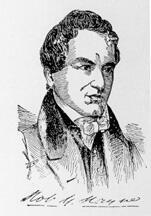
Here you will find contact information for Senator Robert Young Hayne, including email address, phone number, and mailing address.
| Name | Robert Young Hayne |
| Position | Senator |
| State | South Carolina |
| Party | Nullifier |
| Status | Former Representative |
| Term Start | December 1, 1823 |
| Term End | March 3, 1833 |
| Terms Served | 2 |
| Born | November 10, 1791 |
| Gender | Male |
| Bioguide ID | H000398 |
About Senator Robert Young Hayne
Robert Young Hayne (November 10, 1791 – September 24, 1839) was an American politician from South Carolina who served in the United States Senate from 1823 to 1832, as Governor of South Carolina from 1832 to 1834, and as Mayor of Charleston from 1836 to 1837. A leading advocate of states’ rights, compact theory, and nullification, he emerged as one of the principal figures in the Nullification Crisis and gained national prominence for his 1830 Senate debate with Daniel Webster, an exchange that became a defining episode in the constitutional controversies that helped precipitate the American Civil War. A member of the Nullifier Party during his Senate career, he represented South Carolina in Congress during a significant period in American history and contributed to the legislative process over two terms in office.
Hayne was born on November 10, 1791, in St. Paul Parish, near Hollywood in the Colleton District of South Carolina, to William Hayne and Elizabeth Peronneau Hayne. His family owned plantations worked by enslaved laborers, placing him firmly within the Lowcountry planter elite. Among his siblings was an older brother, Arthur Peronneau Hayne, who also pursued a public career, and he later became the uncle of the poet Paul Hamilton Hayne (1830–1886). Hayne received a private education appropriate to his social class and then read law in Charleston in the office of Langdon Cheves, a prominent South Carolina lawyer and politician. He was admitted to the bar in 1812 and established a legal practice in Charleston, which became the base for his subsequent political and business activities.
Hayne’s early adulthood coincided with the War of 1812, during which he served in the state militia. He began as a lieutenant in the Charleston Cadet Infantry and rose to the rank of captain in the Third South Carolina Regiment. He later held the post of quartermaster general of the state militia, responsible for supply and logistics, and by 1836 he had advanced to the rank of major general. His personal life reflected his integration into South Carolina’s political and social elite. On November 3, 1813, he married Frances Henrietta Pinckney (1790–1818), daughter of Charles Pinckney, a prominent lawyer and former governor of South Carolina. The couple had one daughter, Frances Henrietta Pinckney Sharpe (1818–1875). Frances Pinckney Hayne died in 1818 from complications of childbirth. In 1820 Hayne married Rebecca Brewton Allston, daughter of planter William Alston. Her father provided a lot on lower King Street in Charleston, where Hayne built a residence that corresponds to today’s 4 Ladson Street. Robert and Rebecca Hayne had two sons, William Alston Hayne (1821–1901) and Arthur P. Hayne (1822–1888). Hayne later gave his daughter Frances a plantation in Tamassee, South Carolina, when she married Elam Sharpe, the court clerk of Pendleton, shortly before Hayne’s unexpected death in 1839.
Hayne’s political career began in the state legislature. A Democrat, he was elected to the South Carolina House of Representatives and served from 1814 to 1818. In his final year he was chosen Speaker of the House, an early indication of his rising influence. In 1818 he was elected Attorney General of South Carolina, a position he held until 1822. During his tenure as attorney general, the Denmark Vesey affair unfolded in Charleston after authorities claimed to have uncovered a planned slave insurrection. Governor Thomas Bennett, who was skeptical of the city-appointed court’s handling of the trials, requested Hayne’s legal opinion. Hayne advised that the protections of Magna Carta, habeas corpus, and the provisions of the state constitution in favor of liberty applied only to “freemen” and that the governor lacked authority to review or correct judicial errors in the proceedings. The opinion reflected both the racial and legal hierarchies of the period and Hayne’s own commitment to preserving the institution of slavery.
In 1822 the South Carolina legislature elected Hayne to the United States Senate, where he took his seat on March 4, 1823. He was reelected in 1828 and served until his resignation on December 13, 1832. During his Senate career he aligned with the emerging Nullifier Party and became one of the most forceful spokesmen for southern states’ rights. From 1825 to 1832 he chaired the Senate Committee on Naval Affairs, giving him a significant role in shaping naval policy. Contemporary Martin Van Buren observed that Hayne entered the Senate with a self-confident and outspoken style, speaking frequently and at length, but that over time he adopted a more deferential and measured tone, showing greater respect for senior members and thereby increasing his influence. Hayne was an ardent free-trader and an uncompromising advocate of state sovereignty. He consistently argued that slavery was a domestic institution to be regulated solely by the individual states and opposed any federal initiative that might curtail it. He resisted the proposal to send U.S. delegates to the Panama Congress organized by Simón Bolívar, in part because the meeting was expected to address the abolition of slavery in former Spanish colonies. Warning against federal interference with slavery, he declared that “the moment the federal government shall make the unhallowed attempt to interfere with the domestic concerns of the states; those states will consider themselves driven from the Union.”
Hayne’s most famous moment in the Senate came in 1830, in the Webster–Hayne debate. The immediate issue was the “Foot resolution,” introduced on December 29, 1829, by Senator Samuel A. Foot of Connecticut, calling for a federal inquiry into restricting the sale of public lands to parcels already surveyed and on the market. The proposal raised broader questions about western expansion, economic policy, and the respective powers of the federal government and the states. Hayne, who had already opposed the protectionist tariff measures of 1824, 1828, and 1832, used the debate to attack federal policies he believed favored northern manufacturing interests at the expense of the South and West. He contended that the Constitution was a compact among sovereign states and that any state retained the right to “nullify” a federal law it deemed unconstitutional. Webster responded with a powerful defense of the Union and the supremacy of the federal Constitution, culminating in his celebrated declaration, “Liberty and Union, now and forever, one and inseparable.” The exchange crystallized the opposing constitutional visions of state sovereignty and national authority and made Hayne a central figure in the intensifying sectional conflict.
Hayne’s political philosophy translated directly into his role in the Nullification Crisis. In 1832, under Governor James Hamilton Jr., he served as chairman of South Carolina’s nullification convention. There, Hamilton, Hayne, and their allies argued that a state could nullify federal tariff laws it considered unconstitutional. The convention’s delegates, by a vote of roughly eighty percent of its 162 members, adopted the Ordinance of Nullification, declaring the federal tariffs of 1828 and 1832 null and void within South Carolina’s borders. The confrontation with the administration of President Andrew Jackson brought the Union to the brink of armed conflict, but a temporary compromise was achieved in 1833 through a gradual reduction of tariff rates. During this period Hayne resigned his Senate seat after being elected governor by the state legislature in 1832. He served a single term as Governor of South Carolina from 1832 to 1834, guiding the state through the height of the crisis. His vacated Senate seat was filled by John C. Calhoun, who resigned the vice presidency of the United States to represent South Carolina in the Senate and continue the constitutional arguments Hayne had championed.
After leaving the governorship, Hayne remained active in public life and municipal affairs. From 1836 to 1837 he served as Mayor of Charleston, South Carolina, further cementing his role as a leading figure in the state’s political establishment. At the same time, he was deeply involved in the economic development of South Carolina, particularly in the promotion of internal improvements and railroads. He actively supported the South Carolina Canal and Railroad Company, which by 1835 was expanding westward under a plan he advanced to link the port of Charleston with Memphis, Tennessee, and the Mississippi River. Hayne became president of the Louisville, Cincinnati and Charleston Railroad, a major enterprise intended to create a transregional rail connection. He held that position until his death and was succeeded by James Gadsden. In 1839 the LCCR purchased the stock of the South Carolina Canal and Railroad Company, and the two lines were formally merged in 1844. The ambitious vision of a continuous line to the Mississippi Valley was never realized; only about 60 miles of track to Columbia, South Carolina, were completed initially, with later extensions to Camden, South Carolina, in 1848 and to Atlanta, Georgia, in 1853.
Hayne’s public career and private life were inseparable from the system of slavery. Census records indicate that in 1820 he enslaved 118 people in Georgetown, South Carolina—about half of them engaged in agriculture—another 50 in Colleton County, and 19 in Charleston. By the 1830 census he enslaved 17 people in Charleston. His name appeared in the abolitionist compendium American Slavery As It Is (1839), which cited an advertisement he had signed seeking the capture of an enslaved man who had escaped and might be attempting to reach the county where his wife and children lived. The notice was used as an example of slaveholders’ disregard for the marriages and family ties of enslaved African Americans. Hayne’s legal and constitutional arguments, including his insistence that constitutional protections applied only to “freemen,” reinforced the racial and social order of the slaveholding South.
Hayne died unexpectedly in Asheville, North Carolina, on September 24, 1839. He was buried in the churchyard of St. Michael’s Church in Charleston, South Carolina. His dream of a transcontinental—or at least trans-Appalachian—rail connection from Charleston to the Mississippi Valley remained unrealized at his death. His family’s fortunes were later shaped by the Civil War and its aftermath. His son-in-law, Captain Elam Sharpe Jr., who had married Hayne’s daughter Frances, served in the Confederate forces as a member of the First South Carolina Cavalry, Hampton’s Legion, and survived the conflict. Sharpe and his family had sold their plantations and invested heavily in Confederate bonds; after the war, their finances were ruined, and he moved first to Tennessee and then to Dallas, Texas, where he became a Presbyterian minister. Hayne’s Charleston residence on Ladson Street was sold by his descendants in 1863, but the structure survives, having been moved and renovated in 1890. His nephew, the poet Paul Hamilton Hayne, who became associated with the postwar “Poets of the South” and served as South Carolina’s poet laureate, moved to Georgia after the Civil War and in 1878 published a biographical study titled Lives of Robert Y. Hayne and Hugh Swinton Legaré. Hayne’s memory was later commemorated during World War II when a Liberty ship was named the SS Robert Y. Hayne in his honor.