Representative Robert Franklin Jones
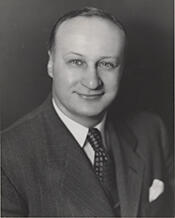
Here you will find contact information for Representative Robert Franklin Jones, including email address, phone number, and mailing address.
| Name | Robert Franklin Jones |
| Position | Representative |
| State | Ohio |
| District | 4 |
| Party | Republican |
| Status | Former Representative |
| Term Start | January 3, 1939 |
| Term End | January 3, 1949 |
| Terms Served | 5 |
| Born | June 25, 1907 |
| Gender | Male |
| Bioguide ID | J000249 |
About Representative Robert Franklin Jones
Robert Franklin Jones (June 25, 1907 – June 22, 1968) was an American lawyer, public official, and Republican member of the United States House of Representatives from Ohio who served in Congress during a pivotal era surrounding the Second World War. Over the course of his congressional career, he served multiple terms between 1939 and 1949, including four full terms from 1939 to 1947, and was later a commissioner of the Federal Communications Commission (FCC).
Jones was born in Cairo, Allen County, Ohio, on June 25, 1907. He attended the public schools of the area and graduated from Lima Central High School in nearby Lima, Ohio, in 1924. Pursuing a legal career, he enrolled at Ohio Northern University in Ada, Ohio, where he studied law. He completed his legal education there and graduated with a law degree in 1929.
In 1929, Jones was admitted to the bar and commenced the practice of law in Lima, Ohio. Building a reputation in local legal circles, he entered public service as prosecuting attorney of Allen County, Ohio, a position he held from 1935 to 1939. During this period he became active in Republican Party politics and developed the political base that would support his later bid for national office. His rise in local politics was later reported to have included membership in the Black Legion in the 1930s, a clandestine extremist organization, in exchange for support in his election as county prosecutor, a revelation that would generate controversy when he was later appointed to federal office.
Jones was elected as a Republican to the Seventy-sixth Congress in 1938 and took his seat in the U.S. House of Representatives on January 3, 1939. He was subsequently reelected to the four succeeding Congresses, serving continuously through the Seventy-seventh, Seventy-eighth, Seventy-ninth, and into the Eightieth Congress. His service in Congress thus spanned a significant period in American history, including the prelude to World War II, the war years, and the immediate postwar era. Throughout his tenure, he participated in the legislative process and represented the interests of his Ohio constituents as a member of the Republican Party.
During the critical years leading up to and during the early stages of World War II, Jones was notable for his opposition to isolationism. In 1940, at a time when public opinion in the United States was deeply divided over involvement in the European conflict, he campaigned in favor of aiding Great Britain. Between the fall of France on July 25, 1940, and the German invasion of the Soviet Union on June 22, 1941—when Britain stood largely alone against Nazi Germany—Jones, along with fellow Ohio congressmen Charles H. Elston and William E. Hess, strongly advocated providing Britain with all possible assistance. During this period he went further than many of his colleagues by explicitly supporting the idea that the United States should enter the war on the British side.
Jones’s congressional service continued until his resignation on September 2, 1947. Over the course of his time in the House, he completed four full terms from 1939 to 1947 and contributed to the legislative deliberations of five consecutive Congresses during a time of major domestic and international change. Shortly before his resignation, President Harry S. Truman nominated him to serve as a commissioner of the Federal Communications Commission, and his appointment was confirmed by the United States Senate. He began his service on the FCC on September 5, 1947. His elevation to the commission, however, provoked controversy when it became publicly known that he had joined the Black Legion in the 1930s in connection with his earlier local political advancement.
Jones served as a commissioner of the Federal Communications Commission from September 5, 1947, until his resignation from that body on September 19, 1952. In this role he participated in federal oversight and regulation of radio, and the emerging fields of television and other communications services, during a formative period for American mass media. After leaving the FCC, he resumed the practice of law in Washington, D.C., continuing his professional career in the nation’s capital.
In his later years, Jones remained in the Washington area. He died in Olney, Montgomery County, Maryland, on June 22, 1968, three days before his sixty-first birthday. He was interred in Lima Memorial Park Cemetery in Lima, Ohio, returning in death to the community where he had begun his legal and political career.