Senator Robert C. Krueger
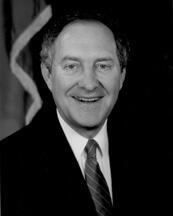
Here you will find contact information for Senator Robert C. Krueger, including email address, phone number, and mailing address.
| Name | Robert C. Krueger |
| Position | Senator |
| State | Texas |
| Party | Democratic |
| Status | Former Representative |
| Term Start | January 14, 1975 |
| Term End | January 3, 1995 |
| Terms Served | 3 |
| Born | September 19, 1935 |
| Gender | Male |
| Bioguide ID | K000333 |
About Senator Robert C. Krueger
Robert Charles Krueger (September 19, 1935 – April 30, 2022) was an American diplomat, politician, scholar, and businessman who served as both a United States Representative and United States Senator from Texas, as well as a United States Ambassador. A member of the Democratic Party, he was born in New Braunfels, Texas, the son of Faye (Leifeste) and Arlon E. Krueger. Raised in the Texas Hill Country, he later maintained close ties to his hometown throughout his public and private life.
Krueger pursued an extensive academic education. He earned a Bachelor of Arts degree from Southern Methodist University in 1957 and a Master of Arts degree from Duke University in 1958. Awarded a Rhodes Scholarship, he attended Merton College, Oxford, where he completed a D.Phil. in English literature. His doctoral thesis, entitled “The Poems of William Herbert, Third Earl of Pembroke,” reflected his early specialization in Renaissance literature. He went on to teach English literature and rose to become vice provost and Dean of the Trinity College of Arts and Sciences at Duke University. His scholarly work included an edition of the poems of Sir John Davies, published by Clarendon Press, Oxford, in 1975. In addition to his academic career, Krueger held business positions as chairman of the board of Comal Hosiery Mills and managing partner of the Krueger Brangus Ranch, combining interests in manufacturing and ranching before entering elective office.
Krueger’s first major foray into national politics came with his election to the U.S. House of Representatives. He was elected as a Democrat to the 94th and 95th Congresses, serving from January 3, 1975, to January 3, 1979, representing Texas’s 21st congressional district. At the time, the district was the largest in Texas, stretching from northern San Antonio to Big Bend National Park in far West Texas. In the 1974 general election, part of the so‑called “Watergate Class” that benefited from the political fallout following President Richard Nixon’s resignation, Krueger defeated Republican Doug Harlan of San Antonio. Harlan had previously run a surprisingly close race against longtime Democratic incumbent O. C. Fisher in 1972 despite spending almost no money; in 1974 Krueger won by an even closer margin despite setting a record for spending in a congressional race at the time, while Harlan again campaigned on a shoestring. Both men had studied at Duke University, with Harlan later earning a law degree from the University of Texas School of Law and becoming active in Republican consulting. Krueger was reelected in 1976, coinciding with the election of Jimmy Carter as president, and he served in the House until 1979, contributing to the legislative process during a significant period in American history and representing the interests of his Texas constituents.
Krueger sought higher office soon after his House service. In 1978 he challenged incumbent Republican Senator John Tower for a U.S. Senate seat from Texas, narrowly losing by a margin of about 0.3 percent. In 1984 he again ran for the U.S. Senate when Tower chose to retire, but he was defeated in the Democratic primary, finishing third in a contest between more liberal State Senator Lloyd Doggett and more conservative U.S. Representative Kent Hance. Years later, in 2010, the Houston Chronicle characterized his 1984 Senate campaign as the ninth-worst in Texas’ modern political history, describing him as a “bland centrist” caught between a “fiery liberal” and a “folksy conservative.” During the mid‑1980s, from 1985 to 1989, Krueger wrote a regular newspaper column on a broad range of public affairs issues that appeared in major Texas newspapers in San Antonio, Dallas, Houston, and Corpus Christi, maintaining his profile in public life.
In addition to his legislative career, Krueger held important diplomatic and regulatory posts. On October 23, 1979, President Jimmy Carter appointed him Ambassador-at-Large and Coordinator for Mexican Affairs at the U.S. Department of State, a position he held until February 1, 1981, during the remainder of the Carter administration. Returning to elective office in Texas in 1990, he was elected to the Texas Railroad Commission, which regulated oil and gas as well as the rail system in the state. In that race he received the most votes of any contested candidate on the primary ballot of either major party and went on to defeat his general election opponent by a 16‑percent margin, underscoring his continued electoral strength in statewide politics.
Krueger’s service in the United States Senate came by appointment rather than initial election. In 1993, Governor Ann Richards appointed him to the U.S. Senate to fill the vacancy created when four-term incumbent Lloyd Bentsen, the 1988 Democratic vice-presidential nominee, resigned to become Secretary of the Treasury in President Bill Clinton’s cabinet. Krueger served as a Senator from Texas from January 21, 1993, until June 14, 1993. During this brief tenure, he participated in the democratic process and contributed to the legislative work of the Senate at a time of significant national policy debates. He stood for election in a June 1993 special election runoff for the remainder of the term ending January 3, 1995, but lost by a two‑to‑one margin to Republican State Treasurer Kay Bailey Hutchison, a popular statewide figure. In 2010, the Houston Chronicle labeled this 1993 Senate campaign the single worst in Texas’ modern political history, citing his shifting positions on the “don’t ask, don’t tell” policy and the unpopularity in Texas of President Clinton’s proposed BTU tax. As of 2025, Krueger remains the last Democrat to have served as a United States Senator from Texas.
After leaving the Senate, Krueger resumed diplomatic service under President Bill Clinton. In May 1994 he was appointed U.S. Ambassador to Burundi, a country beset by severe ethnic violence and sharing the same Hutu-Tutsi demographic composition as neighboring Rwanda, where a genocidal civil war had erupted only months before his arrival. Due to security concerns, his family was initially not permitted to join him. He served in Burundi until 1995, when his convoy was ambushed in Cibitoke Province; traveling on a remote highway, his motorcade came under attack by gunmen armed with AK‑47s before being successfully protected and diverted by Diplomatic Security Service agents Chris Reilly and Larry Salmon. In 1996 Krueger was appointed U.S. Ambassador to Botswana and concurrently served as Special Representative of the Secretary of State to the Southern African Development Community. He held these posts until 2000, after which he returned to Merton College, Oxford, as a visiting fellow and began writing a memoir of his service in central Africa. That work, co‑authored with his wife and later published by the University of Texas Press in 2007, appeared under the title From Bloodshed to Hope in Burundi: Our Embassy Years during Genocide.
In his later years, Krueger remained active in academic and civic life. He held lectureship positions at several Texas institutions, including the University of North Texas (then North Texas State University), the University of Texas at Austin, Rice University, Southern Methodist University, Texas State University, and Texas Tech University. He also delivered the Inaugural Distinguished Lecture of the Rutgers Council on Public and International Affairs on December 9, 2014, reflecting his ongoing engagement with international and public policy issues. His earlier scholarly and literary contributions included his 1975 Clarendon Press edition, The Poems of Sir John Davies, and his later co‑authored memoir, From Bloodshed to Hope in Burundi: Our Embassy Years during Genocide, which featured a foreword by Archbishop Desmond Tutu.
Krueger’s personal life was closely tied to his Texas roots. He married Kathleen Tobin of Bandera, Texas, who co‑authored his Burundi memoir and became a public official in her own right, serving two terms on the New Braunfels City Council and as mayor pro tem. The couple had three children. In the late 1980s, Krueger and his family were the victims of a stalker, an ordeal that contributed to the passage of a series of anti‑stalking laws in Texas, strengthening legal protections for victims of harassment. Robert Charles Krueger died on April 30, 2022, at the age of 86, from congestive heart failure, leaving a legacy that spanned scholarship, business, state and national elective office, and significant diplomatic service on three continents.