Representative Robert Luce
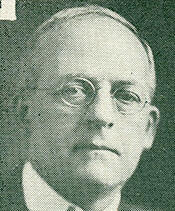
Here you will find contact information for Representative Robert Luce, including email address, phone number, and mailing address.
| Name | Robert Luce |
| Position | Representative |
| State | Massachusetts |
| District | 9 |
| Party | Republican |
| Status | Former Representative |
| Term Start | May 19, 1919 |
| Term End | January 3, 1941 |
| Terms Served | 10 |
| Born | December 2, 1862 |
| Gender | Male |
| Bioguide ID | L000498 |
About Representative Robert Luce
Robert Luce (December 2, 1862 – April 7, 1946) was a United States Representative from Massachusetts and a prominent Republican politician whose congressional service spanned from 1919 to 1941. Over the course of ten terms in the U.S. House of Representatives, he contributed to the legislative process during a significant period in American history, representing the interests of his Massachusetts constituents through the post–World War I era, the Roaring Twenties, and the Great Depression.
Luce was born in Auburn, Androscoggin County, Maine, on December 2, 1862. He attended the public schools of Auburn and nearby Lewiston, Maine, before moving with his family to Massachusetts, where he continued his education in the public schools of Somerville. He entered Harvard University and graduated in 1882. Immediately after his graduation, he taught at Waltham High School for one year, beginning a career that would combine education, journalism, and public service.
After leaving teaching, Luce engaged in journalism and founded Luce’s Press Clipping Bureau, a pioneering press-clipping and media-monitoring enterprise with offices in Boston and New York City. He served as president of the firm, which became a well-known resource for businesses, public figures, and institutions seeking systematic coverage of their appearances in the press. During this period he also studied law and was admitted to the bar, although he did not engage in extensive legal practice, choosing instead to focus on his business and political interests. He became an author, writing works on political science and public affairs that reflected his growing involvement in civic and governmental issues.
Luce’s formal political career began in the Massachusetts House of Representatives, where he served as a member in 1899 and again from 1901 to 1908. In state politics he quickly emerged as an influential Republican leader. He served as president of the Republican State Convention in 1910 and was elected the 42nd lieutenant governor of Massachusetts in 1912. Beyond elective office, he held several important public roles, including membership on the Massachusetts Teachers Retirement Board, reflecting his continued interest in education policy. He was a delegate to the Massachusetts constitutional convention from 1917 to 1919, participating in efforts to revise and modernize the state’s fundamental law, and in 1918 he served as president of the Republican Club of Massachusetts. In addition, he later served as a Regent of the Smithsonian Institution, underscoring his engagement with national cultural and scientific institutions. For many years, Luce owned the Walter S. and Melissa E. Barnes House in Somerville, Massachusetts, a residence associated with his long-standing ties to that community.
Luce was elected as a Republican to the Sixty-sixth and the seven succeeding Congresses, serving in the U.S. House of Representatives from March 4, 1919, to January 3, 1935. His service in Congress occurred during a transformative period in American history, encompassing the aftermath of World War I, the onset of Prohibition, the expansion of federal regulatory powers, and the economic upheavals leading to the Great Depression. During these years he participated actively in the democratic process, contributing to debates and legislation affecting both his district and the nation. He held important committee assignments, serving as chairman of the Committee on Elections No. 2 in the Sixty-seventh Congress and as chairman of the Committee on World War Veterans’ Legislation in the Sixty-eighth Congress, where he played a role in shaping policies affecting veterans of the First World War.
After losing his bid for reelection in 1934 to the Seventy-fourth Congress, Luce returned to private life briefly before being elected again as a Republican to the Seventy-fifth and Seventy-sixth Congresses, serving from January 3, 1937, to January 3, 1941. This brought his total service in the House to ten terms between 1919 and 1941. During this later period in Congress, he continued to participate in major legislative issues of the New Deal era. Among his notable legislative contributions was his co-sponsorship, with Senator Henrik Shipstead of Minnesota, of the measure that became known as the Shipstead–Luce Act. This law expanded the oversight authority of the United States Commission of Fine Arts to include review of new structures on private property abutting federal land in the District of Columbia, thereby strengthening federal influence over the aesthetic and architectural character of the nation’s capital. Luce was again an unsuccessful candidate for reelection in 1940 to the Seventy-seventh Congress, which concluded his congressional career.
Following his final departure from Congress in 1941, Luce resumed his former business pursuits, including his work with Luce’s Press Clipping Bureau, and continued his writing and public commentary on political and governmental affairs. He remained a respected elder statesman within Massachusetts Republican circles and retained his interest in public policy, education, and civic life. Robert Luce died in Waltham, Massachusetts, on April 7, 1946. He was interred in Mount Auburn Cemetery in Cambridge, Massachusetts, a resting place for many of New England’s prominent political and cultural figures.