Representative Robert Bruce Macon
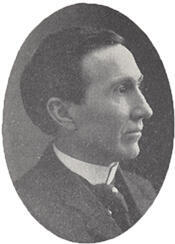
Here you will find contact information for Representative Robert Bruce Macon, including email address, phone number, and mailing address.
| Name | Robert Bruce Macon |
| Position | Representative |
| State | Arkansas |
| District | 1 |
| Party | Democratic |
| Status | Former Representative |
| Term Start | November 9, 1903 |
| Term End | March 3, 1913 |
| Terms Served | 5 |
| Born | July 6, 1859 |
| Gender | Male |
| Bioguide ID | M000035 |
About Representative Robert Bruce Macon
Robert Bruce Macon (July 6, 1859 – October 9, 1925) was an American lawyer and Democratic politician who served five terms as a U.S. Representative from Arkansas from 1903 to 1913. His decade in Congress coincided with a significant period in American history marked by the Progressive Era, expanding federal authority, and rapid economic and social change, during which he participated in the legislative process and represented the interests of his Arkansas constituents.
Macon was born on July 6, 1859, in Trenton, Phillips County, Arkansas. He grew up in the post–Civil War South, a region undergoing reconstruction and economic hardship, an environment that shaped his understanding of rural and agricultural concerns that would later inform his public service. Details of his early family life are sparse in the public record, but his upbringing in a largely agrarian area of eastern Arkansas placed him in close contact with the challenges faced by farmers and small communities in the Mississippi Delta region.
Macon received his early education in the local schools of Phillips County. Like many aspiring professionals of his generation in the South, he pursued legal studies as a path into public life. He studied law, was admitted to the bar, and began practicing as an attorney in Arkansas. His legal career provided him with experience in the interpretation of state and federal law and brought him into contact with a broad range of clients, helping to establish his reputation as a capable advocate and laying the groundwork for his later political career.
Building on his legal practice, Macon entered public life as a member of the Democratic Party, which dominated Arkansas politics in the late nineteenth and early twentieth centuries. Through his work as a lawyer and party member, he became known in his community and within state political circles. His alignment with Democratic positions of the era and his familiarity with the needs of his largely rural constituency contributed to his emergence as a candidate for national office. By the turn of the century, he was well positioned to seek election to the United States House of Representatives.
Macon was elected as a Democrat to the U.S. House of Representatives and served in Congress from March 4, 1903, to March 3, 1913, encompassing five consecutive terms. During this decade in the House, he participated actively in the democratic process, contributing to the legislative work of the chamber at a time when issues such as railroad regulation, tariff policy, banking reform, and agricultural interests were at the forefront of national debate. Representing Arkansas, he advocated for the concerns of his constituents, including farmers, small landowners, and local businesses, and took part in deliberations that reflected the broader transformation of the federal government’s role in economic and social policy during the Progressive Era.
Macon’s congressional service occurred under several presidential administrations, including those of Theodore Roosevelt, William Howard Taft, and the early period of Woodrow Wilson, and he served during multiple Congresses that considered significant reforms. As a member of the House of Representatives, he worked within the committee system and on the floor to shape legislation affecting both Arkansas and the nation. His decade-long tenure reflected the confidence of his district’s voters and his ability to navigate the shifting political currents of the early twentieth century.
After leaving Congress in 1913, Macon returned to private life in Arkansas. He resumed the practice of law, drawing on his experience as a former member of Congress and long-time attorney. In his later years, he remained a respected figure in his community, known for his public service and his role in representing Arkansas at the national level during a formative period in American political development.
Robert Bruce Macon died on October 9, 1925. His career as a lawyer and legislator, particularly his five terms in the U.S. House of Representatives from 1903 to 1913, left a record of service that reflected both the priorities of his Arkansas constituents and the broader legislative currents of the Progressive Era.