Representative Robert T. Matsui
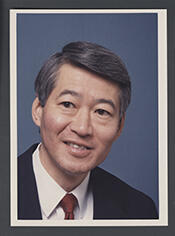
Here you will find contact information for Representative Robert T. Matsui, including email address, phone number, and mailing address.
| Name | Robert T. Matsui |
| Position | Representative |
| State | California |
| District | 5 |
| Party | Democratic |
| Status | Former Representative |
| Term Start | January 15, 1979 |
| Term End | January 3, 2005 |
| Terms Served | 14 |
| Born | September 17, 1941 |
| Gender | Male |
| Bioguide ID | M000249 |
About Representative Robert T. Matsui
Robert Takeo Matsui (September 17, 1941 – January 1, 2005) was an American politician from the state of California who served as a Representative from California in the United States Congress from 1979 to 2005. A member of the Democratic Party, he represented California’s 5th congressional district (originally numbered the 3rd district before redistricting) and contributed to the legislative process during 13 terms in office, serving until his death at the end of his 13th term. The Robert T. Matsui United States Courthouse in Sacramento is named in his honor.
A third-generation Japanese American, Matsui was born in Sacramento, California, on September 17, 1941. When he was six months old, he and his family were taken from Sacramento and interned by the U.S. government at the Tule Lake War Relocation Center in 1942 during World War II. This early experience of wartime incarceration as an American citizen of Japanese ancestry profoundly shaped his later public service and his commitment to civil liberties and redress for Japanese Americans who had been interned.
Matsui pursued higher education at the University of California, Berkeley, where he graduated in 1963 with a Bachelor of Arts degree in political science. He continued his studies at Hastings College of the Law (now the University of California College of the Law, San Francisco), earning his law degree in 1966. After completing his legal education, he returned to Sacramento and in 1967 founded his own law practice, establishing himself in the local legal community and gaining experience that would later inform his work on complex legislative and policy issues.
Matsui entered elective office at the local level. In 1971, he was elected to the Sacramento City Council, marking the beginning of his formal political career. He won re-election to the council in 1975 and, in 1977, became vice mayor of Sacramento. His tenure in city government helped build his reputation as a capable and attentive public servant and positioned him for higher office at a time when Sacramento and its surrounding region were undergoing significant growth and political change.
In 1978, after 12-term incumbent John E. Moss announced his retirement, Matsui ran for the Democratic nomination in what was then California’s 3rd congressional district. He won a five-way Democratic primary with 36 percent of the vote, defeating a field that included State Assemblyman Eugene Gualco and Sacramento Mayor Phil Isenberg. In the general election, he defeated Republican Sandy Smoley with 53 percent of the vote. He would never again face a contest nearly that close in what has long been the most Democratic district in interior California. Matsui was reelected 13 times; after his initial race, he never dropped below 68 percent of the vote. He was reelected in 1982 with no major-party opposition and was unopposed in 1984. Following the 1990 census, his district was renumbered as the 5th district, which he continued to represent. His service in Congress occurred during a significant period in American history, and as a member of the House of Representatives he participated in the democratic process and represented the interests of his constituents over more than a quarter century.
During his congressional career, Matsui rose to positions of substantial influence within the Democratic Party and the House. He served as chairman of the Democratic Congressional Campaign Committee (DCCC), a role typically given to members considered politically secure in their districts, and he became the third-ranking Democrat on the powerful House Committee on Ways and Means. In time he served as ranking member of the Ways and Means Committee, where he played a central role in shaping tax, trade, and social welfare legislation. He was particularly noted for his staunch opposition to efforts to privatize Social Security, arguing for the preservation and strengthening of the program. His voting record was generally liberal; he opposed the Defense of Marriage Act, the federal ban on so-called partial-birth abortions, and the Private Securities Litigation Reform Act, reflecting his alignment with civil rights, reproductive rights, and investor-protection positions within the Democratic caucus.
Matsui was especially prominent in the movement to secure redress for Japanese Americans who had been incarcerated during World War II, drawing directly on his own childhood experience at Tule Lake. In 1988, he played a key role in helping pass the Civil Liberties Act of 1988, which produced an official apology from the federal government for the wartime internment program and provided token monetary compensation to surviving victims. He was also instrumental in the designation of the Manzanar internment camp as a national historic site, ensuring public recognition and preservation of that history, and in obtaining land in Washington, D.C., for the memorial to Japanese American patriotism in World War II. These efforts made him one of the leading congressional advocates for civil liberties and historical redress for Japanese Americans.
Matsui’s personal life was closely intertwined with public service. He was married to Doris Okada Matsui, who worked in the Clinton administration as deputy assistant to the President and Deputy Director of Public Liaison for President Bill Clinton until December 1998. She then left the White House to become senior advisor and director of government relations at the firm of Collier Shannon Scott, PLLC, before later seeking elective office herself. The Matsuis had one son, Brian Matsui, who completed both his undergraduate and Juris Doctor degrees at Stanford University.
In what would be his last election, in 2004, Matsui faced Republican challenger Mike Dugas and easily won a 14th term with 71.4 percent of the vote, compared to Dugas’s 23.4 percent. Opponents Pat Driscoll of the Green Party and John Reiger of the Peace and Freedom Party received 3.4 percent and 1.8 percent of the vote, respectively. His overwhelming margin of victory in 2004 was consistent with his long-standing electoral strength and was one reason he had been selected to chair the Democratic Congressional Campaign Committee, as DCCC chairs are chosen in part because they are not expected to face serious competition for re-election.
Late in 2004, Matsui’s health declined. On December 24, 2004, he entered Bethesda Naval Hospital with pneumonia, a complication arising from myelodysplastic syndrome, a rare stem cell disorder that impairs the bone marrow’s ability to produce blood products such as red blood cells, white blood cells, and platelets. He died of pneumonia on January 1, 2005, while still in office at the end of his 13th term in Congress. In the special election held on March 8, 2005, to fill the vacant seat, his widow Doris Matsui won with over 68 percent of the vote and was sworn in as his successor on March 10, 2005, continuing the representation of Sacramento and the surrounding area in the U.S. House of Representatives and extending the Matsui family’s legacy of public service.