Representative Robert C. McEwen
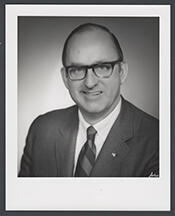
Here you will find contact information for Representative Robert C. McEwen, including email address, phone number, and mailing address.
| Name | Robert C. McEwen |
| Position | Representative |
| State | New York |
| District | 30 |
| Party | Republican |
| Status | Former Representative |
| Term Start | January 4, 1965 |
| Term End | January 3, 1981 |
| Terms Served | 8 |
| Born | January 5, 1920 |
| Gender | Male |
| Bioguide ID | M000433 |
About Representative Robert C. McEwen
Robert Cameron McEwen (January 5, 1920 – June 15, 1997) was a Republican member of the United States House of Representatives from New York who served eight consecutive terms in Congress from 1965 to 1981. Over the course of his legislative career, he represented the interests of his New York constituents during a significant period in American history, contributing to the work of the House of Representatives and participating actively in the federal legislative process.
McEwen was born on January 5, 1920, in Ogdensburg, St. Lawrence County, New York. Raised in the North Country region of the state, he maintained a lifelong connection to his hometown and its surrounding communities. He pursued higher education at the University of Vermont and later attended the Wharton School of the University of Pennsylvania, gaining a grounding in liberal arts and business that would inform his later work in law and public service.
With the onset of World War II, McEwen entered military service. He served in the United States Army Air Forces from 1942 to 1946, during which time he attained the rank of sergeant. His wartime service coincided with the global conflict that shaped the mid-twentieth century, and his experience in uniform preceded his entry into the legal profession and elective office.
After his discharge from the military, McEwen completed his legal education. He graduated from Albany Law School in 1947, was admitted to the bar, and commenced the practice of law in Ogdensburg. Establishing himself as an attorney in his hometown, he became involved in local affairs and Republican Party activities, building the professional and political base that would lead to his election to state and national office.
McEwen began his legislative career in the New York State Senate. He was elected on January 5, 1954, to fill the vacancy caused by the appointment of Paul D. Graves to the New York Supreme Court. He served continuously in the State Senate until 1964, sitting in the 169th, 170th, 171st, 172nd, 173rd, and 174th New York State Legislatures. During this period, he represented his upstate district in Albany, participating in the formulation of state policy in areas such as infrastructure, education, and economic development at a time of postwar growth and change in New York.
In 1964, McEwen was elected as a Republican to the United States House of Representatives. He served in the 89th, 90th, 91st, 92nd, 93rd, 94th, 95th, and 96th Congresses, holding office from January 3, 1965, to January 3, 1981. His eight terms in the House encompassed the Great Society era, the Vietnam War, the civil rights movement, the Watergate crisis, and the economic and foreign policy challenges of the 1970s. As a member of the House of Representatives from New York, he participated in the democratic process at the national level, contributing to the legislative work of Congress and advocating for the needs of his district, which included communities along the St. Lawrence River and the Canadian border. A member of the Republican Party, he worked within his conference on issues affecting his largely rural and small-city constituency, including trade, transportation, and cross-border relations. He chose not to run for reelection in 1980, concluding sixteen years of continuous service in the House.
Following his departure from Congress, McEwen continued his involvement in public affairs. In 1981, President Ronald Reagan appointed him to the International Joint Commission, the United States–Canada body that advises the two governments on issues related to boundary waters. In this role, which he held until 1989, McEwen drew on his long familiarity with the St. Lawrence River and Great Lakes region, contributing to binational discussions on water use, environmental protection, and resource management. His service on the commission extended his public career into the realm of international cooperation between the United States and Canada.
McEwen’s contributions to his hometown and region were recognized during his lifetime. In 1982, the Custom House at Ogdensburg was named in his honor, reflecting his longstanding advocacy for the community and its role as a key port of entry on the St. Lawrence River. He remained closely associated with Ogdensburg throughout his life. Robert Cameron McEwen died in Ogdensburg on June 15, 1997, and was buried in Ogdensburg Cemetery, closing a career that spanned military service, the practice of law, state legislative leadership, eight terms in the United States Congress, and federal service on a major international commission.