Representative Robert Neill McGarvey
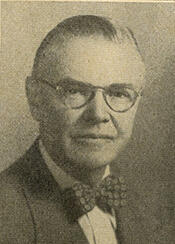
Here you will find contact information for Representative Robert Neill McGarvey, including email address, phone number, and mailing address.
| Name | Robert Neill McGarvey |
| Position | Representative |
| State | Pennsylvania |
| District | 2 |
| Party | Republican |
| Status | Former Representative |
| Term Start | January 3, 1947 |
| Term End | January 3, 1949 |
| Terms Served | 1 |
| Born | August 14, 1888 |
| Gender | Male |
| Bioguide ID | M000442 |
About Representative Robert Neill McGarvey
Robert Neill McGarvey (August 14, 1888 – June 28, 1952) was a Republican member of the United States House of Representatives from Pennsylvania who served one term in Congress from 1947 to 1949. Born in Philadelphia, Pennsylvania, he spent his early life in that city, where he was educated in the local schools before pursuing business studies. His upbringing in Philadelphia, a major commercial and political center, helped shape his later interests in communications, finance, and public affairs.
McGarvey attended the University of Pennsylvania Business College, receiving training that prepared him for a career in the private sector. After completing his business education, he entered the field of communications, first working as a telegrapher. This early work placed him in a rapidly evolving industry that was central to business and news dissemination in the early twentieth century. He advanced to become manager of a news bureau, a position that gave him experience in information management, public communication, and organizational leadership.
In 1922 McGarvey transitioned into the financial sector, becoming an investment broker. This move into investment work reflected both his business education and his growing expertise in economic and financial matters. As an investment broker, he was engaged in advising clients and managing financial transactions during a period marked by significant economic expansion in the 1920s, followed by the challenges of the Great Depression and the economic transformations of the World War II era. His professional background in business and finance would later inform his perspective as a legislator.
McGarvey entered national politics as a member of the Republican Party and was elected to Congress in the 1946 elections. He won a seat in the U.S. House of Representatives from Pennsylvania to the 80th United States Congress, defeating incumbent Democratic Congressman William T. Granahan. His term began on January 3, 1947, and concluded on January 3, 1949. Serving during a significant period in American history immediately following World War II, McGarvey participated in the legislative process at a time when Congress was addressing postwar economic adjustment, veterans’ issues, and the emerging contours of the early Cold War.
As a member of the House of Representatives, McGarvey represented the interests of his Pennsylvania constituents and took part in the broader democratic process of lawmaking. Among his notable activities in Congress, he served on a federal commission that helped to designate Independence Hall in Philadelphia as a National Historical Park. This work contributed to the preservation and formal recognition of one of the nation’s most important historic sites, underscoring his connection to his native city and his interest in safeguarding American historical landmarks.
McGarvey sought to continue his congressional service in the 1948 elections but was an unsuccessful candidate for reelection. In a rematch against William T. Granahan, the Democrat he had defeated two years earlier, he lost the seat and returned to private life after the close of the 80th Congress. His single term in office nonetheless placed him at the center of key postwar debates and left a record of participation in both national policy discussions and historic preservation efforts.
Robert Neill McGarvey died on June 28, 1952. His career encompassed work in communications, journalism-related management, investment brokerage, and public service in the United States Congress. Through his business endeavors and his term as a Republican representative from Pennsylvania, he contributed to both the economic life of his community and the legislative history of the post–World War II era.