Representative Robert H. Mollohan
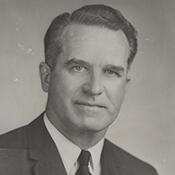
Here you will find contact information for Representative Robert H. Mollohan, including email address, phone number, and mailing address.
| Name | Robert H. Mollohan |
| Position | Representative |
| State | West Virginia |
| District | 1 |
| Party | Democratic |
| Status | Former Representative |
| Term Start | January 3, 1953 |
| Term End | January 3, 1983 |
| Terms Served | 9 |
| Born | September 18, 1909 |
| Gender | Male |
| Bioguide ID | M000845 |
About Representative Robert H. Mollohan
Robert Homer Mollohan (September 18, 1909 – August 3, 1999) was an American politician who served as a member of the United States House of Representatives from West Virginia from 1953 to 1957 and again from 1969 to 1983. A Democrat, he represented West Virginia’s 1st congressional district and was succeeded in Congress by his son, Alan Mollohan. Over the course of nine terms in office, his service in Congress spanned three decades and occurred during a significant period in American history, during which he participated in the legislative process and represented the interests of his constituents.
Mollohan was born in Grantsville, Calhoun County, West Virginia, on September 18, 1909. He was raised in the state he would later represent in Congress, and his early life in rural West Virginia informed his understanding of the economic and social conditions of the region. Seeking higher education within the state, he attended Glenville State College, from which he graduated with a Bachelor of Science degree in accounting. This training in accounting and finance provided the professional foundation for his early career in public service and administration.
After completing his education, Mollohan began his career in municipal government when he was hired by the city of Parkersburg, West Virginia, as a tax collector. Demonstrating administrative ability, he was promoted in 1935 to chief of the miscellaneous tax division. As the New Deal expanded federal involvement in local affairs, his responsibilities shifted in 1939 when he was reassigned as the local director of the Works Progress Administration (WPA), overseeing federal relief and public works projects in the area. In 1940, he briefly worked for the United States Census Bureau, gaining further experience in federal data collection and administration.
In 1941, Mollohan assumed a significant state-level role as director of the West Virginia Industrial School for Boys in Pruntytown, a position he held for eight years. As director of this reform institution, he was responsible for the management and oversight of the facility and its programs for juvenile offenders. He left the Industrial School in 1949 to become a clerk for the United States Senate, moving to a staff position within the federal legislative branch. This role in the Senate provided him with direct exposure to national politics and legislative procedures and helped prepare him for his own later service as a member of Congress.
Mollohan was elected as a Democrat to the U.S. House of Representatives from West Virginia’s 1st congressional district in the 1952 election and took office on January 3, 1953. He served two consecutive terms, from 1953 to 1957, during the 83rd and 84th Congresses. During this initial period in the House of Representatives, he participated in the democratic process at the national level and represented the interests of his West Virginia constituents. Notably, he did not sign the 1956 Southern Manifesto, a document in which many southern legislators opposed the Supreme Court’s decision in Brown v. Board of Education, placing him apart from many contemporaries who resisted desegregation.
Rather than seek reelection to the House in 1956, Mollohan chose to run for governor of West Virginia in the 1956 gubernatorial election. He secured the Democratic nomination but was defeated in the general election by Republican state house minority leader Cecil Underwood. In the final days of the campaign, his candidacy was damaged by revelations that he had received $20,000 and two automobiles from a coal operator on a strip mine at the West Virginia Industrial School for Boys during his tenure as superintendent. After leaving Congress in January 1957, he attempted to return to the House in 1958, running again for his former seat, which was then held by Republican Arch A. Moore Jr., but he was unsuccessful. Following this defeat, Mollohan temporarily retired from electoral politics and established an insurance agency, continuing his professional life in the private sector.
Mollohan reentered public life in 1968 when he again sought his old congressional seat after Arch A. Moore Jr. decided to run for governor. Despite his long absence from Congress, he won election and returned to the House on January 3, 1969. He then served seven additional consecutive terms, from 1969 to 1983, bringing his total House service to nine terms. During this second, longer period in Congress, he served on the House Armed Services Committee, where he played a role in defense policy and military oversight during the Vietnam War era and the Cold War. He became known for his effectiveness in securing federal appropriations for his district and the state, and he developed a reputation for obtaining substantial funding for local “pork barrel” projects, which contributed to economic development and infrastructure improvements in West Virginia.
Mollohan retired from the House of Representatives at the conclusion of the 97th Congress on January 3, 1983, ending a congressional career that had begun three decades earlier. He was succeeded in Congress by his son, Alan Mollohan, who continued to represent West Virginia’s 1st congressional district and held the seat until 2011, extending the Mollohan family’s presence in the House for an additional generation. Robert Homer Mollohan died on August 3, 1999, closing a long life marked by extensive public service at the local, state, and federal levels, and by a central role in representing West Virginia during a transformative era in American political and economic history.