Senator Robert Morris
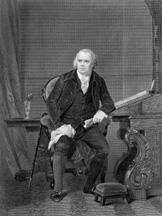
Here you will find contact information for Senator Robert Morris, including email address, phone number, and mailing address.
| Name | Robert Morris |
| Position | Senator |
| State | Pennsylvania |
| Party | Pro-Administration |
| Status | Former Representative |
| Term Start | March 4, 1789 |
| Term End | March 3, 1795 |
| Terms Served | 1 |
| Born | January 20, 1734 |
| Gender | Male |
| Bioguide ID | M000985 |
About Senator Robert Morris
Robert Morris served as a Senator from Pennsylvania in the United States Congress from March 4, 1789, to March 3, 1795. A prominent financier of the American Revolution and later a member of the Pro-Administration Party in the First Congress, he played a significant role in the early legislative and financial foundations of the United States under the new Constitution. His single term in the Senate coincided with the formative years of the federal government, during which he contributed to the legislative process and represented the interests of his Pennsylvania constituents at a time when the structure and powers of the new national institutions were being tested and defined.
Born on January 20, 1734 (January 31, 1734, New Style), in Liverpool, England, Robert Morris was the son of Robert Morris Sr., a tobacco factor, and Elizabeth Murphet. He emigrated to the American colonies as a youth, arriving in Maryland and then settling in Philadelphia, Pennsylvania, where he was apprenticed to the shipping and banking firm of Charles Willing. Demonstrating early aptitude in commerce and finance, Morris rose rapidly in the mercantile community. By the 1750s and 1760s he had become a partner in the firm Willing, Morris & Co., which engaged in shipping, trade, and finance and would later provide him with the experience and connections that proved critical during the Revolutionary era.
Morris’s education was largely practical and commercial rather than academic, shaped by his apprenticeship and subsequent work in Philadelphia’s business world. Through his activities in trade, he developed a sophisticated understanding of credit, international commerce, and public finance. This background made him a natural leader among colonial merchants opposed to British trade restrictions and taxation policies in the years leading up to the American Revolution. His business success and civic involvement brought him into the political life of Pennsylvania and the broader colonial resistance movement.
During the American Revolution, Robert Morris emerged as one of the most important financial leaders of the patriot cause. He served in the Second Continental Congress and was a signer of the Declaration of Independence in 1776, the Articles of Confederation in 1778, and later the United States Constitution in 1787, making him one of the few individuals to sign all three of these foundational documents. As a member of Congress and a leading merchant, he organized credit, supplies, and funding for the Continental Army, often using his personal credit and commercial network to secure provisions and loans when public resources were scarce. From 1781 to 1784 he served as Superintendent of Finance of the United States under the Articles of Confederation, where he worked to stabilize the young nation’s finances, proposed the creation of a national bank, and helped establish the Bank of North America in Philadelphia.
Morris’s role in the framing and ratification of the Constitution further cemented his national prominence. As a delegate to the Constitutional Convention in Philadelphia in 1787, he supported a stronger central government and was instrumental in the convention’s work, although he spoke relatively little on the floor. After the Constitution was adopted, he advocated its ratification in Pennsylvania. His reputation as the “Financier of the Revolution” and as a key supporter of the new federal system made him a natural choice for high office under the new government.
In 1789, Robert Morris entered congressional service as one of the first United States Senators from Pennsylvania, aligning with the Pro-Administration Party that generally supported the policies of President George Washington and Treasury Secretary Alexander Hamilton. Serving from 1789 to 1795, he participated in the Senate’s early deliberations on the organization of the federal judiciary, the assumption of state debts, the establishment of the Bank of the United States, and the development of the nation’s fiscal and commercial policies. His experience in finance and his earlier work as Superintendent of Finance informed his legislative perspective, and he contributed to shaping the economic framework of the new republic during a significant period in American history.
After leaving the Senate in 1795, Morris devoted himself to extensive land and business ventures, particularly large-scale land speculation in the American West. These undertakings, however, proved financially disastrous. Overextended and unable to meet his obligations, he was eventually confined for debt in the Prune Street Debtors’ Prison in Philadelphia from 1798 to 1801, a stark reversal from his earlier status as one of the wealthiest men in America. Following his release, he lived in relative obscurity and reduced circumstances. Robert Morris died in Philadelphia on May 8, 1806. Despite his later financial misfortunes, his contributions as a Revolutionary-era financier, a signer of the nation’s key founding documents, and a United States Senator from Pennsylvania remain central to his historical legacy.