Representative Robert Neill
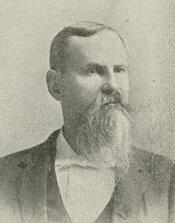
Here you will find contact information for Representative Robert Neill, including email address, phone number, and mailing address.
| Name | Robert Neill |
| Position | Representative |
| State | Arkansas |
| District | 6 |
| Party | Democratic |
| Status | Former Representative |
| Term Start | August 7, 1893 |
| Term End | March 3, 1897 |
| Terms Served | 2 |
| Born | November 12, 1838 |
| Gender | Male |
| Bioguide ID | N000025 |
About Representative Robert Neill
Robert Neill was an American politician who served as a Representative from Arkansas in the United States Congress from 1893 to 1897. A member of the Democratic Party, he contributed to the legislative process during two terms in office and represented the interests of his Arkansas constituents during a significant period in American history. Born in 1838, Neill lived through the Civil War, Reconstruction, and the political realignments of the late nineteenth century, experiences that shaped the context in which he later served in the national legislature.
Details of Robert Neill’s early life, including his exact place of birth, family background, and formative influences, are not extensively documented in the surviving public record. Coming of age in the antebellum era, he would have been in his early twenties when the Civil War began in 1861, and his adult life unfolded against the backdrop of the conflict and its aftermath in the South. Like many Southern political figures of his generation, his outlook and later public service were informed by the economic and social upheavals that followed the war and Reconstruction, as Arkansas and other former Confederate states adjusted to new political realities.
Information about Neill’s formal education is similarly limited in available sources. There is no comprehensive contemporary account of the schools he attended or any professional training he may have received. Nonetheless, his eventual election to the United States House of Representatives indicates that he attained a level of education and public standing sufficient to engage in the legal, economic, and constitutional questions that came before Congress in the 1890s. His ability to navigate party politics within Arkansas and to win election to federal office suggests that he was well integrated into the civic and political life of his state.
Before entering Congress, Neill’s career developed within this evolving postwar environment in Arkansas, although the specific offices or occupations he held prior to his election are not clearly recorded in standard biographical references. By the early 1890s, he had become sufficiently prominent within the Democratic Party to secure nomination and election to the national legislature. His rise to congressional office coincided with a period of intense debate over monetary policy, agricultural distress, and the regulation of commerce, issues of particular importance to a largely rural and agrarian state such as Arkansas.
Robert Neill’s congressional service began when he took his seat in the United States House of Representatives in 1893. Serving from 1893 to 1897, he completed two consecutive terms, participating in the Fifty-third and Fifty-fourth Congresses. As a Democratic representative from Arkansas, he was part of the majority during the early portion of his service, when his party controlled the House, and he helped to shape legislation during the administration of President Grover Cleveland. During these years, Congress addressed questions of tariff reform, the currency and the gold versus silver controversy, and responses to the economic downturn known as the Panic of 1893. Neill’s role in the House placed him within the broader democratic process at a time when farmers and laborers in states like Arkansas were pressing for relief and reform.
In representing his Arkansas constituents, Neill participated in debates and votes that affected both his state and the nation. While detailed records of his individual speeches or committee assignments are not readily available in standard summaries, his presence in Congress during this era meant engagement with issues central to the post-Reconstruction South, including federal economic policy, internal improvements, and the evolving relationship between the federal government and the states. His service concluded in 1897, after which he left the House of Representatives as the country moved toward the turn of the twentieth century and the onset of a new phase of industrial and political development.
Following his departure from Congress, Robert Neill returned to private life. The public record does not provide extensive detail about his later activities, but his post-congressional years were spent during a period when Arkansas continued to grapple with modernization, agricultural change, and the entrenchment of Jim Crow laws in the South. Neill lived until 1907, dying at the age of approximately sixty-nine. His life spanned from the pre–Civil War era through Reconstruction and into the Progressive Era, and his two terms in the United States House of Representatives from 1893 to 1897 remain the central, documented portion of his public career.