Representative Robert N. C. Nix
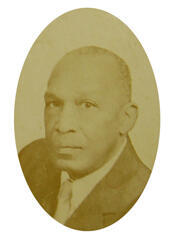
Here you will find contact information for Representative Robert N. C. Nix, including email address, phone number, and mailing address.
| Name | Robert N. C. Nix |
| Position | Representative |
| State | Pennsylvania |
| District | 2 |
| Party | Democratic |
| Status | Former Representative |
| Term Start | January 3, 1957 |
| Term End | January 3, 1979 |
| Terms Served | 11 |
| Born | August 9, 1898 |
| Gender | Male |
| Bioguide ID | N000113 |
About Representative Robert N. C. Nix
Robert Nelson Cornelius Nix Sr. (August 9, 1898 – June 22, 1987) was an American politician and lawyer who served as a Democratic Representative from Pennsylvania in the United States House of Representatives from 1957/1958 until 1979. Over the course of 11 terms in Congress, he became the first African American to represent Pennsylvania in the House of Representatives and played a significant role in federal legislation during a transformative period in American history. The Robert N. C. Nix Sr. Federal Building and United States Post Office in Philadelphia, Pennsylvania, bears his name in recognition of his public service.
Nix was born in Orangeburg, South Carolina, on August 9, 1898. He moved north as a young man and attended Townsend Harris High School in New York City, an academically rigorous public preparatory school. He went on to Lincoln University in Pennsylvania, one of the nation’s historically Black colleges and universities, graduating in 1921. Pursuing a career in law, he enrolled at the University of Pennsylvania Law School, where he earned his law degree. These educational experiences, spanning institutions in both the African American and broader academic traditions, provided the foundation for his later work as an attorney and legislator.
After completing his legal education, Nix began practicing law in Philadelphia, Pennsylvania. Establishing himself in private practice, he quickly became active in local Democratic Party politics. In 1932, he was elected a Democratic committeeman from Philadelphia’s Fourth Ward, marking his formal entry into political life. Two years later, in 1934, he was appointed a special assistant deputy attorney general of Pennsylvania, a position that expanded his experience in public law and state governance. His growing prominence within the party led to his selection as a delegate to the 1956 Democratic National Convention, underscoring his influence in both state and national Democratic politics by the mid-1950s.
Nix’s congressional career began with a special election in 1958 to fill the vacancy created when Representative Earl Chudoff resigned from the House of Representatives. In that contest, Nix defeated two opponents to win the seat, thereby becoming the first African American ever elected to represent Pennsylvania in the U.S. House. Existing records also note his service in Congress as beginning in 1957, reflecting the broader period in which he emerged as a federal legislator. A relatively low-profile elected official who rarely sought or attracted widespread publicity, he nonetheless became a reliable supporter of mostly liberal legislation. He was reelected 10 times, serving a total of 11 terms and approximately 20 years in the House, and consistently participated in the democratic process on behalf of his Philadelphia constituents.
During his tenure in Congress, Nix worked for the passage of landmark legislation associated with the American civil rights movement, aligning himself with efforts to dismantle segregation and expand voting and civil rights protections. In 1967, he privately sought to prevent the House of Representatives from denying Representative Adam Clayton Powell Jr. his seat, reflecting his concern for due process and representation. In 1962, he became the first member of Congress known to have met openly with gay rights activists when he invited Frank Kameny, a pioneering gay rights advocate, to his office, an early and notable instance of congressional engagement with LGBTQ issues. In 1975, he introduced an amendment to the Foreign Military Sales Act requiring the Department of Defense to provide Congress with information on the identities of agents who negotiated arms sales for American firms, thereby enhancing legislative oversight of foreign military sales.
Nix’s committee assignments and leadership roles further defined his congressional service. He served on the Veterans’ Affairs Committee, the Foreign Affairs Committee, and the Committee on Merchant Marine and Fisheries, contributing to policy on veterans’ benefits, international relations, and maritime and commercial issues. He rose to become chairman of the House Committee on the Post Office and Civil Service, where he oversaw legislation affecting federal employees and postal operations. In addition, he chaired the Subcommittee on International Economic Policy, a position that placed him at the intersection of foreign policy and international trade and finance. His long tenure in these roles reflected both seniority and the confidence of his colleagues in his judgment and experience.
Nix’s congressional service came to an end following the 1978 Democratic primary, when he was defeated by William H. Gray III, who went on to win the general election. Leaving the House in 1979, he concluded a congressional career that had spanned two decades and encompassed some of the most significant legislative battles of the mid-twentieth century. His influence extended beyond his own career through his family: his son, Robert N. C. Nix Jr., became the first African American elected to statewide office in Pennsylvania when he was elected to the Pennsylvania Supreme Court, furthering the Nix family’s legacy in law and public service.
In later years, Nix’s contributions were formally recognized through the naming of a major federal facility in his honor. In 1985, the United States courthouse and post office building in Philadelphia was renamed the Robert N. C. Nix Sr. Federal Building and United States Post Office, commemorating his long service to the city, the Commonwealth of Pennsylvania, and the nation. Known for his emphasis on preparation, precision, and professionalism, he was remembered for advising others, “Be prepared, be sharp, be careful, and use the King’s English well. And you can forget all the [other rules] unless you remember one more: Get paid.” Robert Nelson Cornelius Nix Sr. died on June 22, 1987, leaving a record as a pioneering African American legislator and a steady, influential participant in the work of Congress during a critical era in American history.