Senator Robert Barnwell Rhett
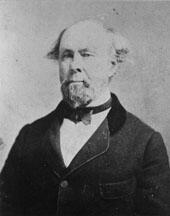
Here you will find contact information for Senator Robert Barnwell Rhett, including email address, phone number, and mailing address.
| Name | Robert Barnwell Rhett |
| Position | Senator |
| State | South Carolina |
| Party | Democratic |
| Status | Former Representative |
| Term Start | September 4, 1837 |
| Term End | March 3, 1853 |
| Terms Served | 7 |
| Born | December 21, 1800 |
| Gender | Male |
| Bioguide ID | R000184 |
About Senator Robert Barnwell Rhett
Robert Barnwell Rhett (born Robert Barnwell Smith; December 21, 1800 – September 14, 1876) was an American politician from South Carolina who became one of the most prominent pro-slavery extremists and early advocates of Southern secession in the antebellum United States. A leading “Fire-Eater” and a staunch supporter of slavery, he was widely nicknamed the “father of secession” for his persistent agitation in favor of disunion. Over the course of his long public career, he served as South Carolina’s attorney general, a member of the United States House of Representatives, a United States Senator, and later as a deputy to the Provisional Confederate States Congress and member of the Confederate House of Representatives. He was also an influential editor and propagandist through his newspaper, the Charleston Mercury.
Rhett was born Robert Barnwell Smith on December 21, 1800, in South Carolina, into a family connected to the state’s planter elite. In 1838 he changed his surname from Smith to Rhett, adopting the name of a prominent colonial ancestor, Colonel William Rhett, thereby aligning himself more visibly with an established and influential Lowcountry lineage. This change reflected his social aspirations and his identification with South Carolina’s traditional ruling class. He grew up in a slaveholding society and would later articulate, in stark and uncompromising terms, his belief that a people “owning slaves” were “mad, or worse than mad,” if they did not control their own political destinies—an outlook that underpinned his lifelong commitment to states’ rights and secession.
Rhett entered public life in South Carolina during the turbulent era of sectional conflict and tariff controversies. In 1832, amid the Nullification Crisis, he became South Carolina’s attorney general, a post he held until 1837. In that capacity he aligned himself with the most radical states’ rights elements in the state, arguing that South Carolina and other Southern states possessed the sovereign authority to resist federal policies they deemed unconstitutional. His tenure as attorney general coincided with the height of the state’s confrontation with the federal government over tariff policy, and he emerged as a leading critic of federal economic measures that he believed disadvantaged the South.
In 1837 Rhett was elected as a member of the United States House of Representatives from South Carolina, beginning a long period of service in the national legislature. He served in the House from 1837 to 1849, participating actively in debates over tariffs, slavery, and the balance of power between the federal government and the states. During his time in the House he vehemently objected to the protectionist Tariff of 1842, which he regarded as an unconstitutional and oppressive measure favoring Northern industrial interests at the expense of the Southern agricultural economy. A member of the Democratic Party, he contributed to the legislative process during seven terms in office, consistently pressing a hard-line pro-slavery and states’ rights agenda and helping to shape the increasingly sectional character of national politics in the 1840s.
After leaving the House, Rhett continued his national political career in the United States Senate. He served as a Senator from South Carolina in the United States Congress from 1850 to 1852, during a critical period marked by the Compromise of 1850 and intensifying disputes over the expansion of slavery into the western territories. As a member of the Senate, he participated in the democratic process and represented the interests of his constituents, but he also became one of the most uncompromising opponents of compromise with the North. His Senate career further solidified his reputation as a leading Fire-Eater, and he used his position to argue that the South should consider secession if its demands regarding slavery and states’ rights were not met. Although his formal Senate service ended in 1852, his influence on Southern politics and secessionist thought continued to grow.
Rhett’s prominence increased dramatically with the election of Republican Abraham Lincoln in 1860, an event he and other Fire-Eaters had long predicted would justify disunion. After Lincoln’s election, Rhett was elected to the South Carolina Secession Convention, which in December 1860 declared South Carolina’s secession from the Union. He was then chosen as a deputy from South Carolina to the Provisional Confederate States Congress, which met in Montgomery, Alabama, in 1861. In that body he was one of the most active deputies and served as chairman of the committee that reported the Confederate States Constitution, playing a central role in framing the new government’s foundational document. He was subsequently elected to the Confederate House of Representatives, continuing his legislative career under the Confederate government. Despite his early prominence, he received no higher office in the Confederate administration and eventually returned to South Carolina, where he became a sharp and persistent critic of Confederate President Jefferson Davis and his policies throughout the remainder of the Civil War.
Parallel to his formal political career, Rhett exerted considerable influence as a journalist and propagandist. He published his views through his newspaper, the Charleston Mercury, which became one of the leading secessionist organs in the South. Through its editorials and commentary, the Mercury championed immediate secession, defended slavery, and attacked any perceived moderation in Southern politics. Rhett used the paper to shape public opinion in South Carolina and beyond, and his writings helped prepare the ideological ground for disunion. His family was also directly involved in the military events of the war: his son, Alfred M. Rhett, commanded a battery at Fort Moultrie at the time of the bombardment of Fort Sumter in April 1861, an engagement that marked the formal beginning of the Civil War.
In the aftermath of Confederate defeat, Rhett’s public role diminished, but his reputation as a leading secessionist remained. In October 1865, Confederate military officer P. G. T. Beauregard wrote to Rhett encouraging him to resume publication of the Charleston Mercury “to help in re-establishing the truths of History,” expressing the view that the Confederate cause had been sacrificed by the “prejudices & want of judgment & foresight” of Jefferson Davis. Rhett lived out his later years in South Carolina, remaining a symbol of the most radical strand of antebellum Southern nationalism and pro-slavery ideology. He died on September 14, 1876, leaving behind a controversial legacy as one of the principal intellectual and political architects of Southern secession and the Confederate experiment.