Representative Robert Fleming Rich
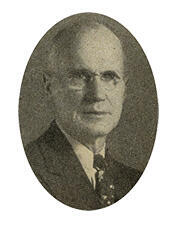
Here you will find contact information for Representative Robert Fleming Rich, including email address, phone number, and mailing address.
| Name | Robert Fleming Rich |
| Position | Representative |
| State | Pennsylvania |
| District | 15 |
| Party | Republican |
| Status | Former Representative |
| Term Start | April 15, 1929 |
| Term End | January 3, 1951 |
| Terms Served | 10 |
| Born | June 23, 1883 |
| Gender | Male |
| Bioguide ID | R000209 |
About Representative Robert Fleming Rich
Robert Fleming Rich (June 23, 1883 – April 28, 1968) was a Republican member of the U.S. House of Representatives from Pennsylvania who served ten terms in Congress between 1929 and 1951. Over more than two decades in national office, he represented his Pennsylvania constituents during a period that encompassed the Great Depression, the New Deal, World War II, and the early Cold War.
Rich was born in Woolrich, Clinton County, Pennsylvania, where his family was associated with the local woolen-mills business that gave the community its name. He pursued his early education in central Pennsylvania, attending Dickinson Seminary in Williamsport and the Williamsport Commercial College. He graduated from Mercersburg Academy in Mercersburg, Pennsylvania, in 1902. From 1903 to 1906 he attended Dickinson College in Carlisle, Pennsylvania, laying the groundwork for a lifelong association with higher education in the state.
After leaving Dickinson College, Rich entered the woolen-mills business in 1906, joining what would become the Woolrich Woolen Mills, a major regional manufacturing concern. He expanded his activities into banking and became financially interested in various business and manufacturing enterprises, developing a reputation as an industrialist and businessman. His leadership in business was paralleled by extensive service in educational and civic institutions. He served as a member of the board of trustees of Dickinson College from 1912 to 1958, of the Lock Haven Teachers College from 1918 to 1928, and of the Lock Haven Hospital from 1920 to 1951. He was also an important supporter of Lycoming College and served on its board of trustees from 1931 to 1963, reflecting his sustained commitment to education and community institutions in Pennsylvania.
Rich’s prominence in business and civic affairs led naturally into political involvement within the Republican Party. He served as a delegate to the Republican National Conventions in 1924, 1952, and 1956, participating in the selection of the party’s presidential nominees and contributing to national party deliberations. His views on foreign and domestic policy were strongly held and often forcefully expressed. During the era of World War II and the early Cold War, he opposed close alignment of the United States with the Soviet Union, famously remarking that such an alliance would be akin to “get in bed with a rattlesnake and a skunk,” a phrase that captured his staunch anti-Communist sentiment.
Rich entered Congress during a period of transition in Pennsylvania’s representation. He was elected as a Republican to the Seventy-first Congress to fill the vacancy caused by the death of Representative Edgar R. Kiess, taking office in 1929. He was subsequently reelected to the Seventy-second Congress and to the five succeeding Congresses, serving continuously through the early New Deal years. A member of the Republican Party, he contributed to the legislative process during ten terms in office and participated actively in the democratic process as a member of the House of Representatives, representing the interests of his constituents from Pennsylvania. Known as a fiscal conservative, he became particularly noted during the New Deal for his persistent questioning of federal spending. According to contemporary accounts, he gained fame and popularity for repeatedly demanding on the House floor, whenever a new spending bill was considered, “Where are we going to get the money?” The refrain became so familiar that other members of the House would often join in like a chorus, even as they proceeded to support the appropriations he opposed.
Rich chose not to seek renomination in 1942, stepping away from Congress at the end of the Seventy-seventh Congress. He returned to the House, however, when he was again elected as a Republican to the Seventy-ninth, Eightieth, and Eighty-first Congresses, serving during and after World War II as the United States adjusted to postwar realities and the onset of the Cold War. His congressional service from 1929 to 1951 thus spanned ten terms, during which he consistently advocated limited government spending and maintained a strong anti-Communist stance. He was not a candidate for renomination in 1950, concluding his legislative career at the end of the Eighty-first Congress.
Throughout and beyond his congressional service, Rich remained closely identified with Woolrich Woolen Mills. He served as general manager of the company from 1930 to 1959, guiding it through the economic upheavals of the Depression and wartime production demands. He then became president of the firm from 1959 to 1964, and subsequently chairman of the board from 1964 until 1966, when he was named honorary chairman. His long tenure in leadership roles at Woolrich reflected both his business acumen and his enduring connection to the industry and community in which he had begun his career.
Robert Fleming Rich died on April 28, 1968, in Jersey Shore, Pennsylvania. He was interred in Woolrich Cemetery in his native Woolrich, Pennsylvania, returning in death to the community that had shaped his life in business, public service, and civic engagement.