Representative Robert Fay Rockwell
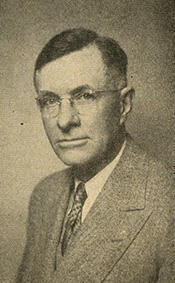
Here you will find contact information for Representative Robert Fay Rockwell, including email address, phone number, and mailing address.
| Name | Robert Fay Rockwell |
| Position | Representative |
| State | Colorado |
| District | 4 |
| Party | Republican |
| Status | Former Representative |
| Term Start | January 3, 1941 |
| Term End | January 3, 1949 |
| Terms Served | 4 |
| Born | February 11, 1886 |
| Gender | Male |
| Bioguide ID | R000369 |
About Representative Robert Fay Rockwell
Robert Fay Rockwell (February 11, 1886 – September 29, 1950) was a U.S. Representative from Colorado who served four terms in Congress from 1941 to 1949. A member of the Republican Party, he also held a series of important state offices in Colorado, including service in both chambers of the state legislature and a term as lieutenant governor. Over the course of his public career, he combined his legislative work with extensive interests in cattle ranching and agriculture in western Colorado.
Rockwell was born in Cortland, New York, the son of Lemuel Wilson Rockwell and Elizabeth (Smith) Rockwell. He attended the public schools of Hornell, New York, and went on to The Hill School in Pottstown, Pennsylvania, from which he graduated in 1905. That same year he entered Princeton University and attended from 1905 to 1906 before leaving to pursue opportunities in the West. His early education in New York and Pennsylvania provided the foundation for his later work in both business and public service.
In 1907 Rockwell moved to Paonia, Colorado, where he established himself as a cattle rancher and fruit grower in the western part of the state. His experience in agriculture and ranching would remain central to his identity and informed much of his later public work, particularly his involvement with state agricultural institutions. On June 24, 1908, he married Aileen Miller, with whom he had two sons, Robert F. Rockwell Jr. and Wilson M. Rockwell. The family divided their time between a ranch in Colorado and a home in Miami, Florida. Aileen Rockwell died at their Miami residence on March 5, 1938.
Rockwell entered public life as a member of the Colorado House of Representatives, serving from 1917 to 1921. He then advanced to the Colorado Senate, where he served from 1921 to 1923. His legislative work at the state level led to his election as lieutenant governor of Colorado, a position he held from 1923 to 1925. In 1924 he sought higher office as a candidate for the Republican nomination for governor, but was unsuccessful, losing the nomination to Clarence Morley, who went on to win the general election. Rockwell remained active in state politics and, in 1930, became the Republican nominee for governor; he was defeated in the general election by the Democratic incumbent, Billy Adams.
Beyond elective office, Rockwell played a continuing role in Colorado’s agricultural and educational affairs. He served as a member of the State Board of Agriculture from 1932 to 1946, a period during which the board oversaw important aspects of the state’s agricultural policy and its land-grant institutions. He also returned to the Colorado Senate, serving again as a state senator from 1938 to 1941. Throughout these years he maintained his ranching and fruit-growing operations, linking his legislative interests closely to the concerns of rural and agricultural communities in western Colorado.
Rockwell’s congressional career began when he was elected as a Republican to the Seventy-seventh Congress to fill the vacancy caused by the death of Representative Edward T. Taylor. He took his seat on December 9, 1941, and was subsequently reelected to the Seventy-eighth, Seventy-ninth, and Eightieth Congresses, serving continuously until January 3, 1949. His four terms in the U.S. House of Representatives coincided with a critical period in American history, encompassing the Second World War and the immediate postwar years. During this time he participated in the legislative process, represented the interests of his Colorado constituents, and contributed to national debates on wartime and postwar policy. In 1948 he was an unsuccessful candidate for reelection to the Eighty-first Congress.
After leaving Congress in 1949, Rockwell resumed his cattle ranching activities in Colorado, returning to the private pursuits that had long underpinned his public career. He also held business positions in his native New York, serving as chairman of the board of directors of Tuttle & Rockwell Co. in Hornell, New York, and of Rockwell Co. in Corning, New York. His civic and fraternal affiliations included membership in the Sons of the American Revolution, the Masonic order, and the Paonia Rotary Club, reflecting his engagement in community and patriotic organizations in addition to his formal public offices. On November 23, 1948, he married Elizabeth Armstrong, his second wife, following the death of Aileen Miller Rockwell a decade earlier.
Rockwell died unexpectedly of a cerebral hemorrhage at his home in Maher, Colorado, on September 29, 1950. He was interred in Hornell Cemetery in Hornell, New York, returning in death to the region where he had spent his youth before building a long career in ranching, business, and public service in Colorado.