Representative Robert A. Roe
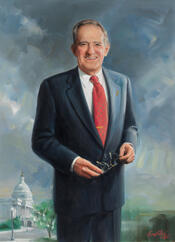
Here you will find contact information for Representative Robert A. Roe, including email address, phone number, and mailing address.
| Name | Robert A. Roe |
| Position | Representative |
| State | New Jersey |
| District | 8 |
| Party | Democratic |
| Status | Former Representative |
| Term Start | January 3, 1969 |
| Term End | January 3, 1993 |
| Terms Served | 12 |
| Born | February 28, 1924 |
| Gender | Male |
| Bioguide ID | R000383 |
About Representative Robert A. Roe
Robert Aloysius Roe (February 28, 1924 – July 15, 2014) was an American Democratic Party politician who represented New Jersey in the United States House of Representatives from November 4, 1969, to January 3, 1993. Over the course of 12 consecutive terms in Congress, he participated actively in the legislative process and represented the interests of his New Jersey constituents during a significant period in American political history.
Roe was born in Lyndhurst, New Jersey, on February 28, 1924, and was raised in Wayne, New Jersey. He graduated from Pompton Lakes High School in Pompton Lakes, New Jersey. After high school, he pursued higher education in the Pacific Northwest, attending Oregon State University in Corvallis and Washington State University in Pullman. His formal education was interrupted by military service during World War II, when he served in the United States Army.
Following his wartime service, Roe returned to New Jersey and entered local public life. He began his political career in Wayne Township, serving as a committeeman from 1955 to 1956. In 1956 he was elected Mayor of Wayne Township, a position he held until 1961. Concurrently expanding his role in county government, Roe served on the Passaic County Board of Chosen Freeholders from 1959 to 1963, and he was selected as Freeholder Director in 1962 and 1963. These local and county posts established him as a prominent Democratic figure in northern New Jersey and provided a foundation for his later state and national service.
In 1963, Roe was appointed Commissioner of the New Jersey Department of Conservation and Economic Development. In that capacity, he served until his resignation in 1969, overseeing programs related to natural resources, land use, and economic growth at a time of expanding suburban development in the state. His tenure as commissioner enhanced his profile in statewide affairs and positioned him as a leading advocate for both conservation and economic planning in New Jersey.
Roe’s congressional career began when Representative Charles S. Joelson resigned from Congress in 1969. In the special election held on November 4, 1969, Roe was elected as a Democrat to the U.S. House of Representatives. He took office representing a New Jersey district and would be reelected to serve 12 terms, remaining in the House until January 3, 1993. A member of the Democratic Party, Roe generally maintained a mostly liberal voting record on economic and social issues, but he was notably anti-abortion, reflecting a more conservative stance on that particular issue. During his tenure, he participated in the democratic process through committee work, floor debates, and constituent service, and he was in office during major national developments spanning the Vietnam War era, the Watergate period, the Reagan years, and the end of the Cold War.
Roe sought higher office within New Jersey during his time in Congress. He was an unsuccessful candidate for the Democratic nomination for Governor of New Jersey in both 1977 and 1981. In each of those gubernatorial primaries he finished in second place for the nomination, demonstrating substantial statewide support but falling short of securing his party’s standard in the general election.
Within the House of Representatives, Roe rose to positions of significant committee leadership. He served as Chairman of the Committee on Science, Space, and Technology from 1987 to 1991, overseeing legislative matters related to federal scientific research, space exploration, and technological development. From 1991 to 1993, he chaired the Committee on Public Works and Transportation, where he played a central role in shaping federal policy on infrastructure, transportation systems, and public works projects. These chairmanships placed him at the forefront of major legislative initiatives in science, technology, and infrastructure during the late 1980s and early 1990s. Roe retired from Congress following the 1992 election and subsequently worked as a consultant.
Roe’s later life included both public recognition and controversy. In 1993, after leaving office, he was convicted of driving while intoxicated following a crash in Rockaway Township, New Jersey, in which he collided with a minivan and seriously injured a woman and her 15-year-old daughter. Years later, in January 2008, a bill was passed by the New Jersey Legislature to name Route 23 after the former congressman. The proposal drew strong opposition from Mothers Against Drunk Driving, whose representatives objected to honoring a man who had seriously injured two people while driving drunk. A spokesman for Governor Jon Corzine stated that the governor had not been aware of the accident when he signed the naming bill and that a second bill would be required to reverse the designation. In response to the controversy, Roe himself requested that lawmakers repeal the legislation.
Robert A. Roe died of congestive heart failure at his home in the Green Pond section of Rockaway Township, New Jersey, on July 15, 2014, at the age of 90. His long career in public service, spanning local government, state administration, and nearly a quarter-century in Congress, left a lasting imprint on New Jersey politics and on federal policy in the areas of science, technology, and public works.