Senator Robert Nelson Stanfield
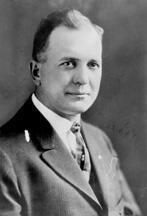
Here you will find contact information for Senator Robert Nelson Stanfield, including email address, phone number, and mailing address.
| Name | Robert Nelson Stanfield |
| Position | Senator |
| State | Oregon |
| Party | Republican |
| Status | Former Representative |
| Term Start | April 11, 1921 |
| Term End | March 4, 1927 |
| Terms Served | 1 |
| Born | July 9, 1877 |
| Gender | Male |
| Bioguide ID | S000791 |
About Senator Robert Nelson Stanfield
Robert Nelson Stanfield Jr. (July 9, 1877 – April 13, 1945) was an American Republican politician, rancher, and banker from the state of Oregon who rose from frontier agricultural roots to serve in both the Oregon House of Representatives and the United States Senate. A member of the Republican Party, he served in the Oregon House from 1912 to 1918, including a term as Speaker from 1917 to 1918, and later represented Oregon in the United States Senate from March 4, 1921, to March 3, 1927. During his single term in Congress, he contributed to the legislative process at a significant period in American history, participating in the democratic process and representing the interests of his Oregon constituents.
Stanfield was born near the city of Umatilla in eastern Oregon on July 9, 1877, the first son of Harriet Thankful Townsend and Robert N. Stanfield Sr., who owned a livery stable and freighting company. He spent his early childhood in Umatilla until 1882, when the family moved to Pendleton, Oregon, where his father operated a freight forwarding business. In 1885, the family relocated again to the former Buel Atwood place on Butter Creek near Echo, Oregon, establishing the ranch that would shape Stanfield’s life and career. After the move to Butter Creek, he attended the Thomson School and later the Butter Creek School, which was built on land his father donated to the local school district, reflecting the family’s early engagement in community development.
In the fall of 1895, Stanfield enrolled at the state normal school in Weston, Oregon, intending to pursue further education. His studies were disrupted by the death of his father on April 15, 1896, a loss that forced him to assume adult responsibilities at an early age. He left school in 1897 after completing two years and took over management of the Stanfield ranch on Butter Creek on behalf of his mother. Working with his brothers, he expanded the original family holding into a large and diversified livestock operation encompassing multiple ranches. Initially focused on cattle, he later shifted primarily to sheep, and by World War I his flocks were estimated at approximately 350,000 head, a scale that led contemporaries to regard him as the world’s largest sheep rancher. In addition to ranching, he became involved in banking enterprises in Echo and Baker, Oregon, further entrenching his role in the economic life of eastern Oregon.
Stanfield entered public life as a Republican when he was elected in 1912 to the Oregon House of Representatives from District 22, representing Morrow and Umatilla counties. He served continuously in the state house through 1917, gaining influence and experience in legislative affairs. During the 1917 session he was chosen Speaker of the Oregon House of Representatives, a position that placed him at the center of state policymaking during the World War I era. In 1918, he sought higher office and ran against Charles L. McNary for the Republican nomination to the United States Senate, but he was defeated in the May primary, temporarily halting his ascent to national office.
In 1920, Stanfield successfully secured election as a Republican to the United States Senate from Oregon. He served one term, from March 4, 1921, to March 3, 1927, a period marked nationally by postwar adjustment, Prohibition, and significant debates over public lands and resource development. In the Senate, he chaired the Committee to Examine Branches of the Civil Service during the Sixty-eighth Congress and later served on the Committee on Public Lands and Surveys in the Sixty-ninth Congress. Reflecting his background and regional priorities, he took hearings on public land use out of Washington, D.C., and into the western states for the first time, bringing federal deliberations closer to the communities most affected by land and resource policy. He considered his greatest legislative achievement to be securing support for the construction of the Owyhee Dam and related irrigation projects in Malheur County, Oregon, among the early large-scale desert land reclamation efforts that transformed arid lands into productive agricultural areas.
Stanfield’s tenure in the Senate was also marked by a personal reputation as “rough and ready,” which both endeared him to many rural supporters and created political liabilities. During the era of national Prohibition, he was arrested following a drunken bar fight in Baker, Oregon, an incident that damaged his standing among more conservative and temperance-minded voters. When he sought reelection in 1926, he faced intense opposition from the Woman’s Christian Temperance Union (WCTU) and the Ku Klux Klan, both of which mobilized against him. Although he retained strong admiration among many of his cowboy and ranching constituents, that base of support proved insufficient to secure another term in the Senate.
In 1926, Stanfield ran for the Republican nomination for the U.S. Senate but lost in the May primary to Frederick Steiwer. Undeterred, he gained a place on the general election ballot as an independent candidate, only to be defeated a second time by Steiwer in the fall election. He continued to seek public office, running in the 1928 Republican primary for a seat in the U.S. House of Representatives, but he was again unsuccessful. These defeats effectively ended his national political career and returned him to private life.
After leaving Congress, Stanfield returned to Oregon and resumed his former business pursuits in ranching and related enterprises, remaining a prominent figure in the economic and social life of his region even without public office. In his later years he spent time in the interior Northwest, and on April 13, 1945, he died in Weiser, Idaho. Robert Nelson Stanfield Jr. was buried at Hillcrest Cemetery in Weiser. He was survived by his wife, Inez Hill, and one daughter, Barbara, closing the life of a figure who had risen from a Butter Creek ranch to the halls of the United States Senate while helping shape the development of Oregon’s agricultural and public land policies.