Representative Robert H. Steele
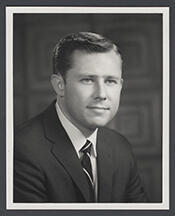
Here you will find contact information for Representative Robert H. Steele, including email address, phone number, and mailing address.
| Name | Robert H. Steele |
| Position | Representative |
| State | Connecticut |
| District | 2 |
| Party | Republican |
| Status | Former Representative |
| Term Start | January 3, 1969 |
| Term End | January 3, 1975 |
| Terms Served | 3 |
| Born | November 3, 1938 |
| Gender | Male |
| Bioguide ID | S000836 |
About Representative Robert H. Steele
Robert Hampton Steele (born November 3, 1938) is a retired American politician and author from the state of Connecticut. A member of the Republican Party, he served as a Representative from Connecticut in the United States Congress from 1969 to 1975, contributing to the legislative process during three terms in office. Steele’s service in Congress occurred during a significant period in American history, and as a member of the House of Representatives he participated in the democratic process and represented the interests of his constituents in Connecticut’s 2nd congressional district.
Steele was born in Hartford, Connecticut, on November 3, 1938. He grew up in nearby Wethersfield, where he attended the public schools. His father, also known as Bob Steele, was a well-known radio personality and for more than fifty years hosted the state’s top-rated morning show on WTIC-AM, making the Steele name familiar throughout Connecticut. This environment exposed Robert Steele early to public life and communication, influences that would later shape his political career.
After completing his primary and secondary education in Wethersfield, Steele attended Amherst College in Massachusetts. He graduated with a Bachelor of Arts degree in 1960. He then pursued graduate studies at Columbia University in New York City, earning a master’s degree in 1963. His academic training, particularly in international affairs, helped prepare him for subsequent work in intelligence and public policy.
Following his formal education, Steele spent five years as a Soviet expert in the Central Intelligence Agency, serving in Washington, D.C., and in Mexico. In this role he focused on Cold War issues and Soviet affairs during a tense period in U.S.–Soviet relations. After leaving the CIA, he entered the private sector and, between 1968 and 1970, worked as a securities analyst for the Travelers Insurance Company. This combination of intelligence and financial experience provided him with a broad perspective on national security and economic issues as he moved into electoral politics.
Steele was elected as a Republican to the United States House of Representatives from Connecticut’s 2nd congressional district in 1970. He was chosen in a special election to fill the vacancy in the Ninety-first Congress caused by the death of Democratic Representative William L. St. Onge, and at the same time was elected to the Ninety-second Congress. He won the 1970 special election despite running in a district where Democrats outnumbered Republicans, reflecting his appeal across party lines. He was subsequently re-elected to the Ninety-third Congress by a margin of approximately 68,000 votes. In Congress, Steele developed a moderate-to-liberal voting record that featured opposition to the Vietnam War and engagement with major issues of the era, including questions of reform and accountability in government.
Steele’s tenure in the House extended from 1970 to 1975, encompassing three terms in office during which he contributed to the legislative process and represented Connecticut during a period marked by the Vietnam War, social change, and the unfolding Watergate scandal. A Republican, he often took positions that emphasized reform and responsiveness to public concerns. Although earlier accounts sometimes date his service from 1969, his congressional career in fact began with his 1970 special-election victory and concluded at the end of his third term in January 1975.
In 1974 Steele chose not to seek re-election to the Ninety-fourth Congress. Instead, he ran for Governor of Connecticut. In the wake of the Watergate scandal, he centered his gubernatorial campaign on themes of political reform and integrity, emphasizing his support for campaign finance reform and pledging not to accept political contributions exceeding $100. Despite this reform-oriented platform, his campaign for governor was unsuccessful, and he left elective office following the end of his final term in the House.
In his later life, Steele became known as an anti-gambling expert and author. Drawing on his interest in public policy and the social impacts of legalized gambling, he wrote and spoke extensively on the subject. In 2012 he published a novel, “The Curse: Big-Time Gambling’s Seduction of a Small New England Town,” which examined the effects of casino development on local communities and reflected his broader concerns about the expansion of gambling in New England. Now retired from politics, Robert Hampton Steele remains associated with his work as a congressman, reform advocate, and critic of large-scale gambling.