Representative Robert G. Stephens Jr.
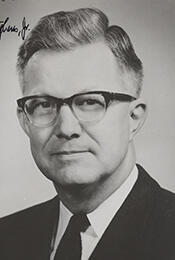
Here you will find contact information for Representative Robert G. Stephens Jr., including email address, phone number, and mailing address.
| Name | Robert G. Stephens Jr. |
| Position | Representative |
| State | Georgia |
| District | 10 |
| Party | Democratic |
| Status | Former Representative |
| Term Start | January 3, 1961 |
| Term End | January 3, 1977 |
| Terms Served | 8 |
| Born | August 14, 1913 |
| Gender | Male |
| Bioguide ID | S000860 |
About Representative Robert G. Stephens Jr.
Robert Grier Stephens Jr. (August 14, 1913 – February 20, 2003) was a United States Representative from Georgia who served eight consecutive terms in the U.S. House of Representatives from 1961 to 1977. A member of the Democratic Party, he represented Georgia’s 10th congressional district during a period of major national transformation and contributed to the legislative process over the course of the 87th through the 94th Congresses.
Stephens was born on August 14, 1913, in Atlanta, Georgia. He came from a family with deep political and legal roots in the American South. He was a great-great nephew of Alexander H. Stephens, vice president of the Confederate States and later governor of Georgia, and a grandson of Clement Anselm Evans, a Confederate general and prominent clergyman. He was also a distant cousin of 19th-century U.S. Supreme Court Justice Robert Cooper Grier, from whom he derived his middle name. Raised and educated in Atlanta, he graduated from Boys High School in 1931, laying the foundation for a long career in law, public service, and politics.
After high school, Stephens attended the University of Georgia at Athens, where he pursued an extended course of study. He earned a Bachelor of Arts degree in 1935 and a Master of Arts degree in 1937. During this period, he broadened his academic experience by studying abroad at the University of Hamburg in Germany in 1935 and 1936, gaining exposure to European political and legal developments on the eve of World War II. He returned to Athens to study law, receiving a bachelor of laws (LL.B.) degree from the University of Georgia School of Law in 1941. His legal education prepared him for both his later academic work and his eventual career in elective office.
Stephens entered military service shortly after completing his legal studies. He served in the United States Army from September 1941 through March 1946, during the entirety of the United States’ involvement in World War II and the immediate postwar period. He rose to the rank of lieutenant colonel and was stationed both in the United States and in Germany. In the aftermath of the war, he was assigned to the staff of U.S. Supreme Court Justice Robert H. Jackson, who served as chief prosecutor for the United States at the Nuremberg war crimes trials. In this capacity, Stephens participated in the legal and administrative work surrounding the prosecution of major Nazi officials, an experience that deepened his engagement with international law and postwar justice.
Following his discharge from the Army in March 1946, Stephens returned to Athens, Georgia, and embarked on a dual career in law and education. He joined the faculty of the University of Georgia, contributing to the academic life of the institution, and simultaneously maintained a private law practice in Athens. In addition to his teaching and private practice, he served as city attorney for Athens, advising the municipal government on legal matters and further solidifying his role in local public affairs. These combined roles in academia, law, and municipal service helped establish his reputation as a capable lawyer and public servant.
Stephens entered state-level politics in the early 1950s. In 1951, he was elected to the Georgia Senate, where he served through 1953. That year he was elected to the Georgia House of Representatives, in which he served until 1959. During his tenure in the Georgia General Assembly, he participated in the legislative process at a time when the state was confronting issues of postwar growth, education, and the early stages of the modern civil rights era. His work in both the state Senate and House provided him with legislative experience and a political base that would support his later bid for national office.
In 1960, Stephens was elected as a Democrat to the U.S. House of Representatives from Georgia’s 10th congressional district, taking his seat in the 87th Congress in January 1961. He was subsequently re-elected to seven additional terms, serving continuously until January 1977. Over these eight terms in office, his congressional service coincided with a significant period in American history, encompassing the Kennedy, Johnson, Nixon, and Ford administrations; the height of the civil rights movement; the Great Society legislative era; and the Vietnam War. As a member of the House of Representatives, Robert Grier Stephens Jr. participated in the democratic process, contributed to the legislative work of Congress, and represented the interests of his constituents in Georgia. During his time in Congress, he also served as a delegate to the 1964 Democratic National Convention, reflecting his active role within the national Democratic Party. He chose not to run for re-election in 1976, concluding his service in the House at the end of his eighth term.
After leaving Congress in 1977, Stephens returned to private life in Athens, Georgia. His congressional papers and related materials from his years in office, spanning 1961 to 1976, were deposited in the Robert Grier Stephens Jr. Collection at the Richard B. Russell Library for Political Research and Studies at the University of Georgia, providing a resource for scholars studying mid-20th-century Georgia and national politics. Robert Grier Stephens Jr. died on February 20, 2003, in Athens, Georgia. He was buried in Oconee Hill Cemetery in Athens, closing a life that had encompassed military service, legal practice, academic work, and more than two decades in elective office at both the state and national levels.