Senator Robert Strange
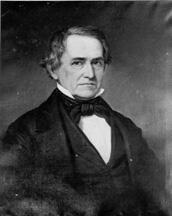
Here you will find contact information for Senator Robert Strange, including email address, phone number, and mailing address.
| Name | Robert Strange |
| Position | Senator |
| State | North Carolina |
| Party | Democratic |
| Status | Former Representative |
| Term Start | December 5, 1836 |
| Term End | November 16, 1840 |
| Terms Served | 2 |
| Born | September 20, 1796 |
| Gender | Male |
| Bioguide ID | S000992 |
About Senator Robert Strange
Robert Strange was an American politician and lawyer who represented North Carolina as a United States Senator from 1836 to 1840. Born on September 20, 1796, in Beaufort, North Carolina, he was the son of James Strange and Elizabeth (née Moore) Strange. During his youth, his family moved within the state, and he came of age in the early national period, a time of rapid political and territorial change in the United States. His early life in coastal and then inland North Carolina helped shape his familiarity with the state’s diverse economic and social interests, which he would later represent in public office.
Strange pursued a formal education that prepared him for a career in the law and public affairs. He attended New Bern Academy and later studied at Washington College (now Washington and Lee University) in Lexington, Virginia. After completing his studies, he read law and was admitted to the bar, beginning legal practice in Fayetteville, North Carolina. His legal career quickly established him as a prominent attorney in the region, and his skills in advocacy and knowledge of state law led naturally into public service at the state level.
Before entering the United States Senate, Strange built a substantial career in North Carolina politics and jurisprudence. He served as a member of the North Carolina House of Commons from 1821 to 1823 and again in 1826, representing Fayetteville and its surrounding area. In addition to his legislative work, he held judicial responsibilities; he was appointed a judge of the superior court of North Carolina, serving from 1827 to 1836. In this role, he traveled on the judicial circuit, presiding over a wide range of civil and criminal cases and gaining a reputation for legal acumen and careful deliberation.
Strange’s elevation to national office came in the mid-1830s, during a period of intense political realignment in the United States. A member of the Democratic Party, he was elected by the North Carolina legislature to the United States Senate to fill the vacancy created by the resignation of Senator Willie P. Mangum. He took his seat on December 5, 1836. Robert Strange served as a Senator from North Carolina in the United States Congress from 1836 to 1840, completing what is often described as two terms in office under the then-prevailing practice of legislative selection and partial terms. During his tenure, he aligned with the Democratic administrations of Andrew Jackson and Martin Van Buren and participated in debates over banking, internal improvements, and federal–state relations that defined the era.
Strange’s service in Congress occurred during a significant period in American history, marked by the aftermath of the Bank War, the Panic of 1837, and ongoing disputes over tariffs and states’ rights. As a member of the Senate, Robert Strange contributed to the legislative process and represented the interests of his North Carolina constituents, particularly those in the agrarian and commercial communities of his state. He served on various committees and took part in the democratic process at a time when the Senate was a central forum for contesting the scope of federal power and the direction of national economic policy. He resigned from the Senate on November 16, 1840, before the expiration of his full term, and returned to private life in North Carolina.
After leaving Congress, Strange resumed the practice of law in Fayetteville, where he continued to be an influential figure in legal and civic affairs. In addition to his professional work, he was active in literary and social circles and authored writings that reflected his interest in the history and culture of the South. His standing in the community remained high, and he was regarded as one of the leading public men of his generation in North Carolina, having served in both the state legislature and the federal Senate and having held a significant judicial post.
Robert Strange died on February 19, 1854, in Fayetteville, North Carolina. He was interred in the family burial ground near Fayetteville. His career spanned a formative period in both North Carolina and United States history, and his service as a Democratic U.S. senator, state legislator, and judge placed him at the center of many of the legal and political developments of the early nineteenth century. His name is distinct from several other historical figures named Robert Strange, including Robert Straunge (or Strange), an English politician who served as a Member of Parliament for Cirencester in 1614; Robert Strange, an MP for Bristol; Sir Robert Strange, an English engraver (1721–1792); Robert Strange, bishop of the Episcopal Diocese of East Carolina (1857–1914); and Robert Strange, an American actor (1881–1952).