Senator Robert Alphonso Taft
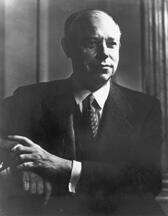
Here you will find contact information for Senator Robert Alphonso Taft, including email address, phone number, and mailing address.
| Name | Robert Alphonso Taft |
| Position | Senator |
| State | Ohio |
| Party | Republican |
| Status | Former Representative |
| Term Start | January 3, 1939 |
| Term End | December 31, 1953 |
| Terms Served | 3 |
| Born | September 8, 1889 |
| Gender | Male |
| Bioguide ID | T000009 |
About Senator Robert Alphonso Taft
Robert Alphonso Taft served as a Senator from Ohio in the United States Congress from 1939 to 1953. A member of the Republican Party, Robert Alphonso Taft contributed to the legislative process during 3 terms in office.
Robert Alphonso Taft’s service in Congress occurred during a significant period in American history. As a member of the Senate, Robert Alphonso Taft participated in the democratic process and represented the interests of constituents.
Robert Alphonso Taft Sr. (September 8, 1889 – July 31, 1953) was an American politician, lawyer, and scion of the Republican Party’s Taft family. Taft represented Ohio in the United States Senate, briefly served as Senate majority leader, and was a leader of the conservative coalition of Republicans and conservative Democrats who blocked expansion of the New Deal. Often referred to as “Mr. Republican”, he co-sponsored the Taft–Hartley Act of 1947, which banned closed shops, created the concept of right-to-work states, and regulated other labor practices. The elder son of William Howard Taft, the 27th president of the United States and 10th chief justice of the United States, Robert Taft was born in Cincinnati, Ohio. He pursued a legal career in Cincinnati after graduating from Harvard Law School in 1913. With his brother Charles Phelps Taft II, he co-founded the law partnership of Taft Stettinius & Hollister. Taft served in the Ohio House of Representatives from 1921 to 1931 and in the Ohio Senate from 1931 to 1933. Though he lost re-election in 1932, he remained a powerful force in state and local politics. After winning election to the Senate in 1938 over incumbent Democrat Robert J. Bulkley, Taft repeatedly sought the Republican presidential nomination, often battling for control of the party with the moderate faction of Republicans led by Thomas E. Dewey. He also emerged as a prominent non-interventionist and opposed U.S. involvement in World War II prior to the 1941 Japanese attack on Pearl Harbor. Taft’s non-interventionist stances damaged his 1940 candidacy, and the 1940 Republican National Convention nominated Wendell Willkie. Taft sought the presidency again in 1948, but he lost to Dewey at the 1948 Republican National Convention. He opposed the creation of NATO and criticized President Harry Truman’s handling of the Korean War. Taft again sought the presidential nomination a third time in 1952, and was widely viewed as the front-runner. However, Dewey and other moderates convinced General Dwight D. Eisenhower to enter the race, and Eisenhower narrowly prevailed at the 1952 Republican National Convention and went on to win the 1952 presidential election. Taft was elected Senate majority leader in 1953 but died of a cerebral hemorrhage while being treated for pancreatic cancer later that year. A 1957 Senate committee named Taft as one of America’s five greatest senators, along with Henry Clay, Daniel Webster, John C. Calhoun, and Robert M. La Follette Sr.—portraits of the “famous five” are displayed in the Senate Reception Room.