Representative Robert Ewing Thomason
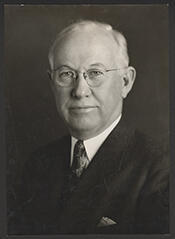
Here you will find contact information for Representative Robert Ewing Thomason, including email address, phone number, and mailing address.
| Name | Robert Ewing Thomason |
| Position | Representative |
| State | Texas |
| District | 16 |
| Party | Democratic |
| Status | Former Representative |
| Term Start | December 7, 1931 |
| Term End | January 3, 1949 |
| Terms Served | 9 |
| Born | May 30, 1879 |
| Gender | Male |
| Bioguide ID | T000189 |
About Representative Robert Ewing Thomason
Robert Ewing Thomason (May 30, 1879 – November 8, 1973) was an American politician and judge who served as a Democratic member of the United States House of Representatives from Texas and later as a United States district judge of the Western District of Texas. Over the course of his public career, he was a member and Speaker of the Texas House of Representatives, mayor of El Paso, representative for Texas’s 16th congressional district in the U.S. House, and a federal judge. His service in Congress, spanning nine terms from 1931 to 1949, occurred during a significant period in American history and reflected his long-standing commitment to representing the interests of his constituents and contributing to the legislative process.
Thomason was born in Shelbyville, Bedford County, Tennessee, on May 30, 1879. In 1880, when he was still an infant, he moved with his parents to Gainesville, Texas. He was educated in the public schools of Gainesville and pursued higher education at Southwestern University in Georgetown, Texas, where he received a Bachelor of Science degree in 1898. He then studied law at the University of Texas School of Law in Austin, earning a Bachelor of Laws degree in 1900. The following year, in 1901, he was admitted to the bar and commenced the practice of law in Gainesville.
Early in his legal career, Thomason served as prosecuting attorney of Cooke County, Texas, from 1902 to 1906. After completing his term as prosecuting attorney, he continued in private practice. Seeking broader opportunities, he later moved to El Paso, Texas, where he established himself in the local legal community. In El Paso he practiced law in partnership with Thomas Calloway Lea Jr., a prominent local attorney and future mayor, and later with J. G. McGrady and Eugene T. Edwards. His growing reputation as an attorney and civic leader in El Paso laid the groundwork for his entry into state and municipal politics.
Thomason was elected to the Texas House of Representatives, serving from 1917 to 1921. During this period he rose quickly in influence, and in 1920 he was chosen Speaker of the Texas House of Representatives, a position he held through 1921. As Speaker, he played a central role in managing legislative business and shaping the agenda of the Texas Legislature during the closing years of World War I and its immediate aftermath. After leaving the state legislature, he remained active in public affairs in El Paso and was elected mayor of El Paso, serving from 1927 to 1930. His mayoral tenure coincided with a period of growth and modernization for the city and helped cement his standing as a leading Democratic figure in West Texas.
In 1930, Thomason was elected as a Democrat to the 72nd United States Congress from Texas’s 16th congressional district. He took his seat in the U.S. House of Representatives on March 4, 1931. He went on to serve nine consecutive terms, remaining in the House until his resignation on July 31, 1947, to accept a federal judgeship. His congressional service thus extended through the Great Depression, the New Deal era, World War II, and the early postwar years. As a member of the House of Representatives, Thomason participated actively in the democratic process, representing the interests of his El Paso–area constituents and contributing to national legislation during a transformative period in American political and economic life.
Thomason’s long legislative career culminated in his appointment to the federal bench. On April 24, 1947, President Harry S. Truman nominated him to a seat on the United States District Court for the Western District of Texas, vacated by Judge Charles Albert Boynton. The United States Senate confirmed his nomination on June 3, 1947, and he received his commission on June 5, 1947. He resigned from Congress effective July 31, 1947, to assume his judicial duties. Thomason served as a United States district judge in El Paso for many years and took senior status on June 1, 1963, continuing to hear cases and perform judicial functions in senior status.
In addition to his public offices, Thomason was active in fraternal and civic organizations. He was a Freemason and belonged to El Paso Lodge No. 130, A.F. & A.M. He was also a member of the El Maida Shrine in El Paso and served as its Illustrious Potentate, reflecting his prominence in Masonic and Shrine activities in the region. His name became closely associated with public institutions in El Paso: the El Paso County Hospital District’s University Medical Center bore his name from 1963 until 2009, and in 2016 the United States courthouse in El Paso was renamed in his honor, recognizing his long service as a federal judge and his broader impact on the community.
Robert Ewing Thomason remained in El Paso during his years in senior judicial status and continued to be regarded as an influential figure in the city’s legal and civic life. He served in senior status in El Paso until his death there on November 8, 1973. He was interred in Restlawn Cemetery in El Paso, Texas. His career spanned more than seven decades of public service at the county, state, municipal, federal legislative, and federal judicial levels, marking him as a significant figure in the political and judicial history of Texas.