Delegate Robert A. Underwood
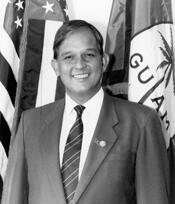
Here you will find contact information for Delegate Robert A. Underwood, including email address, phone number, and mailing address.
| Name | Robert A. Underwood |
| Position | Delegate |
| State | Guam |
| District | At-Large |
| Party | Democratic |
| Status | Former Representative |
| Term Start | January 5, 1993 |
| Term End | January 3, 2003 |
| Terms Served | 5 |
| Born | July 13, 1948 |
| Gender | Male |
| Bioguide ID | U000014 |
About Delegate Robert A. Underwood
Robert Anacletus Underwood (born July 13, 1948) is an American politician and educator who served as the delegate from Guam to the United States House of Representatives from January 3, 1993, to January 3, 2003, as a member of the Democratic Party. A prominent advocate for Guam and other U.S. insular areas, he contributed to the legislative process during five terms in office, later serving as president of the University of Guam from 2008 to 2018 and becoming a co-chair of the United States Institute of Peace China–Freely Associated States Senior Study Group.
Underwood was born in Tamuning, Guam, the son of John Joseph Underwood (1911–1986) and Esther Flores Taitano (1913–2005). His paternal grandparents were James Holland Underwood and Ana Pangelinan Martinez of Tamuning, and his maternal grandparents were Juan San Nicolas Taitano and Rosario Sablan Flores, who resided in Dededo, Guam. He grew up in a Chamorro family deeply rooted in the island’s communities, an experience that later informed his work on cultural preservation, language issues, and political status questions for Guam and other Pacific territories.
Underwood graduated from John F. Kennedy High School in Guam in 1965 and pursued higher education in California, attending California State University, Los Angeles, and the University of Southern California. After completing his studies, he became a high school teacher on the U.S. mainland, gaining classroom experience that would shape his later work in education policy and administration. Returning to Guam, he joined the University of Guam as an instructor in 1976 and served in that capacity until 1983. He then became director of bilingual education assistance for Micronesia, a position he held until 1988, focusing on language access and educational equity in the region. From 1988 to 1992 he served as Academic Vice President of the University of Guam, overseeing academic programs and helping to guide the institution’s development prior to his entry into national politics.
Underwood was elected as Guam’s nonvoting delegate to the U.S. House of Representatives in the 103rd Congress and was subsequently re-elected through the 107th Congress, serving from January 3, 1993, to January 3, 2003. During this significant period in American history, he participated actively in the democratic process and represented the interests of his constituents in Guam. He became a senior member of both the House Armed Services Committee and the House Resources Committee, where he emphasized the strategic importance of Guam and the broader Asia–Pacific region in U.S. national security policy. He played an active role in Department of Defense authorization bills and worked to enhance benefits for military personnel, particularly members of the National Guard and Reserve units, while also pressing for recognition of Guam’s contributions to U.S. defense.
Throughout his congressional service, Underwood sponsored and helped pass major legislation for Guam that resolved longstanding land disputes with the federal government, brought recognition to Guam’s World War II generation and their claims for war reparations, and enhanced local autonomy. He built a strong record of securing federal funds for military construction, assistance to the government of Guam to address in-migration from surrounding islands, and support for several education programs. He ensured Guam’s inclusion in key national measures such as the Telecommunications Act of 1996, which extended domestic telephone rates to the Pacific territories, the State Children’s Health Insurance Program, and the legislation establishing the Department of Homeland Security. He also advanced recognition of Guam’s unique people and culture by lifting the ban on betel nut (pugua) importation into the U.S. Customs Zone, securing Guam’s inclusion in the National World War II Memorial, promoting the creation of Chamorro Standard Time (CST), and facilitating Guam’s participation in national commemorative events.
As a member of both the Congressional Hispanic Caucus and the Congressional Asian Pacific American Caucus, Underwood spoke out for the protection of immigrant rights, expanded educational opportunities, and sensitivity to language and cultural issues. In the 106th Congress he served as chairman of the Congressional Asian Pacific American Caucus, where he led efforts to include Asian Pacific Americans in scholarship programs and was instrumental in the development of the White House Initiative on Asian Americans and Pacific Islanders. In that role he also spoke against racial profiling and worked to ensure that Pacific Islanders were recognized as a distinct demographic category in federal programs and data collection, thereby improving access to services and visibility for these communities.
After leaving Congress in 2003, Underwood sought to continue his public service through territorial office. He declared his candidacy for Governor of Guam in the 2002 gubernatorial election, running with Senator Thomas “Tom” Ada as his candidate for lieutenant governor. In the November 3, 2002, general election, the Underwood–Ada ticket was defeated by Republican candidate Felix Perez Camacho. Underwood again ran for governor in 2006 as the Democratic nominee, this time with Senator Frank Aguon as his running mate. He defeated former governor Carl Gutierrez and Senator Benjamin Cruz in the Democratic primary on September 2, 2006, but in the November 7, 2006, general election he was again defeated, as incumbent Governor Felix Perez Camacho and his new running mate, Lieutenant Governor–elect Dr. Michael Cruz, were re-elected with 50 percent of the vote to Underwood’s 48 percent.
In 2008, Underwood was selected to serve as the tenth president of the University of Guam, beginning a five-year term that was subsequently extended. He held the presidency from 2008 until his retirement in June 2018, during which time he worked to strengthen the university’s academic programs, regional partnerships, and role as a center for research and higher education in Micronesia. He was succeeded as president by Thomas W. Krise. Following his tenure at the university, Underwood continued to engage in policy and regional affairs, becoming a co-chair of the United States Institute of Peace China–Freely Associated States Senior Study Group, where he has contributed to analysis of strategic, political, and developmental issues affecting Pacific island nations and U.S. interests in the region.
Underwood remained active in electoral politics and public discourse into the 2020s. On June 30, 2020, he announced his candidacy for Guam’s delegate seat in the U.S. House of Representatives, challenging incumbent Michael San Nicolas. Due to the COVID-19 pandemic, Guam cancelled party primaries and all qualified candidates appeared on the November 3, 2020, general election ballot. In that three-way race, San Nicolas placed first ahead of Underwood and Republican territorial senator Wil Castro but did not secure an outright majority, triggering a runoff. In the November 17, 2020, runoff election, San Nicolas defeated Underwood, earning more than 59 percent of the vote. Outside of elective office, Underwood has continued to contribute to public debate as a regular opinion writer for the Pacific Daily News.
In his personal life, Underwood married Dr. Nerissa Bretania Underwood, a former superintendent of the Guam Department of Education and a former senator in the Guam Legislature, in an intimate morning ceremony at the Superior Court of Guam in 2009. His long career as an educator, legislator, university president, and policy advocate has made him a central figure in Guam’s modern political and educational history, particularly in advancing the interests of Asian Americans and Pacific Islanders and promoting greater recognition of Guam within the broader American polity.