Senator Robert William Upton
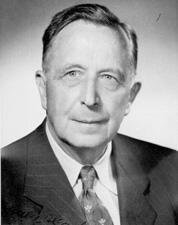
Here you will find contact information for Senator Robert William Upton, including email address, phone number, and mailing address.
| Name | Robert William Upton |
| Position | Senator |
| State | New Hampshire |
| Party | Republican |
| Status | Former Representative |
| Term Start | August 14, 1953 |
| Term End | January 3, 1955 |
| Terms Served | 1 |
| Born | February 3, 1884 |
| Gender | Male |
| Bioguide ID | U000032 |
About Senator Robert William Upton
Robert William Upton (February 3, 1884 – April 28, 1972) was a United States senator from New Hampshire and a long-serving figure in that state’s legal and political life. A member of the Republican Party, he represented New Hampshire in the U.S. Senate from 1953 to 1955, contributing to the legislative process during one term in office. His career spanned private legal practice, state legislative service, constitutional reform efforts, and diplomatic and quasi-judicial assignments abroad.
Upton was born in Boston, Massachusetts, on February 3, 1884. He attended the public schools in Boston and pursued legal studies at Boston University Law School. He graduated from Boston University Law School in 1907 and, in the same year, was admitted to the bars of both Massachusetts and New Hampshire. Shortly thereafter, he moved to New Hampshire and commenced the practice of law in Concord, which would remain his professional and political base for the rest of his life.
Building on his early legal career, Upton entered public service in New Hampshire soon after his admission to the bar. He was elected to the New Hampshire House of Representatives in 1911, marking his first formal role in elective office. Over the following decades, he became deeply involved in the state’s constitutional and legal affairs. He served as a delegate to the New Hampshire State Constitutional Conventions of 1918, 1930, 1938, and 1948, reflecting his sustained influence on the state’s fundamental law. At the 1948 convention he was chosen president, underscoring the respect he commanded among his peers. In 1940, he also served as president of the New Hampshire Bar Association, further solidifying his standing as a leading member of the state’s legal community.
Upton’s long record of legal and civic engagement in New Hampshire led to his appointment to the United States Senate. On August 14, 1953, he was appointed as a Republican to the U.S. Senate to fill the vacancy caused by the death of Senator Charles W. Tobey. He served in the Senate from August 14, 1953, to November 7, 1954, representing New Hampshire during a significant period in American history marked by the early Cold War and domestic debates over national security and economic policy. As a member of the Senate, Robert William Upton participated in the democratic process and represented the interests of his constituents, contributing to the legislative work of the 83rd Congress. He sought to continue in the office but was an unsuccessful candidate for the Republican nomination to fill the vacancy on a permanent basis.
After leaving the Senate, Upton resumed the practice of law in Concord. His expertise and reputation soon led to international responsibilities. In 1956 he served as a member of the Mixed Board, Clemency and Parole, in Bonn, Germany, a body associated with the postwar administration of justice and clemency matters in the Federal Republic of Germany. That same year he was appointed special ambassador to Liberia, reflecting the confidence placed in his judgment and diplomatic abilities during a period when the United States was expanding its engagement with African nations.
Upton continued his legal work in New Hampshire until his retirement from the practice of law in 1970. He remained in Concord during his later years. Robert William Upton died in Concord, New Hampshire, on April 28, 1972. He was interred in Blossom Hill Cemetery in Concord, closing a career that had encompassed state legislative service, leadership in constitutional conventions and bar associations, a brief but notable tenure in the United States Senate, and service in international and diplomatic roles.