Representative Robert William Wilcox
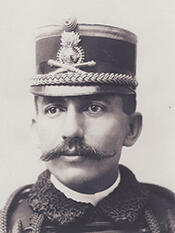
Here you will find contact information for Representative Robert William Wilcox, including email address, phone number, and mailing address.
| Name | Robert William Wilcox |
| Position | Representative |
| State | Hawaii |
| District | -1 |
| Party | Unknown |
| Status | Former Representative |
| Term Start | December 4, 1899 |
| Term End | March 3, 1903 |
| Terms Served | 2 |
| Born | February 15, 1855 |
| Gender | Male |
| Bioguide ID | W000459 |
About Representative Robert William Wilcox
Robert William Kalanihiapo Wilcox (February 15, 1855 – October 23, 1903), nicknamed the Iron Duke of Hawaiʻi, was a Hawaiian revolutionary soldier, French-trained military officer, spy, and politician who led uprisings against both the government of the Hawaiian Kingdom under King David Kalākaua and the Republic of Hawaii under President Sanford B. Dole, events now known as the Wilcox rebellions. He later became the first delegate to the United States Congress for the Territory of Hawaii, serving as a Representative from Hawaii from 1899 to 1903 and contributing to the legislative process during two terms in office. His service in Congress occurred during a significant period in American history, as the United States consolidated its authority over newly acquired overseas territories and as Hawaiʻi transitioned from an independent kingdom to an American territory.
Wilcox was born on February 15, 1855, on the island of Maui. His father, Captain William Slocum Wilcox (1814–1910), was an American from Newport, Rhode Island, and his mother, Kalua of Maui, was Native Hawaiian, the daughter of Makole and Haupa. Through his maternal grandfather Makole, Wilcox was a great-great-great-grandson of the late seventeenth-century Hawaiian king Keaweʻīkekahialiʻiokamoku, and through his grandmother Haupa he was descended from Umi-a-Liloa of Maui (distinct from the famous ruler of Hawaiʻi Island) and Lonomakaihonua. These chiefly lineages connected him to the traditional aliʻi (nobility) of Hawaiʻi and helped shape his later political standing and identification with Native Hawaiian interests.
Wilcox received his early education at the Haleakala Boarding School in Makawao on Maui. After completing his studies there, he became a teacher at a country school on Maui, gaining early experience in public service and leadership. In 1880, he entered political life when he was elected to the royal legislature in Honolulu, on the island of Oʻahu, representing the citizens of Wailuku and neighboring communities on Maui. His legislative service coincided with a period of mounting political tension in the Hawaiian Kingdom, as foreign economic interests and reformist political factions pressed for constitutional changes that would limit the authority of the monarch and restrict the franchise.
In 1881, King David Kalākaua selected Wilcox and two other part-Hawaiian young men to study at the Royal Military Academy in Turin, in the Kingdom of Italy, under the kingdom’s Education of Hawaiian Youths Abroad program. Wilcox underwent formal military training there and, by the time he completed his course of study in 1885, he had achieved the rank of sublieutenant of artillery. Impressed by his abilities, Italian officials sent him on to the Royal Application School for Engineer and Artillery Officers for advanced training. His education in Italy gave him professional military skills and exposure to European political and military thought, experience that would later inform his leadership in armed uprisings in Hawaiʻi. During this period he married Baronessa Gina Sobrero, eldest daughter of Baron Lorenzo Sobrero of Piedmont and Princess Vittoria Colonna di Stigliano of Naples, thereby briefly linking him to European nobility. Their daughter died shortly after the couple separated.
The political landscape of Hawaiʻi changed dramatically in the late 1880s. In 1887 the Reform Party, which later evolved into the Hawaii Republican Party, forced King Kalākaua to accept the so‑called Bayonet Constitution, which stripped much of the monarch’s authority and imposed income and property qualifications that sharply limited the electorate to wealthier Native Hawaiians, Americans, and Europeans. The Reform Party government also ended costly programs such as the overseas military training that had sent Wilcox to Italy. On August 29, 1887, he received orders to return home, and he arrived back in Hawaiʻi in October with his wife Gina Sobrero. He briefly worked as a surveyor but lost confidence that Kalākaua could protect the interests of the Hawaiian people. With Charles Wilson and Sam Nowlein, he planned a coup d’état to replace Kalākaua with his sister, Princess Liliʻuokalani, but the plot was never carried out. On February 11, 1888, Wilcox left Hawaiʻi intending to return to Italy with his wife; instead, the couple settled in San Francisco, California, where he again worked as a surveyor and Gina supported the family by teaching French and Italian. When he decided to return to Hawaiʻi in the spring of 1889, Gina refused to accompany him and took their daughter back to Italy.
Upon his return to Hawaiʻi, Wilcox emerged as a central figure in armed resistance to the new political order. On July 30, 1889, he led an armed attempt to compel King Kalākaua to sign a new constitution to replace the 1887 document. Anticipating the plot, Kalākaua stayed away from ʻIolani Palace, fearing that the rebellion might depose him in favor of Liliʻuokalani. Wilcox and his followers were confronted by the Honolulu Rifles militia, and after a pitched battle he surrendered. Tried for treason in October 1889 before Judge Albert Francis Judd, he was acquitted by a jury, and his willingness to challenge the conservative Reform Party earned him broad popular respect. He helped form the National Reform Party, which sought to restore greater authority to the monarch, and he was again elected to the royal legislature, serving from 1890 to 1893 as a representative for the island of Oʻahu. During this period, however, the conservative elements of the Reform Party, backed by the economic power of the “Big Five” industrial corporations, retained effective control of government.
The death of King Kalākaua in 1891 and the accession of Queen Liliʻuokalani marked another turning point. Wilcox was disappointed that the new queen did not include him in her cabinet and in November 1891 he organized the National Liberal Party. While he did not explicitly call for ending the monarchy, the party advocated restoring power to the people, even if that required a republican form of government. After the restricted elections of February 1892, in which only about 14,000 people could vote, Wilcox and others pressed for constitutional reform. He and his associates were arrested on May 20, 1892, on charges of conspiring to establish a republic, but the charges were dropped a month later. Back in the legislature, he supported measures to strip power from the cabinet, and by August 1892 the ministers had resigned. From September 1892 to April 1893 he published and edited a newspaper, The Liberal, writing the Hawaiian-language section while others handled the English section. The paper criticized the royal family’s perceived extravagance amid economic hardship and advocated modernization and, at times, foreign protection. Although The Liberal initially attacked the queen, by late 1892 it expressed support for her, and Wilcox participated in the rapid cabinet changes that preceded the overthrow of the monarchy in January 1893. When the Committee of Safety, backed by the Honolulu Rifles, moved to depose Liliʻuokalani on January 17, 1893, the queen called upon Wilcox’s artillery training and placed him in command of the field pieces of the Royal Guard, but she ultimately surrendered without resistance to avoid bloodshed.
Following the overthrow, The Liberal resumed publication on January 25, 1893, with its English-language editor Clarence Ashford supporting the Provisional Government and criticizing the deposed queen. The paper advocated annexation to the United States, even suggesting union with the state of California, while protesting the absence of Native Hawaiian leadership in the new regime. President Grover Cleveland’s opposition to immediate annexation and the economic interests of the Big Five, who preferred territorial status to avoid U.S. labor laws, stalled the annexation effort. Wilcox’s attempts to secure a position in the Provisional Government were unsuccessful, and The Liberal ceased publication on April 15, 1893, amid rumors that he might proclaim a liberal republic. On July 4, 1894, the leaders of the Provisional Government declared the Republic of Hawaiʻi, and royalists soon began planning a counterrevolution to restore Liliʻuokalani. Sam Nowlein, Charles T. Gulick, and William H. Rickard recruited Wilcox to serve as military commander; after initial hesitation, frustrated both by the republic and by the lack of progress toward annexation, he agreed.
In early January 1895, Wilcox led royalist forces in an armed uprising against the Republic of Hawaiʻi. Fighting broke out at the base of Diamond Head on January 6 and 7, 1895, and in Mōʻiliʻili on January 7, with further clashes in Mānoa on January 9. Casualties were relatively light, though C. L. Carter, a member of a prominent island family, was killed. The royalist forces were quickly defeated, and Wilcox went into hiding before being captured. By January 16, 1895, most royalist leaders had been arrested, and Liliʻuokalani was taken into custody at Washington Place and imprisoned in ʻIolani Palace. Wilcox was tried for treason, convicted on February 23, 1895, and sentenced to death along with five other leaders. Some of the condemned were freed after testifying against others, and Wilcox’s sentence was commuted to thirty‑five years in prison. On January 1, 1898, Sanford B. Dole, president of the republic, pardoned him, having earlier pressured Liliʻuokalani to abdicate in exchange for clemency for the conspirators.
The political context shifted again when the United States annexed Hawaiʻi by the Newlands Resolution on July 4, 1898, and Dole became provisional governor of the new American possession. The Hawaiian Organic Act of April 30, 1900, organized the Territory of Hawaii and created the office of delegate to the United States Congress. Wilcox helped transform previously anti‑annexation Native Hawaiian political clubs into the Hawaiian Independent Party, later known as the Home Rule Party of Hawaii, campaigning under the slogan “Equal rights for the People.” In 1900 he converted to Roman Catholicism and was baptized, a step that coincided with his emergence as a territorial political leader. During the campaign for delegate, opponents accused him of bigamy, arguing that his first marriage in Italy had been annulled only by the Catholic Church and not under civil law. The Republican Party of Hawaii nominated wealthy rancher and former cabinet minister Samuel Parker, while the Democratic Party nominated Prince David Kawānanakoa. Wilcox, endorsed by his Home Rule organization, won the election and became the first delegate from the Territory of Hawaii to the United States Congress.
As a member of the House of Representatives, Robert William Wilcox served in the 57th Congress from November 6, 1900, to March 3, 1903, representing the interests of the people of Hawaiʻi during a formative period in the territory’s relationship with the United States. In the Congressional Directory, when asked to provide a brief autobiography, he departed from the usual neutral style and described himself as “an indefatigable and fearless leader for his countrymen,” characterizing the territorial government as “the Dole oligarchy.” Later official versions of his biography removed these editorial comments. English was his second language, and his populist rhetoric and strong advocacy for Native Hawaiian rights left him somewhat isolated in Washington, where politics proceeded through gradual negotiation and party discipline. His tenure was further clouded by accusations that he did not fully support the United States effort in the Philippine–American War. Nonetheless, he participated in the democratic process at the national level and sought to use his position to draw attention to the needs and grievances of Native Hawaiians and other residents of the new territory. Although he was also endorsed by the Democratic Party in the 1902 election, he was defeated for reelection by Prince Jonah Kūhiō Kalanianaʻole of the Republican Party.
In his personal life, Wilcox married two women of noble background. His first wife was Baronessa Gina Sobrero of Italy, with whom he had a daughter who died shortly after their separation. On August 20, 1896, he married Theresa Owana Kaʻohelelani Laʻanui (1860–1944), a Hawaiian princess descended from a brother of King Kamehameha I. They had three children: a son, Robert Kalanikupuapaikalaninui Keōua Wilcox (1893–1934), and two daughters, Virginia Kahoa Kaʻahumanu Kaihikapumahana (1895–1954) and Elizabeth Kaʻakaualaninui, the latter of whom died young in 1898. His family connections to both European aristocracy and Hawaiian aliʻi reinforced his complex identity as a bridge between cultures during a time of profound political transformation in Hawaiʻi.
After leaving Congress in 1903, Wilcox remained active in territorial politics. That same year he ran for the office of high sheriff of Honolulu. His health, however, had been in decline for some time. While delivering a campaign speech he suffered a hemorrhage and died a few days later, on October 23, 1903, in Honolulu. He was buried in the Honolulu Catholic Cemetery, reflecting his later-life conversion to Roman Catholicism. His memory continued to be honored in Hawaiʻi; in 1989, at the centennial of the 1889 Wilcox rebellion, a downtown Honolulu park was named Wilcox Park in his honor, and in 1993 a bronze statue of him was unveiled there on the Fort Street Mall (21°18′32″N 157°51′42″W). The inscription on the statue notes that he was regarded by many of his countrymen as a national hero, commemorating his role as a revolutionary leader, legislator, and the first congressional delegate of the Territory of Hawaii.