Senator Robert Wilson
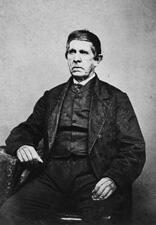
Here you will find contact information for Senator Robert Wilson, including email address, phone number, and mailing address.
| Name | Robert Wilson |
| Position | Senator |
| State | Missouri |
| Party | Unionist |
| Status | Former Representative |
| Term Start | January 1, 1862 |
| Term End | December 31, 1863 |
| Terms Served | 1 |
| Gender | Male |
| Bioguide ID | W000609 |
About Senator Robert Wilson
Robert Wilson, a Unionist politician who represented Missouri in the United States Senate during the Civil War, was born on November 8, 1803, in Staunton, Augusta County, Virginia. He was part of a generation of American public figures whose careers bridged the early national period and the sectional crisis that culminated in the 1860s. In his youth, Wilson moved west as the frontier advanced, eventually settling in the region that would become the state of Missouri. This westward relocation placed him in a border state whose strategic and political importance would later prove central to the Union war effort and to his own public life.
Wilson’s formal education followed the pattern of many early nineteenth‑century American lawyers and politicians. He received a basic education in Virginia and, after his move west, read law in the customary manner of the period rather than through attendance at a formal law school. By the late 1820s and early 1830s, he had been admitted to the bar and established himself in legal practice in Missouri. His legal training and growing familiarity with local affairs prepared him for a broader role in public service, as Missouri’s political institutions matured in the decades after statehood in 1821.
Before his service in the United States Senate, Wilson built a substantial career in Missouri politics and public life. He became active in state affairs and held various positions of trust, gaining a reputation as a capable lawyer and legislator. Over time, he was drawn into the complex political alignments of a slaveholding border state, where questions of Union, states’ rights, and slavery were increasingly contested. His experience in Missouri’s legal and political circles, together with his moderate Unionist convictions, positioned him as a figure acceptable to a broad spectrum of opinion at a moment when the state was deeply divided over secession and national loyalty.
Wilson’s national career began during the most turbulent period in American history. A member of the Unionist Party, he entered the United States Senate from Missouri in the midst of the Civil War. He was appointed to the Senate to fill a vacancy and served from January 17, 1862, to November 13, 1863, completing a single term in office. During these years, the Unionist Party in Missouri represented those who opposed secession while often holding a range of views on slavery and reconstruction, and Wilson’s affiliation with that party reflected his commitment to preserving the Union in a state where loyalties were sharply contested.
Wilson’s service in Congress occurred during a critical phase of the conflict, encompassing major campaigns in both the Eastern and Western theaters and intense debates in Washington over war aims, civil liberties, and the future of slavery. As a United States Senator, he participated in the legislative process at a time when Congress was enacting measures to finance the war, expand the Union Army, and redefine the federal government’s relationship to the states. Representing Missouri, he took part in the democratic process under wartime conditions, working within the Unionist framework to ensure that his state’s interests and its continued alignment with the federal government were maintained. His tenure coincided with the broader national shift toward emancipation, including the issuance of the Emancipation Proclamation on January 1, 1863, and the early congressional debates that would lead to the Thirteenth Amendment.
After leaving the Senate in November 1863, Wilson returned to Missouri and resumed a more private life, withdrawing from the front rank of national politics as the war moved toward its conclusion. He remained identified with the Unionist cause and with the generation of Missouri leaders who had kept the state from formally joining the Confederacy. In his later years, he continued to be regarded as a figure of some standing in Missouri’s legal and political communities, a representative of the state’s complex Civil War legacy.
Robert Wilson died on May 10, 1870, in Marshall, Saline County, Missouri. His life spanned from the early republic through the Civil War era, and his brief but significant service in the United States Senate placed him at the center of national decision‑making during one of the country’s most perilous crises. As a Unionist Senator from Missouri from 1861 to 1863, he contributed to the legislative process in a period when the survival of the Union, the conduct of the war, and the future of slavery were all at issue, and he is remembered in the historical record as one of the several nineteenth‑century American politicians named Robert Wilson who played roles in state and national governance.