Representative Robert E. Wise Jr.
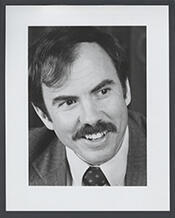
Here you will find contact information for Representative Robert E. Wise Jr., including email address, phone number, and mailing address.
| Name | Robert E. Wise Jr. |
| Position | Representative |
| State | West Virginia |
| District | 2 |
| Party | Democratic |
| Status | Former Representative |
| Term Start | January 3, 1983 |
| Term End | January 3, 2001 |
| Terms Served | 9 |
| Born | January 6, 1948 |
| Gender | Male |
| Bioguide ID | W000654 |
About Representative Robert E. Wise Jr.
Robert Ellsworth Wise Jr. (born January 6, 1948) is an American politician who served as the 33rd governor of West Virginia from 2001 to 2005 and as a Representative from West Virginia in the United States Congress from 1983 to 2001. A member of the Democratic Party, Wise served nine consecutive terms in the U.S. House of Representatives, contributing to the legislative process during a significant period in American history, and later became a prominent national advocate for education reform and cancer prevention.
Wise was born on January 6, 1948, and was raised in the Kanawha Valley of Kanawha County, West Virginia, with his two sisters. His father worked in insurance for the McDonough Caperton Group for thirty years. Wise attended George Washington High School in Charleston, where he ran track and field—competing in the half-mile and mile—and was elected vice president of the student body. His early success in student government presaged a political career in which, for many years, he was noted for having won every election he entered.
In 1966 Wise enrolled at Duke University, where he studied political science and graduated in 1970 with a Bachelor of Arts degree. After leaving Duke, he applied to law school and worked as an aide in a California mental health facility while awaiting admission. He was accepted to the University of Houston for legal studies and later transferred to Tulane University School of Law in New Orleans. While at Tulane, he worked night shifts waiting tables to support himself and completed his Juris Doctor in 1975. Following his graduation, Wise returned to West Virginia and opened his first law practice in Charleston. As a young attorney, he helped create West Virginians for a Fair and Equitable Assessment of Taxes (FEAT), a group focused on property tax reform. He also advocated for coal miners seeking workers’ compensation and participated in community renewal efforts for victims of the 1972 Buffalo Creek disaster, and in 1978 he again assisted with redevelopment issues for those affected by the Mingo County floods.
Wise began his formal political career in 1980 when he ran for public office in Kanawha County, challenging State Senate President William Brotherton in the Democratic primary. With the endorsement of the West Virginia Education Association and other labor organizations, he defeated Brotherton in an upset primary victory and went on to win the general election in November, gaining a seat in the West Virginia Senate. In these early years on the political scene, he developed a reputation for an energetic campaign style, particularly at rallies, and was dubbed “the Boy Wonder of West Virginia politics” by the Charleston Daily Mail in 1982.
In 1982 Wise sought national office, running for the United States House of Representatives from West Virginia’s Second Congressional District, a large district stretching from Harpers Ferry to the Ohio River and considered one of the largest districts east of the Mississippi River. Emerging from a highly competitive Democratic primary, he went on to defeat incumbent Republican Representative Mick Staton with 58 percent of the vote. Wise’s victory marked the beginning of an 18-year tenure in Congress from 1983 to 2001, during which he was reelected eight times, serving nine terms in total. He ran unopposed in 1990 and recorded majorities as high as 74 percent in 1988 against Republican Paul Hart and 64 percent in 1994 against Republican Samuel Cravotta. During his time in the House of Representatives, Wise served as a regional whip, at-large whip, and parliamentarian within the Democratic caucus, and was a member of the Democratic Party leadership team. He served on the House Committee on Education and Labor and the Committee on Transportation and Infrastructure, positions that enabled him to secure federal aid for road and infrastructure projects in West Virginia. Among his notable legislative achievements were work on Chemical Right to Know legislation, the Wise Amendment to the Clean Air Act, and Federal Mental Health Parity legislation. His tireless advocacy for his district and state prompted fellow West Virginian Senator Robert C. Byrd, then one of the longest-serving members of Congress, to describe him as “a steam engine with britches.”
After 18 years in Congress, Wise left his secure House seat in 2000 to run for governor of West Virginia. He won the Democratic primary for governor with approximately 63 percent of the vote and then challenged incumbent Republican Governor Cecil H. Underwood in the general election. Centering his campaign on the economy, education, health care, and the energy industry, Wise won the November 2000 election with just over 50 percent of the vote to Underwood’s 47 percent. He was sworn in as governor on January 15, 2001, by Circuit Judge Dan O’Hanlon. Early in his term, Wise confronted severe flooding across southern West Virginia, and his handling of the disaster response earned him broad latitude from the state legislature to pursue his policy agenda, particularly in education and health care.
As governor, Wise advanced a series of education initiatives, most prominently the PROMISE (Providing Real Opportunities for Maximizing Instate Student Excellence) scholarship program, which was funded through video lottery revenue and modeled in part on Georgia’s HOPE scholarship. The first PROMISE scholarships were awarded in 2002 and provided full tuition for students with at least a 3.0 high school grade point average and a combined SAT score of at least 1,000 to attend a state college, university, or in-state private college. By requiring recipients to complete at least 30 credits per year to maintain eligibility, the program helped increase four-year graduation rates by about 7 percent and reduced the proportion of West Virginia students leaving the state for postsecondary education to the lowest levels since the mid-1990s. Over time, as state budget pressures mounted, the scholarship’s coverage was reduced from full tuition to a fixed amount—$4,750 in a state where average tuition rose above $6,000—though it continued to support approximately 10,000 students. Wise was also the first governor to propose full funding for the state’s Higher Education Grant Program, established the Governor’s Hotline for Safer Schools, and advanced legislation to expand pre-kindergarten programs to cover all four-year-olds in West Virginia.
Wise’s administration also focused on health care and economic development. He expanded enrollment in the federal Children’s Health Insurance Program (CHIP), making health insurance available to children in families earning less than $34,000 a year. His term was marked by persistent budget challenges related to road construction, school funding, the state operating budget, and teacher salaries. When a national recession struck midway through his term, Wise implemented spending cuts of about 10 percent to address revenue shortfalls while seeking to maintain infrastructure improvements and reduce long-term state debt. To attract new businesses and stimulate economic growth, his administration used an extensive package of tax incentives and infrastructure assistance, including $215 million in state grants intended to leverage approximately $1 billion in private investment in projects such as the Blanchette Rockefeller Neurosciences Institute, Cabela’s retail development, the Marshall University Biotechnology Development Center, and the West Virginia High Technology Consortium. Wise also addressed issues related to mountaintop removal coal mining practices and rising medical malpractice insurance costs. On the regional and national stage, he was elected chairman of the Southern Governors’ Association in December 2002, serving through the following year, during which Charleston hosted the association’s annual meeting for the first time in four decades. He also chaired the National Governors Association Committee on Natural Resources and the Southern States Energy Board.
In 2003 Wise publicly acknowledged an extramarital affair with a married state employee, Angela Mascia-Frye, after her husband, Philip Frye, filed for divorce on April 7, 2003, citing the relationship. Wise announced that he would not seek reelection in 2004 and issued a public apology, stating that he “apologize[d] deeply to the people of our state” and that in his private life he had “let many people down.” Before the scandal became public, Secretary of State Joe Manchin had already declared his intention to challenge Wise in the Democratic primary; Manchin subsequently won both the primary and the general election to succeed him. The episode drew national attention, including a satirical segment on “The Daily Show” in August 2003 in which Philip Frye, in an interview with correspondent Rob Corddry, announced a quixotic gubernatorial candidacy aimed at being a nuisance to Wise.
Following the conclusion of his gubernatorial term in 2005, Wise became president of the Alliance for Excellent Education, a nonprofit advocacy organization founded in 1999 by Gerard and Lilo Leeds and based in Washington, D.C. The Alliance is dedicated to ensuring that all students, particularly those who are traditionally underserved, graduate from high school prepared for success in college, careers, and civic life. In this role, Wise emerged as a leading national voice on high school reform, digital learning, and education policy. From 2009 to 2015 he served as chairman of the board of the National Board for Professional Teaching Standards (NBPTS), an organization created in response to the 1983 report “A Nation at Risk” to establish rigorous professional standards for teachers. During his tenure, research released in 2012 by the Harvard University Center for Education Policy Research confirmed that National Board–certified teachers outperformed non-certified teachers in elementary mathematics and English language arts.
Wise’s post-gubernatorial career has included extensive advisory and leadership work in education and public policy. He has served in an advisory capacity to the U.S. Department of Education, the White House, the U.S. Congress, and the National High School Center. In 2010, together with former Florida Governor Jeb Bush, he co-founded the Digital Learning Council, a national group of education leaders that developed the report “10 Elements of High Quality Digital Learning,” outlining principles for effective use of technology in education. In recognition of his influence in the nonprofit sector, he was named to the NonProfit Times “Power & Influence Top 50” list in 2011. He has also served on the Council for the Accreditation of Educator Preparation and Performance Reporting, which develops accreditation standards for teacher preparation programs; the Gordon Commission, a body of experts examining the future of educational assessment; and the Business Roundtable’s Springboard Project, which makes policy recommendations for equipping Americans with skills needed in the modern workforce. His contributions have been recognized with numerous honors, including the National Association of State Boards of Education’s Friend of Education Award in 2011, induction into Marshall University’s June Harless Hall of Fame the same year for his role in establishing the PROMISE scholarship, the Charles W. Eliot Award from the New England Association of Schools and Colleges in 2012 for his education policy initiatives, and the Corporation for Public Broadcasting’s Thought Leader Award in 2013 for affirming the essential role of public media in education, journalism, and the arts.
Wise has also been active in national efforts to combat cancer, informed in part by his own experience as a cancer survivor. Diagnosed with prostate cancer in 1999, he underwent surgery and subsequently became an outspoken advocate for early detection and preventive care. In 2007 members of the American Cancer Society honored him with a ribbon recognizing both his personal fight for survival and his advocacy for increasing outdated tobacco taxes. On that occasion, he urged greater use of basic screening procedures, remarking on the many excuses people make for avoiding them and insisting “there is really no excuse.” Wise serves as co-chair, along with Duke University basketball coach Mike Krzyzewski, of the national board of directors of C-Change, an organization that brings together leaders from the private, public, and nonprofit sectors to coordinate efforts to eliminate cancer. C-Change’s 22-member board operates in a town hall–style format, convening several times a year to address cancer-related issues. Wise also serves on the board of advisors for the Moffitt Cancer Center.