Senator Robert Enoch Withers
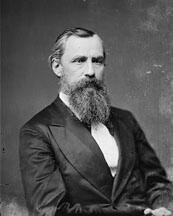
Here you will find contact information for Senator Robert Enoch Withers, including email address, phone number, and mailing address.
| Name | Robert Enoch Withers |
| Position | Senator |
| State | Virginia |
| Party | Democratic |
| Status | Former Representative |
| Term Start | December 6, 1875 |
| Term End | March 3, 1881 |
| Terms Served | 1 |
| Born | September 18, 1821 |
| Gender | Male |
| Bioguide ID | W000659 |
About Senator Robert Enoch Withers
Robert Enoch Withers (September 18, 1821 – September 21, 1907) was an American physician, Confederate military officer, newspaperman, politician, diplomat, and Freemason who served as Lieutenant Governor of Virginia, as a United States Senator from Virginia from 1875 to 1881, and as United States consul in British Hong Kong. A member of the Democratic Party, he represented Virginia in the Senate for one term and contributed to the legislative process during a significant period in American history, participating in the democratic process and representing the interests of his constituents.
Withers was born near Lynchburg, Virginia, to Dr. Robert Walter Withers and Susan Dabney Alexander. He was the second child and oldest son in a family of eleven children. He was educated in private schools before entering the University of Virginia, where he pursued medical studies. While at the university he was inducted into the Freemasons, an affiliation that became a defining feature of his life; he remained active in the fraternity throughout his career and emerged as a leader in the Knights Templar branch of Freemasonry. He graduated from the medical department of the University of Virginia in 1841 and soon thereafter commenced the practice of medicine in Campbell County, Virginia.
In the antebellum period, Withers established himself as a physician and community figure. He practiced medicine in Campbell County for a number of years before relocating in 1858 to Danville, Virginia, where he continued his medical career. His move to Danville placed him in a growing commercial and transportation center in Southside Virginia, a region that would later become strategically important during the Civil War. His professional training, civic engagement, and Masonic leadership helped position him for the military and political responsibilities he would assume in the 1860s and afterward.
At the outbreak of the American Civil War, Withers entered the Confederate States Army in early 1861 as major of the 18th Virginia Infantry Regiment. He was subsequently promoted to colonel and commanded the regiment in the Army of Northern Virginia. During the Peninsula Campaign he was seriously wounded while leading a charge at the Battle of Gaines’ Mill. After recovering from his wounds, he was assigned to administrative duty and placed in charge of the Confederate prison post at Danville, where a complex of six former tobacco warehouses housed up to 5,000 Union prisoners of war. He oversaw this prison post until the end of the conflict and also served as provost marshal of Danville. In the closing days of the war, Withers played a key role in preventing the destruction of Danville’s bridges, rail facilities, and other infrastructure by retreating Confederate forces, thereby preserving much of the town’s physical plant until the arrival of Federal troops.
Following the Confederacy’s surrender, Withers returned to civilian life and resumed his involvement in Virginia’s public affairs. In 1866 he moved back to Lynchburg and founded the Lynchburg News, a daily newspaper devoted to the interests of the Conservative Party, which opposed Radical Reconstruction policies and sought to restore conservative Democratic control in the state. His prominence in Conservative ranks led to his nomination for Governor of Virginia, though he ultimately withdrew from the race. Remaining active in Democratic politics, he served as a presidential elector on the Democratic ticket in 1872. In 1873 he was elected the eleventh Lieutenant Governor of Virginia, a post in which he served during the administration of Governor James L. Kemper and helped guide the state through the later years of Reconstruction and the reestablishment of Democratic dominance.
Withers was elected as a Democrat to the United States Senate and served one full term from March 4, 1875, to March 4, 1881. In national politics he was identified with the classically liberal “Bourbon” wing of the Democratic Party, which favored limited government, fiscal conservatism, and the gold standard, and he aligned himself with the policies and outlook later associated with President Grover Cleveland. During the 46th Congress he chaired the Senate Committee on Pensions, where he played a role in shaping legislation affecting veterans’ benefits and related matters. His Senate service coincided with the end of Reconstruction, the contested election of 1876, and the early phases of the Gilded Age. Withers sought reelection in 1881 but was defeated by William Mahone of the Readjuster Party, a biracial coalition in Virginia that advocated the readjustment of the state’s prewar debt and challenged the power of the Conservative and Bourbon Democrats. In 1877, during his Senate tenure, he was appointed to the Board of Regents of the Smithsonian Institution, reflecting his standing in national public life.
After leaving the Senate, Withers continued his public service in the diplomatic corps. President Grover Cleveland appointed him United States consul to British Hong Kong, a key commercial and strategic outpost in East Asia. He served in that capacity from 1885 to 1889, overseeing American consular interests in a major international port during a period of expanding U.S. commercial engagement in the Pacific. He resigned the post in 1889 and returned to the United States, retiring to Wytheville, Virginia. In retirement he devoted time to writing and to Masonic and community activities. He authored an autobiography, “Memoirs of an Octogenarian,” which provides an extended account of his life, from antebellum Virginia through the Civil War and Reconstruction to the late nineteenth century. His extensive collection of personal papers, including correspondence and manuscripts, is preserved at the Kegley Library of Wytheville Community College.
Withers’s personal life was closely intertwined with prominent Virginia and Southern families. In 1846 he married Mary Virginia Royall, with whom he had eight children. One of their daughters, Betty Ellison Withers Putney, became an advocate for women’s suffrage in the early twentieth century, extending the family’s public engagement into the realm of social reform. Withers’s extended family included a number of notable figures: his grandnephew Withers A. Burress later served as commandant of the Virginia Military Institute and as a combat commander in both World War I and World War II, and he was a cousin of Thomas W. Chinn, a member of the United States House of Representatives from Louisiana and U.S. Minister to the Kingdom of the Two Sicilies. Through ancestral lines, Withers was a distant relative of George Washington and Robert E. Lee and a direct descendant of Nicolas Martiau, an early French Huguenot settler and founder of Yorktown, Virginia, underscoring his deep roots in Virginia’s colonial and Revolutionary heritage.
Robert Enoch Withers spent his final years at “Ingleside,” his plantation home in Wytheville. He remained a respected elder statesman in Virginia, known for his long record of military, political, and diplomatic service and for his leadership in Freemasonry, particularly within the Knights Templar. He died at Ingleside on September 21, 1907, three days after his eighty-sixth birthday. Withers was buried in East End Cemetery in Wytheville, Virginia, closing a life that spanned from the antebellum South through the Civil War and Reconstruction into the dawn of the twentieth century.