Representative Robin Beard
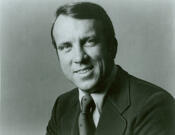
Here you will find contact information for Representative Robin Beard, including email address, phone number, and mailing address.
| Name | Robin Beard |
| Position | Representative |
| State | Tennessee |
| District | 6 |
| Party | Republican |
| Status | Former Representative |
| Term Start | January 3, 1973 |
| Term End | January 3, 1983 |
| Terms Served | 5 |
| Born | August 21, 1939 |
| Gender | Male |
| Bioguide ID | B000280 |
About Representative Robin Beard
Robin Jerald Beard Jr. (August 21, 1939 – June 16, 2007) was an American politician and former United States Marine Corps Reserve officer who served as a Republican member of the United States House of Representatives from Tennessee’s 6th congressional district from 1973 to 1983. Over the course of five terms in Congress, he represented his constituents during a significant period in American history and contributed to the legislative process as part of the Republican Party.
Beard was born in Knoxville, Tennessee, on August 21, 1939. He was educated at Montgomery Bell Academy in Nashville, one of the state’s leading preparatory schools. He went on to attend Vanderbilt University, also in Nashville, from which he graduated after active involvement in campus life, including membership in the Sigma Chi fraternity. In addition to his civilian pursuits, Beard built a parallel military career, serving in the United States Marine Corps Reserve and ultimately attaining the rank of colonel, a background that would later inform his work on national security and defense-related issues.
Beard’s early public career in Tennessee state government began under Republican Governor Winfield Dunn. In 1970, Dunn appointed him Tennessee personnel commissioner, placing him in charge of the state’s personnel system at a time when Republicans were only beginning to gain a foothold in statewide office. This administrative experience, combined with his military service and party activism, positioned him as a promising Republican candidate when congressional opportunities arose in the early 1970s.
In 1972, Beard entered the Republican primary for Tennessee’s 6th Congressional District, which had been significantly redrawn by the state legislature. The redistricting shifted several Republican-trending areas near Memphis into the district while removing a number of strongly Democratic precincts, giving the 6th a markedly more Republican character at the national level. Beard secured the Republican nomination and, in the November 1972 general election, defeated Democratic incumbent William R. “Bill” Anderson by approximately twelve percentage points. His victory was not considered a major upset in light of the new partisan balance of the district, but it was historically notable in a region where most living residents had never before been represented in Congress by a Republican.
During his decade in the U.S. House of Representatives, from January 3, 1973, to January 3, 1983, Beard steadily consolidated his support in the 6th District. He worked the district intensively, building a large and durable following even as conservative Democrats continued to dominate many of the district’s seats in the Tennessee General Assembly well into the 1980s. The increasingly Republican tilt of the district at the federal level was reflected in his electoral record. In 1974, a year when Republicans nationwide suffered heavy losses in the aftermath of the Watergate scandal, Beard was reelected with 56.6 percent of the vote. In 1976, he faced a high-profile challenge from former U.S. Senator Ross Bass, who had represented the 6th District in the House from 1955 to 1964, but Beard prevailed by nearly 29 percentage points, aided by the fact that Bass was largely unfamiliar to many voters in the newly configured district. Beard was reelected in 1978 with more than 74 percent of the vote and ran unopposed in 1980. Throughout his five terms, he participated in the democratic process in the House of Representatives, representing the interests of his Tennessee constituents and contributing to the work of Congress during an era marked by economic turbulence, the end of the Vietnam War, and the beginning of the Reagan administration.
In 1982, Beard chose not to seek a sixth term in the House, instead entering the race for the Republican nomination for the U.S. Senate seat held by freshman Democrat Jim Sasser. He won the Republican primary but was defeated in the general election by Sasser in a landslide of roughly 20 percentage points. The loss underscored the continued difficulty Republicans faced in statewide contests in Tennessee at that time; the party would not capture another statewide office until 1994, when Republicans won the governorship and both U.S. Senate seats.
Following his congressional career, Beard remained active in international and public affairs. He was appointed a deputy secretary-general of the North Atlantic Treaty Organization (NATO), serving in Belgium from 1984 to 1987 and again from 1992 to 1995. In this capacity, he was involved in the political and administrative work of the alliance during the late Cold War and the early post–Cold War period, years that saw significant changes in European security and NATO’s strategic posture. Between and after these NATO assignments, he engaged in private-sector work, including running a Washington, D.C.–based import-export business. During this period he resided for a time in Alexandria, Virginia, maintaining ties to the nation’s capital and to defense and foreign policy circles.
In his later years, Beard retired to Charleston County, South Carolina. Remaining interested in public service and local affairs, he sought a seat on the Charleston County school board in 2006, entering a race that also included Arthur Ravenel Jr., another former member of the U.S. House of Representatives, who was ultimately successful. Beard continued to live in the coastal community of Isle of Palms, South Carolina, where he died on June 16, 2007, from a brain tumor. His funeral was held at the historic Huguenot Church in Charleston, South Carolina, reflecting both his ties to the Lowcountry and the esteem in which he was held by family, friends, and former colleagues.