Representative Rod Blum
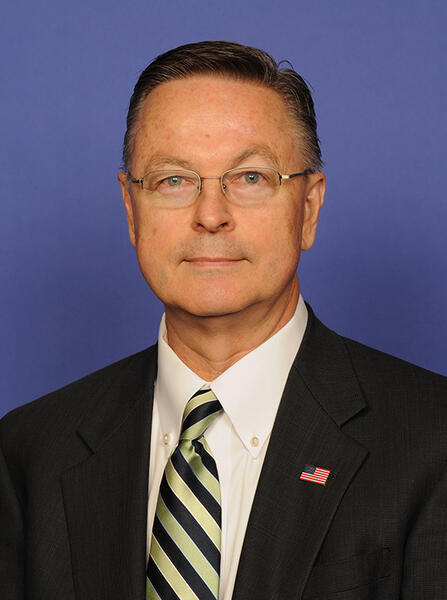
Here you will find contact information for Representative Rod Blum, including email address, phone number, and mailing address.
| Name | Rod Blum |
| Position | Representative |
| State | Iowa |
| District | 1 |
| Party | Republican |
| Status | Former Representative |
| Term Start | January 6, 2015 |
| Term End | January 3, 2019 |
| Terms Served | 2 |
| Born | April 26, 1955 |
| Gender | Male |
| Bioguide ID | B001294 |
About Representative Rod Blum
Rodney Leland Blum (born April 26, 1955) is an American businessman and politician who served as the U.S. representative for Iowa’s 1st congressional district from January 3, 2015, to January 3, 2019. A member of the Republican Party, he has described himself as a “Tea Party Republican” and a member of the Tea Party movement, asserting that “the Tea Party is what the Republican Party should have always been.” During his two terms in Congress, he represented a largely eastern Iowa district and participated actively in the legislative process on issues ranging from health care and federal spending to tax policy and environmental regulation.
Blum was born in 1955 and later pursued higher education in Iowa. He attended Loras College in Dubuque, Iowa, where he earned a degree in finance, laying the groundwork for a career in business and financial management. He subsequently enrolled at the University of Dubuque, also in Dubuque, where he completed a master’s degree in business administration. This combination of finance and business training would become central to his professional life and inform his later political positions on fiscal policy, government spending, and economic regulation.
Before entering national politics, Blum built a career in the private sector and in local party leadership. He became chief executive officer of Eagle Point Software, a Dubuque-based software company, serving as CEO from 1990 to 2000. After leaving Eagle Point Software, he acquired and operated another software firm, Digital Canal, which he has owned since 2000. Alongside his business activities, Blum became active in Republican politics at the county level, serving as chair of the Dubuque County Republican Party from 1995 to 1997. His tenure as a local party leader helped establish his profile within Iowa Republican circles and provided a platform for his later congressional campaigns.
Blum emerged on the national political scene in the 2014 election cycle. After winning the Republican primary in June 2014, he ran for the open seat in Iowa’s 1st congressional district, which had been vacated by Democrat Bruce Braley when Braley chose to run unsuccessfully for the U.S. Senate that year. In the November 4, 2014, general election, Blum defeated Democratic state representative Pat Murphy with 51 percent of the vote. The victory was widely regarded as a surprise Republican win, as the district carried a Democratic-leaning Cook Partisan Voting Index (PVI) of D+5. Blum took office on January 3, 2015, succeeding Braley and joining the 114th Congress as part of a wave of conservative and Tea Party–aligned Republicans.
During his first term and subsequent reelection campaign, Blum aligned himself with the conservative wing of the House Republican Conference. In 2016 he ran for a second term and was unopposed in the Republican primary. In the general election he faced Democrat Monica Vernon and won reelection with 54 percent of the vote. In Congress, he served on the Committee on Small Business, where he chaired the Subcommittee on Agriculture, Energy and Trade, reflecting both his business background and the agricultural character of his district. He also served on the Committee on Oversight and Government Reform, including its Subcommittee on Information Technology, where he participated in oversight of federal agencies and information systems. Blum was a member of several ideological and issue-based caucuses, including the Freedom Caucus, the Republican Study Committee, the Congressional Slovak Caucus, and the Congressional Term Limits Caucus. By October 2017, he had voted with the Republican Party in approximately 90 percent of roll-call votes in the 115th Congress and had voted in line with President Donald Trump’s position in about 94 percent of recorded votes.
Blum’s congressional tenure was marked by strong conservative positions on fiscal policy, health care, environmental regulation, and federal spending. He favored “fully repealing” the Patient Protection and Affordable Care Act (Obamacare) and supported a “constitutional amendment to balance the budget and limit spending.” In 2015 he voted against legislation that would have averted a federal government shutdown, later remarking in connection with the shutdown debate that “I think the Founding Fathers are smiling right now for the first time in a long time.” He opposed a mandatory increase in the federal minimum wage and supported broad tax reform. In 2017 he voted in favor of the Tax Cuts and Jobs Act of 2017, afterward stating that families would see their take-home pay increase and publicly celebrating the legislation on social media. In March 2016, commenting on a $2 billion redevelopment of Washington, D.C.’s Southwest waterfront, he remarked that Washington, D.C., “needs a recession,” reflecting his criticism of what he viewed as excessive federal growth and spending.
Health care policy was a central and sometimes controversial aspect of Blum’s congressional record. Although he initially withheld support from the first version of the American Health Care Act of 2017 (AHCA), the Republican bill to repeal and replace the Affordable Care Act, saying it “doesn’t do enough to lower premiums for hardworking Americans,” he ultimately voted on May 4, 2017, to repeal the Affordable Care Act and pass a revised version of the AHCA. Blum said that the bill had been improved to his liking and described it as both “Trumpcare” and “Obamacare 2.0,” noting that “We’ve probably changed 10, 20 percent of the bill is all.” He argued that the AHCA would stabilize insurance markets, lower premiums for Iowans, increase consumer choices, reduce taxes, and protect people with preexisting conditions. When asked why he voted for the legislation before the nonpartisan Congressional Budget Office had released its impact assessment, he cited what he saw as an urgent need to fix Obamacare. During town hall meetings in May 2017, he asserted that coverage for those on Medicaid would not change under the AHCA and told constituents that those receiving insurance through employer-based group plans would see “nothing” change. Subsequent fact-checking by National Public Radio and local media found these claims to be partly false, noting that changes could occur depending on whether employers were based in states that sought waivers and that the bill allowed higher premiums for some individuals who did not maintain continuous coverage and permitted states to alter essential health benefits.
Blum was also known for his views on environmental policy and climate science. He described himself as “skeptical” of the scientific consensus that human activities are a primary contributor to climate change, asserting that the scientific community had previously supported conjectures about global cooling and expressing concern that “most scientists’ paychecks come from the federal government, and so right away that makes me a bit skeptical.” He opposed federal regulation of greenhouse gas emissions, and by February 2017 he held a 3 percent lifetime score from the League of Conservation Voters, reflecting his consistent opposition to most environmental regulatory measures favored by that organization. His skepticism of climate policy and his broader deregulatory stance aligned him with many members of the House Freedom Caucus and other conservative Republicans during the 114th and 115th Congresses.
In the 2018 election cycle, Blum sought a third term in the House but faced a strong challenge in a district that had become increasingly competitive. He was defeated in the general election by Democratic state representative Abby Finkenauer, losing by approximately 16,900 votes. His loss ended his service in Congress on January 3, 2019, after two terms. Following his departure from office, Blum returned to private life and his business interests, including his ongoing ownership of Digital Canal. Remaining engaged in politics, he later briefly entered the race for Iowa’s 2nd congressional district in the 2026 election cycle but ultimately withdrew from the contest before Election Day.