Senator Rod Grams
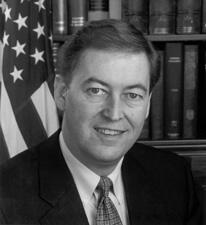
Here you will find contact information for Senator Rod Grams, including email address, phone number, and mailing address.
| Name | Rod Grams |
| Position | Senator |
| State | Minnesota |
| Party | Republican |
| Status | Former Representative |
| Term Start | January 5, 1993 |
| Term End | January 3, 2001 |
| Terms Served | 4 |
| Born | February 4, 1948 |
| Gender | Male |
| Bioguide ID | G000367 |
About Senator Rod Grams
Rodney Dwight Grams (February 4, 1948 – October 8, 2013) was an American politician, television news anchor, and businessman who served Minnesota in both the United States House of Representatives and the United States Senate. A member of the Republican Party, he represented Minnesota’s 6th congressional district in the House from January 3, 1993, to January 3, 1995, and then served as a United States Senator from Minnesota from January 3, 1995, to January 3, 2001. His congressional service occurred during a significant period in American political history marked by shifting party control in Congress and major debates over federal spending, tax policy, and social programs.
Grams was born on a farm near Princeton, Mille Lacs County, Minnesota, where he was raised in a rural setting that shaped his early life and work ethic. He attended public schools in Princeton and later took courses at Anoka Technical College and at Brown Institute (now Brown College) in Minneapolis, where he studied broadcasting. Before entering broadcasting full time, he worked in construction and became involved in homebuilding, an experience that later informed his interest in small business and economic issues. His early years in Minnesota’s agricultural and small-town environment contributed to the populist and fiscally conservative themes that would characterize his later political career.
Before entering politics, Grams built a prominent career in television journalism across the Midwest and Great Plains. He worked as a reporter and anchor at several stations in Montana, Wisconsin, and Minnesota, gaining regional recognition for his on-air work. In 1982 he joined KMSP-TV, the Fox-affiliated station in the Twin Cities, where he served as senior news anchor. From 1982 until 1991 he became a familiar presence in Minnesota households, anchoring evening newscasts and covering state and national events. During this period he also maintained interests in construction and real estate development, further solidifying his profile as both a media figure and businessman. He left KMSP-TV in 1991, retiring from television to pursue elective office.
Grams launched his political career in 1992, running as a Republican for the U.S. House of Representatives in Minnesota’s 6th congressional district. In that election he challenged embattled Democratic incumbent Gerry Sikorski, focusing on themes of fiscal restraint, government reform, and accountability. Grams won the race and took office on January 3, 1993. During his single term in the House, he aligned with the Republican minority on issues of deficit reduction, lower taxes, and regulatory reform, and he supported the broader movement that culminated in the Republican gains of the 1994 midterm elections. Rather than seek reelection to the House, he chose to run for the U.S. Senate seat being vacated by retiring Republican Senator David Durenberger in 1994.
In the 1994 Senate race, Grams campaigned on a platform of limited government, tax relief, and welfare reform, and he won the general election, beginning his Senate service on January 3, 1995. As a United States Senator from Minnesota, he served two terms in Congress overall—one in the House and one in the Senate—contributing to the legislative process during a period of divided government and intense budget negotiations between Congress and the Clinton administration. In the Senate he was associated with efforts to cut taxes, reduce federal spending, and promote pro-business policies, and he supported the 1996 welfare reform legislation. Grams also worked on telecommunications and technology issues, reflecting both his media background and the rapid growth of the communications sector in the 1990s. He represented the interests of his Minnesota constituents on agricultural, economic, and infrastructure matters, and participated fully in the democratic process through committee work, floor debates, and constituent services. In 2000 he sought reelection but was defeated by Democratic challenger Mark Dayton, concluding his Senate service on January 3, 2001.
After leaving the Senate, Grams remained active in public affairs and Republican politics in Minnesota. He continued his involvement in business, including real estate and development, and occasionally appeared in media and political forums. In 2006 he attempted a political comeback by seeking the Republican nomination for his former Senate seat, but he withdrew from the race before the Republican primary. That same year he ran for the U.S. House of Representatives in Minnesota’s 8th congressional district as the Republican-endorsed candidate, challenging long-serving Democratic incumbent Jim Oberstar; Grams was defeated in the general election, and this race marked his final bid for federal office.
In his later years, Grams divided his time between business activities and family life in Minnesota. He was married and had children, and he remained a recognizable figure in state political circles. Rodney Dwight Grams died on October 8, 2013, in Princeton, Minnesota, at the age of 65. His career encompassed significant roles in journalism and public service, spanning local television news, one term in the U.S. House of Representatives, and a full term in the United States Senate representing Minnesota.