Representative Rodney Alexander
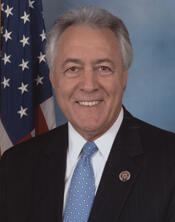
Here you will find contact information for Representative Rodney Alexander, including email address, phone number, and mailing address.
| Name | Rodney Alexander |
| Position | Representative |
| State | Louisiana |
| District | 5 |
| Party | Republican |
| Status | Former Representative |
| Term Start | January 7, 2003 |
| Term End | September 27, 2013 |
| Terms Served | 6 |
| Born | December 5, 1946 |
| Gender | Male |
| Bioguide ID | A000361 |
About Representative Rodney Alexander
Rodney McKinnie Alexander (born December 5, 1946) is an American politician who represented Louisiana in the United States House of Representatives from 2003 to 2013 and later served as Secretary of the Louisiana Department of Veterans Affairs. A member of the Republican Party for most of his congressional tenure, he was initially elected to Congress as a Democrat before changing his party affiliation in 2004. Over six terms in office, he participated in the legislative process during a significant period in American history and represented the interests of the constituents of Louisiana’s 5th congressional district.
Alexander was born in 1946 in Louisiana and came of age during the post–World War II era in the American South, a period marked by political realignment and economic transition. Before entering national politics, he established himself in state and local public life and in private business, gaining experience that would later inform his work in Congress. His early years in public service helped build a political base in northeastern and central Louisiana, an area that would form the core of the district he later represented in the U.S. House of Representatives.
In 2002, Alexander ran for the U.S. House from Louisiana’s 5th congressional district and was elected as a Democrat, taking office at the start of the 108th Congress in January 2003. His initial election placed him in a district long represented by Democrats, including such figures as Jerry Huckaby and Otto Passman. As a freshman member, he joined the House of Representatives at a time when the nation was engaged in military operations abroad and grappling with domestic policy challenges, and he contributed to the legislative process as part of the broader Democratic delegation from the South.
Alexander’s party affiliation became a defining feature of his congressional career. On August 4, 2004, he registered to run for re-election as a Democrat, but two days later he changed his registration to Republican. His party switch became official on August 9, 2004, reflecting the broader partisan realignment underway in Louisiana and the region. Running as a Republican in the 2004 open primary, he defeated fellow Republican Jock Scott of Alexandria and secured re-election in November. In 2006, he was again re-elected, defeating Democrat Gloria Williams Hearn, wife of psychologist George E. Hearn of Pineville, Louisiana. Over the course of his service, he was re-elected five times, ultimately serving six terms in the House.
As his tenure progressed, Alexander consolidated his position within the Republican Party and among conservative voters in his district. In one Republican closed primary, he defeated Richard Todd Slavant of Monroe by a margin of nearly 9–1, underscoring his strong standing with party voters. In the subsequent November 2 general election, he faced Independent candidate Tom Gibbs Jr. of Ouachita Parish and won easily; no Democratic candidate filed for the seat, despite the district’s history of Democratic representation. During this period, Alexander aligned himself with conservative currents within the House and joined the Tea Party Caucus, reflecting his support for limited government and fiscal restraint.
Alexander’s final congressional campaign occurred in 2012, when he sought a sixth term in the U.S. House. He drew two last-minute challengers but prevailed decisively, receiving 202,531 votes, or 77.8 percent of the total. His opponents included Libertarian candidate Clay Steven Grant, who received 20,194 votes (7.8 percent), and a no-party candidate, Ron Caesar, who polled 37,486 votes (14.4 percent). During the 2012 election cycle, Alexander’s campaign raised a total of $1,235,114 and spent $942,083, leaving a surplus of $295,079 and no campaign debt. Major contributors to his campaign came from a range of business interests, including the crop production industry, the oil and gas industry, commercial banks, and general contractors. Among his top individual and organizational contributors were Adams and Reese, the Livingston Group, O’Neal Gas, and Kadav Inc. He concluded his service in Congress at the end of his sixth term in January 2013.
After leaving the U.S. House of Representatives, Alexander continued his public service at the state level. On September 30, 2013, he became Secretary of the Louisiana Department of Veterans Affairs, assuming responsibility for programs and services for the state’s veterans. He held this position until June 3, 2014. In this role, he drew on his legislative experience and his familiarity with federal and state policy to address the needs of veterans in Louisiana. His tenure as secretary marked the continuation of a long career in public life that spanned local, state, and federal service and reflected the evolving political landscape of Louisiana in the late twentieth and early twenty-first centuries.