Senator Roger Sherman Baldwin
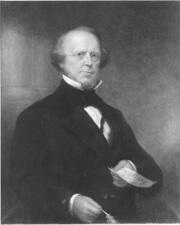
Here you will find contact information for Senator Roger Sherman Baldwin, including email address, phone number, and mailing address.
| Name | Roger Sherman Baldwin |
| Position | Senator |
| State | Connecticut |
| Party | Whig |
| Status | Former Representative |
| Term Start | December 6, 1847 |
| Term End | March 3, 1851 |
| Terms Served | 1 |
| Born | January 4, 1793 |
| Gender | Male |
| Bioguide ID | B000096 |
About Senator Roger Sherman Baldwin
Roger Sherman Baldwin (January 4, 1793 – February 19, 1863) was an American lawyer and politician who served as the 32nd Governor of Connecticut from 1844 to 1846 and as a United States senator from Connecticut from 1847 to 1851. A member of the Whig Party, he was noted both for his contributions to state and national politics and for his prominent role as counsel in the 1841 Amistad case, one of the most significant legal battles over slavery in the antebellum United States.
Baldwin was born in New Haven, Connecticut, the son of Simeon Baldwin and Rebecca Sherman. He came from a distinguished New England family deeply rooted in the political and religious life of the colonies and the early republic. His maternal grandfather was Roger Sherman, a leading Founding Father and the only person to sign all four of the principal founding documents of the United States: the Continental Association, the Declaration of Independence, the Articles of Confederation, and the Constitution. Through his father he was descended from colonial figures Robert Treat, Samuel Appleton, and Simon Willard, and through his mother from Samuel Stone and William Blaxton. He was also the nephew of Ebenezer Baldwin. This heritage placed him in a family tradition of public service and legal scholarship that would shape his own career.
Baldwin received his early education at the Hopkins School in New Haven and entered Yale College at the age of fourteen. At Yale he was a member of the Linonian Society, one of the college’s historic literary and debating societies, and he graduated with high honors in 1811. After leaving Yale he read law in his father’s office in New Haven and continued his legal training at the Litchfield Law School, one of the most prominent law schools in the United States at the time. He was admitted to the bar in 1814. Although he would be repeatedly called into public office over the course of his life, Baldwin devoted himself primarily to the practice of law, attaining high distinction for his mastery of legal questions and his skill in argument.
Baldwin’s legal career reached national prominence with his defense of the Africans involved in the Amistad affair. In 1841 he served as one of the principal attorneys defending the rights of the Africans who had seized control of the Spanish schooner La Amistad after being kidnapped and transported in violation of international law. His advocacy before the federal courts, including the Supreme Court of the United States, was widely celebrated for both its legal acumen and its moral force. The case became a landmark in the struggle against the international slave trade and contributed significantly to his public reputation. A simplified version of the events surrounding the case was later dramatized in the 1997 film “Amistad,” in which actor Matthew McConaughey portrayed Baldwin.
Baldwin’s entry into public life began at the local level. He served in the city government of New Haven in 1826 and again in 1828, gaining experience in municipal affairs. He was elected to the Connecticut State Senate in 1837 and 1838, and in 1840 and 1841 he represented the town of New Haven in the Connecticut General Assembly. In 1844 the Connecticut legislature elected him Governor of Connecticut, and he was re-elected in 1845. As governor, Baldwin confronted the issue of slavery within his own state. In 1844 he proposed legislation to end slavery in Connecticut; although the General Assembly did not enact his proposal at that time, the measure was reintroduced and ultimately passed in 1848 as “An Act to Prevent Slavery,” marking the formal abolition of slavery in the state.
Upon the death of United States Senator Jabez W. Huntington in 1847, Governor Clark Bissell appointed Baldwin to fill the resulting vacancy in the United States Senate. He took his seat in December 1847 and, in May 1848, was elected by the Connecticut Legislature to continue in that position, serving a full term until 1851. As a Whig senator during a period of intense national conflict over slavery and sectional issues, Baldwin participated actively in the legislative process and represented the interests of his Connecticut constituents. During his Senate service, he called for the establishment of an “independent tribunal” to protect the rights of free Black Americans and to investigate the claims of those enforcing the Fugitive Slave Act. In debates over the status and rights of Black Americans—at a time when some argued that they were not citizens and had no rights worthy of protection—Baldwin reminded his colleagues that, at the nation’s founding, many states had allowed Black men of property to vote, a right that was only rescinded in many places during the 1830s. His stance placed him among those in Congress who sought to defend civil rights within the constraints of the political order of his day.
After his Senate term ended in 1851, Baldwin held no further regular public office, though he remained engaged in public affairs. He continued his legal practice and was regarded as one of Connecticut’s leading attorneys. In the presidential election of 1860 he served as one of Connecticut’s presidential electors. In 1861, as the nation moved toward civil war, Governor William Alfred Buckingham appointed him a delegate to the Washington Peace Convention, convened at the request of the State of Virginia in a last effort to avert armed conflict between North and South. Baldwin was known as a devout Christian who studied the Bible daily, and his religious convictions informed both his personal life and his public positions.
Baldwin’s family connections extended his influence into subsequent generations of American public life and scholarship. He married Emily Pitkin Perkins, and their son Simeon E. Baldwin later became Governor of Connecticut, continuing the family’s political legacy in the state. He was the grandfather of Edward Baldwin Whitney, who served as a justice of the New York Supreme Court, and the great-grandfather of Hassler Whitney, a renowned mathematics professor at Princeton University. His name is commemorated in Greenwich, Connecticut, where a town park is called Roger Sherman Baldwin Park, reflecting both his own prominence and that of his distinguished family.
Roger Sherman Baldwin died in New Haven on February 19, 1863, at the age of seventy, and was interred in Grove Street Cemetery. A biographical discourse was delivered at his funeral by the Reverend Dr. Dutton, later printed in the April 1863 issue of the New Englander and also published as a separate pamphlet, attesting to the esteem in which he was held by his contemporaries.