Senator Roger W. Jepsen
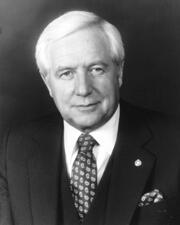
Here you will find contact information for Senator Roger W. Jepsen, including email address, phone number, and mailing address.
| Name | Roger W. Jepsen |
| Position | Senator |
| State | Iowa |
| Party | Republican |
| Status | Former Representative |
| Term Start | January 15, 1979 |
| Term End | January 3, 1985 |
| Terms Served | 3 |
| Born | December 23, 1928 |
| Gender | Male |
| Bioguide ID | J000101 |
About Senator Roger W. Jepsen
Roger William Jepsen (December 23, 1928 – November 13, 2020) was an American politician from Iowa who served one term as a United States Senator from 1979 to 1985 and earlier as the 39th Lieutenant Governor of Iowa from 1969 to 1973. A member of the Republican Party, he later served as chairman of the National Credit Union Administration from 1985 to 1993, where he helped oversee more than 14,000 credit unions nationally. His public career spanned local, state, and federal office during a significant period in late twentieth-century American political and economic history.
Jepsen was born on December 23, 1928, in Cedar Falls, Iowa, the son of Emil Jepsen and the former Esther Sorensen. All of his grandparents were Danish immigrants, and he was raised in Iowa’s public school system. His upbringing in a Midwestern, immigrant-rooted family informed his later political identity and his long association with agricultural and small-business interests in the state.
After completing his early education, Jepsen attended the University of Northern Iowa before enrolling at Arizona State University in Tempe, Arizona. At Arizona State, he was a member of the Tau Kappa Epsilon fraternity. He earned a bachelor’s degree in 1950 and a master’s degree in 1953. His academic training, combined with his military service and subsequent business activities, provided the foundation for his later work in public policy, particularly in economic and agricultural matters.
Jepsen’s military service began shortly after World War II. He became a paratrooper in the United States Army from 1946 to 1947 and then continued his service in the United States Army Reserve from 1948 to 1960, ultimately achieving the rank of captain. Following his active-duty and reserve service, he was engaged in farming, as well as in insurance and health care businesses in Iowa. These professional pursuits kept him closely connected to the economic concerns of his region and helped shape his political agenda when he entered public office.
Jepsen’s political career began at the local level. He served as a county supervisor of Scott County, Iowa, from 1962 to 1965, gaining experience in county administration and local governance. He was then elected to the Iowa Senate, serving as a state senator from 1967 to 1969. Building on this legislative experience, he was elected Lieutenant Governor of Iowa in 1968 on a ticket headed by Governor Robert D. Ray. As the 39th Lieutenant Governor, he served from 1969 to 1973, participating in the executive leadership of the state during a period of social and economic change.
In 1978, Jepsen successfully ran for the United States Senate from Iowa as a Republican, narrowly defeating incumbent Democratic Senator Dick Clark in what was widely regarded as a major upset. He received strong support from the National Conservative Political Action Committee (NCPAC) during the campaign. The race drew national attention, in part because Jepsen criticized Clark’s extensive work on African issues, referring to him as “the Senator from Africa” in light of Clark’s advocacy on behalf of people in South Africa against the apartheid government. Jepsen took office on January 3, 1979, and served a single term, leaving office on January 3, 1985. During the 98th Congress he served as co-chairman of the United States Congressional Joint Economic Committee, where he participated in deliberations on national economic policy. His Senate colleagues credited him with persuading President Ronald Reagan to lift the agricultural embargo against the Soviet Union, a move of particular importance to Midwestern farmers. During part of his Senate tenure, he occupied the so‑called “Candy Desk,” a long-standing Senate tradition in which one senator maintains a desk stocked with candy for colleagues.
Jepsen’s Senate service occurred during a significant period in American history marked by the late Cold War, economic volatility, and shifting agricultural markets. As a member of the Senate, he participated in the legislative process and represented the interests of his Iowa constituents, particularly in areas affecting agriculture, rural development, and economic policy. In the 1984 election, he was defeated for reelection by Democratic U.S. Representative Tom Harkin. The campaign was contentious and drew attention to personal controversies, including reports that Jepsen had been cited for driving while intoxicated in Washington, D.C., and that he had visited a brothel in Iowa. Following his defeat, his single term in the Senate concluded in January 1985.
After leaving Congress, Jepsen was appointed chairman of the National Credit Union Administration (NCUA) in 1985, a position he held until 1993. In that role, he oversaw the federal agency responsible for chartering and supervising federal credit unions and insuring savings in both federal and most state-chartered credit unions. Under his leadership, the NCUA supervised more than 14,000 credit unions nationwide, and he played a key role in regulatory and policy decisions affecting the credit union system during a period of financial-sector change and consolidation.
Jepsen married twice. His first marriage was to Dorothy Ann Lambertson in 1948, with whom he had four children; that marriage ended in divorce. In 1958 he married Dee Ann Delaney, and they had one son together. He remained closely associated with eastern Iowa throughout his later years. Roger William Jepsen died on November 13, 2020, at the Clarissa C. Cook Hospice House in Bettendorf, Iowa, at the age of 91. He was interred at Davenport Memorial Park in Davenport, Iowa.