Representative Romulus Zachariah Linney
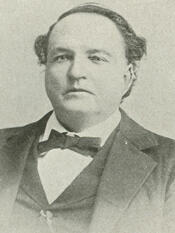
Here you will find contact information for Representative Romulus Zachariah Linney, including email address, phone number, and mailing address.
| Name | Romulus Zachariah Linney |
| Position | Representative |
| State | North Carolina |
| District | 8 |
| Party | Republican |
| Status | Former Representative |
| Term Start | December 2, 1895 |
| Term End | March 3, 1901 |
| Terms Served | 3 |
| Born | December 26, 1841 |
| Gender | Male |
| Bioguide ID | L000339 |
About Representative Romulus Zachariah Linney
Romulus Zachariah Linney (December 26, 1841 – April 15, 1910) was an American politician who served as a Republican Representative from North Carolina in the United States Congress from 1895 to 1901. Over the course of three consecutive terms in the House of Representatives, he contributed to the legislative process during a significant period in American history, representing the interests of his constituents and participating actively in the democratic governance of the nation.
Born on December 26, 1841, Linney came of age in the antebellum South, a context that shaped his later public life and political views. His early years unfolded against the backdrop of mounting sectional tensions that would culminate in the Civil War, and his formative experiences in North Carolina informed his understanding of the economic and social challenges facing his state in the postwar era. Details of his family background and early occupations are less extensively documented, but his subsequent prominence in public affairs indicates a trajectory of increasing engagement with legal, civic, and political matters in his community.
Linney’s education prepared him for a career in public service and the law, providing him with the skills necessary to navigate the complex legal and political environment of Reconstruction and the late nineteenth century. As he entered professional life, he became identified with the Republican Party, which in North Carolina was associated with efforts to reconstruct state institutions, expand political participation, and reshape the postwar economy. His legal and political activities at the state and local levels helped establish his reputation as a capable advocate for his region.
By the 1890s, Linney had emerged as a leading Republican figure in North Carolina, positioning him for election to national office. In 1895 he took his seat in the United States House of Representatives, beginning the first of his three terms in Congress. His tenure coincided with a transformative era marked by industrial expansion, agrarian unrest, and debates over monetary policy, tariffs, and federal authority. As a member of the House, Linney participated in deliberations on these and other issues, contributing to the legislative process and seeking to balance national priorities with the specific needs of his North Carolina constituents.
During his service in Congress from 1895 to 1901, Linney represented a state undergoing political realignment and economic transition. He served through the Fifty-fourth, Fifty-fifth, and Fifty-sixth Congresses, a period that included the economic aftershocks of the Panic of 1893, the rise of populism, and the Spanish–American War. Within this context, he worked within the Republican caucus to advance policies he believed would promote stability, development, and opportunity for his district and state, while also engaging in the broader national debates that defined the era.
After leaving Congress in 1901, Linney returned to private life in North Carolina, remaining a respected figure in state political and civic circles. His post-congressional years were spent largely in the pursuits typical of former legislators of his generation, including legal practice, local leadership, and continued engagement with public affairs, even if no longer from an official national platform. He lived to see the dawn of the twentieth century and the early stages of the Progressive Era, a time when many of the issues he had confronted in Congress continued to evolve.
Romulus Zachariah Linney died on April 15, 1910. His career, spanning the tumultuous decades after the Civil War and into the new century, reflected the challenges and aspirations of North Carolina and the broader South during a period of reconstruction, realignment, and modernization. As a three-term Republican member of the U.S. House of Representatives, he left a record of service that linked his state’s local concerns with the national legislative agenda at a pivotal moment in American history.