Representative Ron Barber
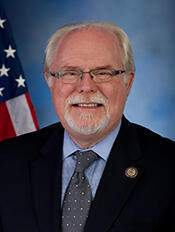
Here you will find contact information for Representative Ron Barber, including email address, phone number, and mailing address.
| Name | Ron Barber |
| Position | Representative |
| State | Arizona |
| District | 2 |
| Party | Democratic |
| Status | Former Representative |
| Term Start | June 12, 2012 |
| Term End | January 3, 2015 |
| Terms Served | 2 |
| Born | August 25, 1945 |
| Gender | Male |
| Bioguide ID | B001279 |
About Representative Ron Barber
Ronald Sylvester Barber (born August 25, 1945) is an American politician and former social services administrator who represented Arizona in the United States House of Representatives from 2012 to 2015. A member of the Democratic Party, he served two terms in Congress, during which he participated actively in the legislative process and represented the interests of constituents in a district that included much of Tucson and southeastern Arizona. His congressional service occurred during a significant period in American history marked by contentious debates over health care, gun policy, immigration, and federal spending.
Barber was born in Wakefield, England, during World War II. His father was an airman stationed at Davis–Monthan Air Force Base in Tucson, Arizona, which led the family to settle in southern Arizona. Barber grew up in Tucson and graduated from Rincon High School there in 1963. He went on to attend the University of Arizona, also in Tucson, earning a Bachelor of Arts degree in 1967. His early life and education in Arizona established the long-standing ties to the region that would later define his public service career.
Following his graduation, Barber pursued a career in public service and social programs, focusing particularly on support for individuals with developmental disabilities. From 1974 to 2006, he worked for the Arizona Division of Developmental Disabilities in Pima County, serving as director and program manager. In this role, he oversaw services and programs for some of the most vulnerable residents in the community, gaining extensive experience in administration, budgeting, and human services policy over more than three decades.
Barber entered federal-level public service as a senior staff member to U.S. Representative Gabrielle “Gabby” Giffords, a Democrat representing southern Arizona. Beginning in 2007, he served as Giffords’s district director, managing her local offices and constituent services throughout the district. On January 8, 2011, Barber was shot in the thigh and face during an assassination attempt on Giffords at a constituent event in Tucson, in which Giffords was severely injured and six people were killed. Giffords later resigned her seat due to the severe injuries she sustained in the attack, and Barber’s experience as her district director and as a survivor of the shooting placed him at the center of the community’s response and recovery.
In 2012, following Giffords’s resignation, Barber decided to seek election to the vacant congressional seat. He won the Democratic nomination for the special election to finish Giffords’s term and, on June 12, 2012, defeated Republican Jesse Kelly, an Iraq War veteran, in the special election. Barber was sworn into office on June 19, 2012, to represent Arizona’s 8th Congressional District. Later that year, after redistricting, the district was renumbered as Arizona’s 2nd Congressional District, which included the eastern two-thirds of Tucson as well as the southeastern corner of Arizona. On March 19, 2012, Barber announced that he would run for a full term in the newly drawn 2nd District in the 2012 general election. The redrawn district was, on paper, slightly more Democratic than its predecessor, but the race proved to be one of the closest in the nation. His Republican opponent, former Air Force pilot Martha McSally, led on election night by a few hundred votes, and the contest was initially too close to call due to a large number of provisional ballots. As additional ballots were counted, Barber overtook McSally, and by November 16, most of the outstanding ballots were in heavily Democratic precincts near Tucson. The Arizona Republic determined that McSally would not be able to overcome Barber’s lead, and by November 17 his margin had grown to about 1,400 votes. That day, the Associated Press concluded there were not enough ballots remaining for McSally to regain the lead and called the race for Barber; McSally conceded later that morning. Barber thus secured election to a full term in the 2nd District.
During his tenure in the House of Representatives from 2012 to 2015, Barber cultivated a reputation as an independent-minded Democrat, at times crossing party lines on key votes. Touting his independence, he voted the same way as Speaker of the House John Boehner on 10 out of the 16 occasions when Boehner chose to cast a vote, more than any other House Democrat. On health care policy, Barber supported the Patient Protection and Affordable Care Act and, in May 2013, voted against its repeal. His experience as a survivor of the 2011 Tucson shooting informed his strong support for gun control laws; in 2013, he co-sponsored legislation to expand background checks on gun sales. Barber characterized himself as pro-choice and voted against legislation that would prohibit federal funding for health plans that include abortion services. He also supported gay rights, co-sponsoring the Respect for Marriage Act and backing the repeal of the “Don’t Ask, Don’t Tell” policy regarding gay and lesbian service members. On immigration, Barber called for increased border security while supporting the DREAM Act, reflecting the concerns of his border district.
Barber ran for re-election in 2014 in what was widely regarded as one of the most competitive House races of that cycle. The Democratic primary took place on August 26, 2014, and he advanced to the general election scheduled for November 4, 2014. Martha McSally, whom Barber had narrowly defeated in 2012, again won the Republican nomination. According to USA Today and other national outlets, Arizona’s 2nd Congressional District was expected to feature one of the most closely watched and competitive contests of 2014. In September 2014, Americans for Responsible Solutions, a pro–gun control political action committee founded by Gabby Giffords and Mark Kelly and later merged into the Giffords Law Center to Prevent Gun Violence, began running television advertisements in support of Barber. When 100 percent of the votes were initially counted, McSally held a 161-vote lead and declared victory on November 12, 2014. Because the margin of victory was less than 1 percent, an automatic recount was required under Arizona law. Barber’s campaign hoped that 762 rejected ballots from Pima County would be included during the recount, which began on December 3, 2014. Ultimately, the recount confirmed McSally’s 161-vote lead, and Barber lost his 2014 re-election bid by that same razor-thin margin.
After leaving Congress in January 2015, Barber remained identified with issues that had defined his public life, including support for gun violence prevention measures, services for people with disabilities, and advocacy on behalf of southern Arizona. His career reflects a trajectory from local social services administration to congressional service, shaped by his long residence in Tucson, his decades of work in developmental disability programs, his role as district director to Gabby Giffords, and his own experience as a survivor of political violence.