Delegate Ron de Lugo
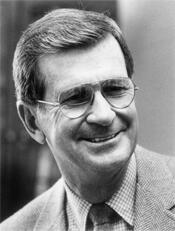
Here you will find contact information for Delegate Ron de Lugo, including email address, phone number, and mailing address.
| Name | Ron de Lugo |
| Position | Delegate |
| State | Virgin Islands |
| District | At-Large |
| Party | Democratic |
| Status | Former Representative |
| Term Start | January 3, 1973 |
| Term End | January 3, 1995 |
| Terms Served | 10 |
| Born | August 2, 1930 |
| Gender | Male |
| Bioguide ID | D000209 |
About Delegate Ron de Lugo
Ronald de Lugo (August 2, 1930 – July 14, 2020) was an American politician and a member of the Democratic Party who became the first Delegate from the United States Virgin Islands to the United States House of Representatives. Over the course of ten terms in Congress, serving from 1973 to 1979 and again from 1981 to 1995, he represented the interests of Virgin Islands residents during a significant period in American political history and helped shape the evolving relationship between the United States and its territories.
De Lugo was born on August 2, 1930, in Englewood, New Jersey, to Puerto Rican parents who were civil servants and divided their lives between New Jersey and the Virgin Islands. His family roots in the Virgin Islands were deep; his grandfather owned a hardware store and gun dealership in Charlotte Amalie, St. Thomas, which tied the family closely to the commercial and civic life of the islands. During his youth, de Lugo spent formative years in Puerto Rico, where he attended Colegio San José in the Río Piedras district of San Juan. This bicultural and bilingual upbringing, spanning New Jersey, Puerto Rico, and the Virgin Islands, would later inform his political perspective on territorial status, representation, and cultural identity within the broader American polity.
During the post–World War II era, de Lugo served in the United States Army, where he worked as a program director and announcer for the Armed Forces Radio Service. This experience in broadcasting and communications laid the groundwork for his early civilian career. After leaving the Army, he returned to the Virgin Islands and became a prominent radio personality, working at WSTA radio in St. Thomas and WIVI in St. Croix. His work in radio increased his visibility across the islands and helped him develop a strong public presence and connection with local communities, which he later translated into electoral support.
De Lugo’s formal political career began in the territorial government of the Virgin Islands. He served as a Senator in the Legislature of the Virgin Islands, where he gained experience in local lawmaking and territorial administration. He also held several key political and party positions: he was a Democratic National Committeeman, the administrator for St. Croix, and the representative of the Virgin Islands to Washington, D.C., roles that placed him at the intersection of local governance and federal relations. In addition, he was active in national party politics, serving as a delegate to the Democratic National Conventions in 1956, 1960, 1964, and 1968, which helped build his network within the Democratic Party and prepared him for federal office.
Following congressional action to create a non-voting Delegate position for the Virgin Islands in the U.S. House of Representatives, de Lugo ran for and won the newly established office in 1972. He took his seat on January 3, 1973, becoming the first Delegate from the United States Virgin Islands to the United States House of Representatives. Serving as a Democrat, he held the position from January 3, 1973, to January 3, 1979. During these initial terms, he participated in the legislative process on issues affecting the territories, economic development, and federal support for infrastructure and social services in the Virgin Islands, while also working to raise the profile of territorial concerns within Congress.
In 1978, de Lugo chose not to seek re-election as Delegate in order to pursue the governorship of the U.S. Virgin Islands. He challenged incumbent Governor Juan Francisco Luis in the 1978 gubernatorial election and selected Eric E. Dawson, a Senator in the Legislature of the Virgin Islands, as his running mate for lieutenant governor. In the general election held on November 7, 1978, the ticket of Luis and Lieutenant Governor Henry Millin defeated de Lugo and Dawson, receiving 10,978 votes (59.2 percent) to de Lugo and Dawson’s 7,568 votes (40.8 percent). The Luis–Millin ticket carried all three of the main islands of the U.S. Virgin Islands, and de Lugo returned to private life briefly following this defeat.
De Lugo re-entered federal office when he was again elected as Delegate to the U.S. House of Representatives, beginning his second period of service on January 3, 1981. He remained in that position until January 3, 1995, choosing not to seek re-election in 1994. Over these additional seven terms, he continued to advocate for the Virgin Islands on matters such as economic development, tourism, infrastructure, and federal-territorial relations. During this time in office, de Lugo also played a role in broader territorial policy; he chaired the committee concerned with the political status of the Northern Mariana Islands and was involved in the process that led to the creation of the Commonwealth of the Northern Mariana Islands, reflecting his wider influence on U.S. territorial governance beyond the Virgin Islands.
After retiring from Congress in 1995, de Lugo resided in St. Croix, remaining a respected elder statesman in Virgin Islands politics and a symbol of the territory’s representation in the federal government. He lived quietly in retirement while maintaining his longstanding ties to the islands he had represented for more than two decades. Ronald de Lugo died on July 14, 2020, at an assisted living facility in Miami, Florida, less than a month before his 90th birthday. His career marked a formative era in the political development of the United States Virgin Islands and the role of U.S. territories in the American legislative system.