Representative Ron Marlenee
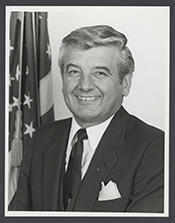
Here you will find contact information for Representative Ron Marlenee, including email address, phone number, and mailing address.
| Name | Ron Marlenee |
| Position | Representative |
| State | Montana |
| District | 2 |
| Party | Republican |
| Status | Former Representative |
| Term Start | January 4, 1977 |
| Term End | January 3, 1993 |
| Terms Served | 8 |
| Born | August 8, 1935 |
| Gender | Male |
| Bioguide ID | M000139 |
About Representative Ron Marlenee
Ronald Charles Marlenee (August 8, 1935 – April 26, 2020) was an American Republican politician who served as a Representative from Montana in the United States Congress from January 3, 1977, to January 3, 1993. A member of the Republican Party, he represented Montana’s 2nd congressional district for eight consecutive terms, becoming the longest-serving Republican representative from Montana in the House of Representatives. Over the course of his tenure, he contributed to the legislative process during a significant period in American history, participating in the democratic process and representing the interests of his constituents in eastern and central Montana.
Marlenee was born on August 8, 1935, in Scobey, Daniels County, Montana, the son of Charles and Margaret (Darchuk) Marlenee and the brother of Bob and Lanney. He was raised in a rural, agricultural setting and was educated in the public schools of Daniels County. Reflecting both the mobility and ambition of postwar westerners, he pursued higher education at several institutions, attending Montana State University in Bozeman and the University of Montana in Missoula. He also completed specialized training at the Reisch School of Auctioneering in Mason City, Iowa, which prepared him for one of his early professional callings.
Before entering national politics, Marlenee worked as an auctioneer, farmer, and rancher, occupations that rooted him firmly in the agricultural and small-business life of Montana. His professional background informed his political views and later legislative priorities, particularly his focus on the needs of family farms, ranchers, and small business owners. Active in Republican politics at the local level, he held several party posts in Daniels County and rose within the state party structure. From 1975 to 1976 he served as the Second Congressional District’s member of the Montana Republican Committee’s executive board, a position that helped launch his bid for Congress.
In 1976, Marlenee was elected as a Republican to the Ninety-fifth Congress from Montana’s 2nd congressional district. He was subsequently reelected seven times, serving eight terms from January 3, 1977, to January 3, 1993. During his years in the House of Representatives, he served on the House Interior Committee and the House Agriculture Committee, assignments that aligned closely with the interests of his largely rural constituency. He was known as a staunch conservative Republican who advocated for small businesses, limited government, Second Amendment rights, and a balanced federal budget. His consistent opposition to many federal spending and regulatory measures earned him the nickname “Dr. No,” reflecting his frequent votes against bills he believed expanded governmental involvement in public life.
Marlenee played an active role in legislation affecting public lands, natural resources, and agriculture. He described himself as a “multi-use” proponent of federal lands, supporting multiple uses such as drilling, mining, grazing, and recreation. He often battled against what he viewed as excessive federal control over state and local lands and was a vocal critic of environmental groups, at times referring to conservationists as “fern feelers and prairie fairies.” His voting record on environmental issues drew strong opposition from environmental organizations, and in 1992 the advocacy group Environmental Action named him to its “Dirty Dozen” list of members of Congress it considered most hostile to environmental protection. Nonetheless, he was involved in a number of significant legislative initiatives related to land and resource management, including measures to study and designate wilderness areas and to address soil conservation and the withdrawal of certain federal lands for military and other purposes.
Among the legislative measures associated with his congressional service were bills he sponsored or co-sponsored concerning wilderness and land management and agricultural policy. In 1977 and 1978, working with Representative Morris K. Udall, he was involved in legislation providing for the study of certain lands for their suitability as wilderness under the Wilderness Act of 1964 and in proposals to designate the Great Bear Wilderness and enlarge the Bob Marshall Wilderness in Montana’s Flathead and Lewis and Clark National Forests. He also participated in the development of the Soil Conservation Act of 1984, working with Representative Eligio De la Garza on measures to promote soil conservation practices. In 1987, he joined with Larry Edwin Craig and Morris Udall in legislation withdrawing certain federal lands in California for military purposes, and he was among the members involved in a 1977 bill to enhance outdoor recreation opportunities by expanding the National Park System and improving access within it. These efforts reflected both his interest in resource use and his insistence on balancing conservation with economic development and local control.
Following the 1990 Census, Montana’s relatively slow population growth resulted in the loss of its 2nd congressional district, reducing the state’s representation to a single at-large seat. In the 1992 election, Marlenee sought this at-large seat and ran against Democratic Representative Pat Williams, who had represented the former 1st district. The race was closely contested and highlighted the ideological and regional divisions within the state. Williams ultimately prevailed with 50.5 percent of the vote, and Marlenee’s defeat ended his sixteen-year tenure in the House. After leaving Congress in January 1993, he did not seek elected office again, effectively concluding his formal political career.
In his personal life, Marlenee was active in fraternal organizations and community affairs. He was both a Freemason and a Shriner over the course of his life. His first marriage was to Carmen Willard, with whom he had five children: David, Mike, Sheila, Casey, and Allison. In 1978, during his early years in Congress, he married his second wife, Cindy Tiemann. After his congressional service, he resided in Bozeman, Montana, with Cindy and their son Casey. He remained engaged in Montana politics, frequently hosting or participating in fundraisers and campaign events for Republican candidates and maintaining his influence within the state’s conservative circles.
In the years after Congress, Marlenee also worked as a lobbyist and policy advocate. He became director of legislative affairs for Safari Club International, a Washington, D.C.–based hunting organization, where he advanced issues related to hunting, wildlife management, and the use of public lands. He co-founded Western Tradition Partnership, later known as American Tradition Partnership, a group active in Montana politics that described itself as an advocate for issues such as water, forest management, and energy development. According to reporting by the Bozeman Chronicle, a state election regulator later found that the group had provided illegal contributions to state Republican candidates, drawing scrutiny to some of its activities. In addition to his political and lobbying work, Marlenee was instrumental in establishing a veterans’ memorial in Miles City, Montana, reflecting his interest in honoring military service and local heritage.
Ronald Charles Marlenee died in Bozeman, Montana, on April 26, 2020. His congressional papers, covering the years 1977 to 1992, are held in the Merrill G. Burlingame Special Collections Library at Montana State University, and his career and public statements are documented in the official Biographical Directory of the United States Congress and in appearances on C‑SPAN.