Representative Rorer Abraham James
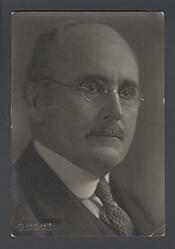
Here you will find contact information for Representative Rorer Abraham James, including email address, phone number, and mailing address.
| Name | Rorer Abraham James |
| Position | Representative |
| State | Virginia |
| District | 5 |
| Party | Democratic |
| Status | Former Representative |
| Term Start | May 19, 1919 |
| Term End | March 3, 1923 |
| Terms Served | 2 |
| Born | March 1, 1859 |
| Gender | Male |
| Bioguide ID | J000052 |
About Representative Rorer Abraham James
Rorer Abraham James (March 1, 1859 – August 6, 1921) was an American lawyer, newspaperman, and Democratic politician from Virginia who served in the Virginia House of Delegates, the Senate of Virginia, and as a United States Representative. A member of the Democratic Party, he contributed to the legislative process during two terms in the U.S. House of Representatives in the early twentieth century, representing the interests of his Virginia constituents during a significant period in American history.
James was born on March 1, 1859, near Brosville, Pittsylvania County, Virginia. He was instructed by private tutors in his youth, reflecting the educational patterns of many rural, post–Civil War Virginia families of some means. Seeking further education, he attended Roanoke College in Salem, Virginia, before entering the Virginia Military Institute (VMI) in Lexington. He graduated from VMI in 1882, an experience that helped shape his later association with the institution. He then pursued legal studies at the University of Virginia in Charlottesville, graduating from its law department in 1887.
In 1887, James was admitted to the bar and commenced the practice of law in Danville, Virginia, an important commercial and tobacco center in the Southside region of the state. While building his legal career, he also became increasingly involved in civic and political affairs. His engagement with public life broadened at the turn of the century when he entered the newspaper business, a field that would give him a prominent voice in regional politics and public opinion.
James became owner and editor of the Danville Register in 1899, using the paper as a platform for Democratic Party views and local issues. He later expanded his influence in the press by purchasing the Danville Bee, thereby consolidating his role as a leading newspaperman in Danville and the surrounding area. His dual careers in law and journalism reinforced his standing as a community leader and helped propel his political advancement.
James’s formal political career began in the Virginia General Assembly. He served as a member of the Virginia House of Delegates from 1889 to 1892, representing his locality during a period of post-Reconstruction political realignment in the state. He then served in the Senate of Virginia from 1893 through 1901, participating in state legislative debates and policymaking over the course of eight years. Nearly two decades after leaving the Virginia Senate, he returned to active party leadership, serving as a delegate to the Democratic National Convention of 1920. He subsequently held influential party posts as chairman of the Fifth District Democratic Committee and later as chairman of the Democratic State Committee, positions that underscored his prominence within Virginia’s Democratic organization. In addition to his political responsibilities, James served as head of the Virginia Military Institute Board of Trustees, maintaining a close institutional connection to his alma mater and helping guide its governance.
Rorer Abraham James’s service in Congress occurred during a significant period in American history. He was elected as a Democrat to the Sixty-sixth Congress by special election to fill the vacancy caused by the resignation of U.S. Representative Edward W. Saunders. He took his seat on June 1, 1920, and was reelected to the Sixty-seventh Congress, continuing to serve until his death. From June 1, 1920, to August 6, 1921, he represented Virginia in the United States House of Representatives, participating in the democratic process and contributing to the legislative work of the chamber during the immediate post–World War I era. His tenure encompassed issues related to economic adjustment after the war, agricultural concerns, and the evolving role of the federal government in domestic affairs.
James died in office on August 6, 1921, in Danville, Virginia, while still serving in the Sixty-seventh Congress. His death placed him among the members of the United States Congress who died in office in the first half of the twentieth century. He was interred in Green Hill Cemetery in Danville, closing a career that had spanned law, journalism, state legislation, party leadership, and national service.