Senator Ross Bass
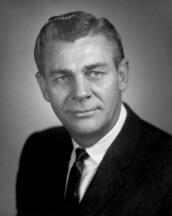
Here you will find contact information for Senator Ross Bass, including email address, phone number, and mailing address.
| Name | Ross Bass |
| Position | Senator |
| State | Tennessee |
| Party | Democratic |
| Status | Former Representative |
| Term Start | January 5, 1955 |
| Term End | January 3, 1967 |
| Terms Served | 6 |
| Born | March 17, 1918 |
| Gender | Male |
| Bioguide ID | B000223 |
About Senator Ross Bass
Ross Bass (March 17, 1918 – January 1, 1993) was an American Congressman and United States Senator from Tennessee. A member of the Democratic Party, he served in the United States Congress from 1955 to 1967, contributing to the legislative process during six terms in office and representing the interests of his Tennessee constituents during a significant period in American history.
Bass was born in rural Giles County, Tennessee, the son of a circuit-riding Methodist minister. He attended local public schools and went on to Martin Methodist Junior College in Pulaski, Tennessee, from which he graduated in 1938. Growing up in a small farming community in southern Middle Tennessee, his early life was shaped by the religious and rural environment of Giles County, influences that later informed his political identity and appeal to voters in his home region.
During World War II, Bass joined the United States Army Air Forces and served as a bombardier in the European Theater. He rose to the rank of captain before his discharge in 1945. After returning from military service, he settled in Pulaski, the county seat of Giles County, where he opened and operated a flower shop. In 1946 he was appointed postmaster of Pulaski, a position he held until 1954. His work as postmaster increased his visibility and connections in the community and laid the groundwork for his entry into elective politics.
In 1954, Bass was elected as a Democratic U.S. Representative from Tennessee’s 6th Congressional District, which included Pulaski. He took office in January 1955 and was reelected four times, serving six terms in the House of Representatives. During his House tenure, he navigated the complex politics of the civil rights era. Although he signed the 1956 Southern Manifesto opposing the Supreme Court’s desegregation rulings, he later broke with most rural Southern Democrats by voting for the Civil Rights Act of 1964. He was the only Democratic Representative from the rural South to support that landmark legislation; the other Southern Representatives voting in favor were from large cities—Richard Fulton of Nashville, Tennessee; Charles Weltner of Atlanta, Georgia; Claude Pepper of Miami, Florida; and four Representatives from Texas: Jack Brooks of Beaumont, Henry B. González of San Antonio, J. J. Pickle of Austin, and Albert Thomas of Houston. Bass also voted in favor of the 24th Amendment to the U.S. Constitution in 1962, which abolished the poll tax in federal elections.
Bass’s congressional career shifted to the Senate following the death of Senator Estes Kefauver in 1963. Tennessee Governor Frank G. Clement, who aspired to the seat himself, appointed Herbert S. Walters as a caretaker senator pending a 1964 special election for the remaining two years of Kefauver’s term. Clement entered the Democratic primary expecting to claim the nomination, but Bass challenged him and defeated him in the August 1964 primary. In the November special election, Bass faced Republican nominee Howard Baker and won by a margin of 51,575 votes, at that time the closest a Republican had come to winning a Senate seat in Tennessee. Because the election was for an unexpired term and Senate seniority is critical for committee and office assignments, Bass was sworn in as soon as the results were certified, giving him a slight seniority advantage over other freshmen senators elected in 1964. He became Tennessee’s junior senator, serving alongside senior Senator Albert Gore Sr. During his Senate service, he supported major civil rights legislation, including a vote in favor of the Voting Rights Act of 1965.
Bass prepared to run for a full Senate term in 1966, but the race proved difficult. Governor Clement, barred by Tennessee’s then-constitutional prohibition on consecutive gubernatorial terms from seeking reelection in 1966, again sought the Senate seat. In the Democratic primary, a large Republican crossover vote aided Clement, and Bass lost the August 1966 primary despite receiving approximately 10 percent more votes than he had in his previous statewide campaign. Clement went on to lose decisively to Howard Baker in the general election, and Bass’s service in the Senate concluded in 1967.
After leaving the Senate, Bass made two major attempts to return to public office. In 1974 he ran for the Democratic nomination for governor of Tennessee, entering a crowded nine-candidate primary. He finished fifth, well behind the eventual nominee and winner, Ray Blanton. In 1976 he sought to reclaim his former House seat, winning the Democratic nomination for the 6th District. However, redistricting had significantly altered the district’s boundaries since his earlier service, adding large suburban areas near Memphis and Nashville that had become strongly Republican at the national level and where Bass was little known. In the general election he lost by a wide margin, 64 percent to 36 percent, to the incumbent Republican Representative Robin Beard.
Bass’s personal life included three marriages. His first marriage, to Avanell K. Bass, ended in divorce in 1967. He married Judy Bobo of Nashville in 1975; they divorced in 1979. After that divorce, he moved to Florida and settled in Miami Shores. In 1992 he married Jacqui Colter, who survived him. Bass lived in Miami Shores until his death from lung cancer on January 1, 1993, at the age of 74. He maintained family ties to Tennessee throughout his life; his first cousin was the actor Dewey Martin.