Representative Roy Elmer Ayers
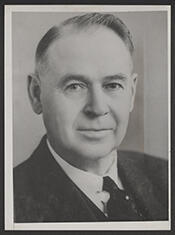
Here you will find contact information for Representative Roy Elmer Ayers, including email address, phone number, and mailing address.
| Name | Roy Elmer Ayers |
| Position | Representative |
| State | Montana |
| District | 2 |
| Party | Democratic |
| Status | Former Representative |
| Term Start | March 9, 1933 |
| Term End | January 3, 1937 |
| Terms Served | 2 |
| Born | November 9, 1882 |
| Gender | Male |
| Bioguide ID | A000352 |
About Representative Roy Elmer Ayers
Roy Elmer Ayers (November 9, 1882 – May 23, 1955) was a U.S. Democratic politician who served as a member of the United States House of Representatives and as the 11th Governor of Montana. He was the first governor of Montana to be born in what would become the state of Montana. Over the course of his public career, Ayers played a role in both state and national politics during a period marked by the Great Depression and the New Deal, and he contributed to the legislative process during two terms in the United States Congress.
Ayers was born on November 9, 1882, in the area that would later become the state of Montana, a distinction that later made him the first Montana-born individual to serve as the state’s governor. Growing up in the American West during a time of rapid development and settlement, he was shaped by the agricultural and ranching economy that characterized the region. His early life in this frontier environment informed his later political focus on the needs of rural communities, land use, and economic development in Montana.
Educated in the schools of what was then Montana Territory and later the state of Montana, Ayers pursued legal studies as a path into public service. He read law and entered the legal profession at a time when Montana’s institutions were still relatively young, and the state was defining its political and economic identity. His legal training provided the foundation for his subsequent work as an attorney and public official, and it prepared him for the legislative and executive responsibilities he would later assume at both the state and federal levels.
Before entering Congress, Ayers established himself in Montana public life through his legal practice and participation in Democratic Party politics. As a lawyer, he became familiar with issues central to Montana’s citizens, including property rights, natural resources, and agricultural concerns. His growing reputation and involvement in civic affairs helped propel him into elective office, where he aligned with the Democratic Party’s emerging New Deal coalition and its emphasis on federal support for struggling communities during the economic crisis of the 1930s.
Roy Elmer Ayers served as a Representative from Montana in the United States Congress from 1933 to 1937. A member of the Democratic Party, he contributed to the legislative process during two terms in office. His service in Congress occurred during a significant period in American history, coinciding with President Franklin D. Roosevelt’s first and second terms and the implementation of major New Deal programs. As a member of the House of Representatives, Ayers participated in the democratic process and represented the interests of his Montana constituents, engaging with legislation aimed at economic recovery, agricultural relief, and infrastructure development, which were of particular importance to his largely rural state.
After his service in the House of Representatives, Ayers continued his political ascent in Montana. He was elected the 11th Governor of Montana, bringing to the office both his experience as a congressman and his background as a Montana-born lawyer and public servant. As governor, he presided over the state during the later years of the Great Depression and the early stages of World War II, a period that required careful management of state resources, coordination with federal programs, and attention to the needs of farmers, ranchers, and working families. His tenure reflected the broader national trends of expanding government involvement in economic and social policy while maintaining a focus on Montana’s particular regional concerns.
In his later years, following his gubernatorial service, Ayers remained a figure identified with Montana’s Democratic politics and with the generation of leaders who guided the state through the economic and political upheavals of the 1930s and early 1940s. He lived to see Montana and the nation transition from depression and war into the postwar era. Roy Elmer Ayers died on May 23, 1955, leaving a legacy as both a congressman and governor who had represented Montana at critical moments in its development and who had the distinction of being the first governor born within the boundaries of the future state.