Representative Roy A. Taylor
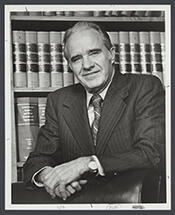
Here you will find contact information for Representative Roy A. Taylor, including email address, phone number, and mailing address.
| Name | Roy A. Taylor |
| Position | Representative |
| State | North Carolina |
| District | 11 |
| Party | Democratic |
| Status | Former Representative |
| Term Start | January 7, 1959 |
| Term End | January 3, 1977 |
| Terms Served | 9 |
| Born | January 31, 1910 |
| Gender | Male |
| Bioguide ID | T000099 |
About Representative Roy A. Taylor
Roy Arthur Taylor (January 31, 1910 – November 28, 1995) was a Democratic U.S. Representative from North Carolina who served nine terms in the United States Congress between 1959 and 1977. He was born in Vader, Lewis County, Washington, and moved to North Carolina as a young man. Taylor pursued his early education in the Asheville area and quickly established ties to western North Carolina, the region he would later represent in Congress.
Taylor graduated from Asheville-Biltmore College in Asheville, North Carolina, in 1929. He continued his studies at Maryville College in Maryville, Tennessee, receiving his degree there in 1931. Committed to a career in law, he returned to Asheville and earned a J.D. from Asheville University Law School in 1936. Following his admission to the bar, he entered private legal practice, building a professional reputation that would support his later entry into public service.
During World War II, Taylor served in the United States Navy from 1943 to 1946. His military service coincided with a critical period in American and world history and contributed to his understanding of national defense and veterans’ issues, perspectives that would inform his later legislative work. After the war, he resumed his legal career in North Carolina while beginning to participate more actively in state politics.
Taylor’s formal political career began in the North Carolina House of Representatives, where he served as a member during the General Assembly’s regular sessions of 1947, 1949, 1951, and 1953. In the state legislature he gained experience in lawmaking, constituent service, and the workings of state government, establishing himself as a capable Democratic legislator from western North Carolina. His service in Raleigh helped position him for higher office and deepened his connections with local communities and party leaders.
Taylor was elected as a Democrat to the Eighty-sixth Congress by special election to fill the vacancy caused by the death of United States Representative David M. Hall. He took his seat in the U.S. House of Representatives on June 25, 1960, and was subsequently reelected to eight succeeding Congresses, serving continuously until January 3, 1977. His tenure in the House spanned a significant period in American history, including the civil rights era, the Great Society, the Vietnam War, and the early stages of the modern environmental and energy debates. As a member of the House of Representatives, Taylor participated in the legislative process and represented the interests of his North Carolina constituents, contributing to national policy discussions over nearly two decades. He was not a candidate for reelection to the Ninety-fifth Congress in 1976, choosing to conclude his congressional service at the end of his ninth term.
After leaving Congress, Taylor remained associated with public and civic life in North Carolina. In recognition of his long service and contributions to the state and nation, the University of North Carolina at Asheville awarded him an honorary Doctor of Law degree in 1986. This honor reflected both his earlier academic ties to Asheville-Biltmore College and his distinguished record as a legislator at the state and federal levels.
Roy Arthur Taylor died on November 28, 1995, in Black Mountain, North Carolina. He was interred in Mountain View Memorial Gardens in Black Mountain. His career encompassed service as a lawyer, state legislator, naval veteran, and nine-term member of the U.S. House of Representatives, marking him as a significant figure in the mid-twentieth-century political history of North Carolina.