Senator Royal Samuel Copeland
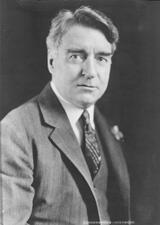
Here you will find contact information for Senator Royal Samuel Copeland, including email address, phone number, and mailing address.
| Name | Royal Samuel Copeland |
| Position | Senator |
| State | New York |
| Party | Democratic |
| Status | Former Representative |
| Term Start | December 3, 1923 |
| Term End | January 3, 1939 |
| Terms Served | 3 |
| Born | November 7, 1868 |
| Gender | Male |
| Bioguide ID | C000769 |
About Senator Royal Samuel Copeland
Royal Samuel Copeland (November 7, 1868 – June 17, 1938) was an American academic, homeopathic physician, and politician who held elected offices in both Michigan and New York and served as a United States senator from New York from 1923 to 1938. He was born in Dexter, Washtenaw County, Michigan, to parents of New England ancestry and spent his early years in southeastern Michigan. Raised in a small-town environment, he attended local public schools before pursuing higher education, experiences that helped shape his later interest in public health and civic affairs.
Copeland studied at the University of Michigan in Ann Arbor, where he received his medical degree in 1889. Trained as a physician at a time when homeopathy retained a significant following in American medicine, he specialized in homeopathic practice and soon became associated with medical education. After completing his studies, he joined the faculty of the University of Michigan’s homeopathic medical school, rising to the rank of professor. His early professional life combined clinical work, teaching, and research, and he developed a reputation as a careful clinician and an effective lecturer. During this period he also became active in local Republican politics in Michigan, reflecting the political alignment of many in his region at the time.
Copeland’s first major elective office came in Michigan municipal government. A member of the Republican Party in his early political career, he was elected mayor of Ann Arbor, Michigan, serving from 1901 to 1903. As mayor, he dealt with the typical concerns of a growing university town, including public works, sanitation, and local infrastructure, and his experience in municipal administration reinforced his interest in public health and urban conditions. After his mayoral term, he continued his medical and academic work, but his career trajectory increasingly pointed toward larger arenas of public service.
In the early twentieth century Copeland moved to New York City, where he shifted his political allegiance to the Democratic Party and became a prominent figure in the city’s medical and civic life. He joined the faculty of the New York Homeopathic Medical College (later part of New York Medical College) and built a successful medical practice. His expertise in public health led to his appointment in 1918 as president of the New York City Board of Health and Health Commissioner of New York City, a position he held during and after World War I. In that role he confronted the devastating influenza pandemic of 1918–1919, adopting policies aimed at maintaining public services while attempting to limit the spread of disease. His tenure as health commissioner brought him national attention as an administrator and public health advocate and established his reputation as a capable manager of large, complex institutions.
Copeland’s prominence in New York public life and his alignment with the Democratic Party paved the way for his election to the United States Senate. He was elected as a Democrat from New York in 1922 and took his seat on March 4, 1923, beginning the first of three consecutive terms. Royal Samuel Copeland served as a senator from New York in the United States Congress from 1923 to 1939, contributing to the legislative process during three terms in office. His service in Congress occurred during a significant period in American history, spanning the prosperity of the 1920s, the onset of the Great Depression, and the New Deal era. As a member of the Senate, he participated in the democratic process and represented the interests of his New York constituents, while drawing on his medical background to influence health and regulatory policy.
During his Senate career, Copeland became best known for his work on public health, food and drug regulation, and infrastructure. He played a central role in the development and passage of the Federal Food, Drug, and Cosmetic Act of 1938, landmark legislation that strengthened federal oversight of pharmaceuticals and consumer products in response to mounting public concern over safety. He also took an interest in aviation, transportation, and urban development, supporting improvements to New York’s harbor and transportation facilities. Within the Senate he served on several key committees and was recognized as a diligent legislator who combined technical knowledge with political pragmatism. Though a Democrat, he often adopted moderate or conservative positions on some New Deal measures, reflecting both his personal views and the diverse constituencies of New York.
Copeland remained in office continuously from his first assumption of senatorial duties in 1923 until his death in 1938. He died in office on June 17, 1938, in Washington, D.C., while still serving his third term as United States senator from New York. His death brought to a close a public career that had spanned local office in Michigan, major municipal responsibility in New York City, and fifteen years in the United States Senate. He was interred in his native Michigan, and his life and work were later commemorated in official memorial proceedings of the U.S. Senate and in biographical accounts that emphasized his dual legacy as a physician and a lawmaker deeply engaged with public health and regulatory reform.