Representative Ruben Hinojosa
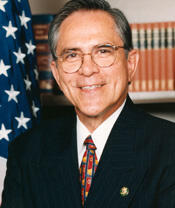
Here you will find contact information for Representative Ruben Hinojosa, including email address, phone number, and mailing address.
| Name | Ruben Hinojosa |
| Position | Representative |
| State | Texas |
| District | 15 |
| Party | Democratic |
| Status | Former Representative |
| Term Start | January 7, 1997 |
| Term End | January 3, 2017 |
| Terms Served | 10 |
| Born | August 20, 1940 |
| Gender | Male |
| Bioguide ID | H000636 |
About Representative Ruben Hinojosa
Rubén Eloy Hinojosa (born August 20, 1940) is an American politician and businessman who served as the U.S. representative for Texas’s 15th congressional district from January 3, 1997, to January 3, 2017. A member of the Democratic Party, he represented a heavily Democratic, Latino-majority district that stretched from Seguin, east of San Antonio, to McAllen on the Mexican border. Much of the region was rural, although Hidalgo County, a core part of the district, has been among the fastest-growing metropolitan areas in the United States. Over 10 terms in office, Hinojosa contributed to the legislative process as a member of the House Financial Services Committee and the House Committee on Education and the Workforce, where he played a prominent role in higher education and minority-access policy.
Hinojosa was born in Edcouch, Texas, and raised in nearby Hidalgo County along the U.S.–Mexico border. The eighth of eleven children, he grew up in a large Mexican American family in a predominantly agricultural region, an experience that later informed his focus on rural development, education, and immigration policy. His father and uncle founded H&H Foods in 1947 as a slaughterhouse and meat-processing business, which became a significant family enterprise in the Rio Grande Valley. Immersed from an early age in both the economic realities of small business and the challenges facing border communities, Hinojosa developed an interest in public service and economic development that would shape his later political career.
Hinojosa pursued higher education in business, earning a Bachelor of Business Administration from the University of Texas at Austin. He later completed a Master of Business Administration at the University of Texas–Pan American, an institution serving many first-generation and Hispanic students in South Texas. His academic training in business administration complemented his practical experience in the family company and prepared him for leadership roles in both the private and public sectors. These business degrees would later underpin his work on financial services legislation and his advocacy for expanding educational opportunity, particularly for low-income and minority students.
In 1974, Hinojosa was elected to the Texas State Board of Education, where he served for ten years. In that role, he participated in statewide policymaking on curriculum, school governance, and educational standards at a time when Texas was experiencing demographic change and growing demands for improved public education. Concurrently, he assumed increasing responsibility in the family enterprise. Control of H&H Foods passed in 1976 to Hinojosa and his brother, Liborio. Under their leadership, the company expanded beyond its origins as a slaughterhouse into a broader food-processing operation. Hinojosa served as an executive of H&H Foods until his election to Congress, at which point he relinquished his executive position but remained a director and major stockholder.
Hinojosa entered national politics after 32-year incumbent Kika de la Garza announced his retirement from the U.S. House of Representatives. In 1996, Hinojosa won a five-way Democratic primary for Texas’s 15th congressional district by only 588 votes, a narrow victory that effectively assured him of election in the strongly Democratic district. In the general election, he defeated Republican Tom Haughey with 62 percent of the vote, and he defeated Haughey again in 1998 with 59 percent. In 2000, he won 89 percent of the vote against Independent candidate Frank L. Jones III. He was unopposed in 2002. Following redistricting, he defeated Republican Michael Thamm in 2004 with 59 percent of the vote, and in the 2006 midterm election he prevailed with 61 percent of the vote in another redrawn version of the district against Republicans Paul Haring and Eddie Zamora. He continued to secure reelection comfortably throughout his tenure, including a 2014 general election in which he again faced Republican Eddie Zamora, who had emerged from a contested Republican primary.
During his two decades in Congress, Hinojosa served on the Committee on Education and the Workforce and the Committee on Financial Services. Within the Education and the Workforce Committee, he was Ranking Member of the Subcommittee on Higher Education and Workforce Training and also served on the Subcommittee on Health, Employment, Labor, and Pensions. On the Financial Services Committee, he sat on the Subcommittee on Capital Markets, Insurance, and Government-Sponsored Enterprises and the Subcommittee on Financial Institutions and Consumer Credit. He was regarded as a “rank-and-file Democrat” and was sometimes described as a “hard-core liberal.” In the 111th Congress he voted with his party 99 percent of the time. The “That’s My Congress” website gave him a “Liberal Action Score” of 37/100 and a “Conservative Action Score” of 16/100 for his votes in the 112th Congress. His voting record included support for extending the USA PATRIOT Act, backing the 2011 budget compromise, and voting for the Patient Protection and Affordable Care Act (Obamacare), the American Clean Energy and Security Act (“cap and trade”), and the Troubled Asset Relief Program during the financial crisis.
Hinojosa’s legislative focus was particularly strong in the areas of education, border infrastructure, and economic development. He emphasized assisting minorities and low-income Americans in gaining access to higher education and was especially active in supporting water-conservation and environmental projects along the U.S.–Mexico border. Along with Representative George Miller, he played a central role in crafting the 2008 Higher Education Opportunity Act, which increased the maximum Pell Grant awards available to low-income students and authorized additional funding for minority-serving institutions, including Hispanic-serving colleges and universities. He advocated replacing federal subsidies for student loans with direct government lending to reduce costs for students. On border and environmental issues, he supported measures to expand the authority of the North American Development Bank (NADBank), and in June 2011 introduced legislation to allow NADBank—already responsible for more than 100 projects to prevent untreated sewage from entering the Rio Grande and other waterways—to finance additional infrastructure projects designed to enhance economic development and raise environmental standards along the border.
In matters of trade, immigration, and security, Hinojosa often supported free trade and comprehensive immigration reform while opposing certain physical border barriers. He was one of 15 House Democrats to vote for the 2005 Central American Free Trade Agreement (CAFTA), reflecting his strong support for free-trade agreements. He co-sponsored a 2010 bill to enhance border security but opposed the construction of a wall along the U.S.–Mexico border, favoring instead a combination of technology, infrastructure, and legal reforms. He backed the “AgJobs” bill aimed at helping undocumented farm workers and was an outspoken advocate of the DREAM Act, which would provide a path to citizenship for individuals brought to the United States as children. He argued that these young people should not be penalized for their parents’ decisions and that the country would benefit from allowing them to pursue higher education, serve in the military, and contribute to national prosperity. In 2010, he supported the introduction of full-body scanners at Valley International Airport, stating that additional precautions were needed for public safety and that the technology gave Transportation Security Administration employees a distinct advantage in preventing terrorist events.
Hinojosa’s final term in Congress coincided with growing scrutiny of foreign-sponsored travel by members of Congress. In 2016 it was revealed that he was one of nine members of Congress who had taken a trip secretly funded by the government of Azerbaijan. Following a House ethics investigation, he was required to turn over gifts received from that trip to the House Clerk. That same year, he chose not to seek an eleventh term in the House. The race to succeed him in Texas’s 15th district drew competitive primaries in both parties. On the Democratic side, Vicente Gonzalez and Juan “Sonny” Palacios Jr. advanced to a May 24 runoff to determine the party’s nominee. Among Republicans, Tim Westley, a San Antonio pastor backed by the Tea Party movement, led a three-way primary with 45.3 percent of the vote, advancing to a runoff against Ruben O. Villarreal, the mayor of Rio Grande City, who received 31.5 percent; Xavier Salinas received 23.2 percent. In the November 8, 2016, general election, Democrat Vicente Gonzalez, Republican Tim Westley, and Green Party candidate Vanessa Tijerina competed for the right to succeed Hinojosa, marking the end of his 20-year tenure in Congress.
Hinojosa’s public life was accompanied by personal and financial challenges. He is married to Martha Lopez Hinojosa, and they have two daughters, Kaitlin and Karen. He also has one son, Rubén Jr., and two daughters from a previous marriage. In December 2010, he filed for personal bankruptcy, attributing his financial difficulties to a loan made to H&H Foods that left him owing $2.6 million to Wells Fargo Bank. Despite these difficulties, he remained a director and major stockholder in the family company while serving in Congress. Throughout his career, Hinojosa’s legislative work and public positions reflected the concerns of his South Texas constituents, particularly in the areas of education, border infrastructure, environmental protection, and opportunities for Hispanic and low-income communities.