Representative Rudolph Gabriel Tenerowicz
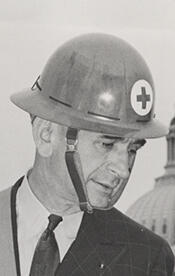
Here you will find contact information for Representative Rudolph Gabriel Tenerowicz, including email address, phone number, and mailing address.
| Name | Rudolph Gabriel Tenerowicz |
| Position | Representative |
| State | Michigan |
| District | 1 |
| Party | Democratic |
| Status | Former Representative |
| Term Start | January 3, 1939 |
| Term End | January 3, 1943 |
| Terms Served | 2 |
| Born | June 14, 1890 |
| Gender | Male |
| Bioguide ID | T000124 |
About Representative Rudolph Gabriel Tenerowicz
Rudolph Gabriel Tenerowicz (June 14, 1890 – August 31, 1963) was an American physician and politician from the state of Michigan who served two terms as a Democratic Representative from Michigan in the United States House of Representatives from 1939 to 1943. His congressional service took place during a significant period in American history, spanning the final years of the Great Depression and the early years of World War II, during which he participated in the legislative process and represented the interests of his constituents in Michigan’s 1st congressional district.
Tenerowicz was born on June 14, 1890, in Budapest, then part of the Austro-Hungarian Empire. His parents, John Tenerowicz, a Polish diplomat serving in Hungary, and Antoinette (Gall) Tenerowicz, immigrated to the United States with their family in 1892. The family settled in Adrian, Armstrong County, Pennsylvania, where Rudolph was raised alongside his five siblings: Sr. Mary (Tenerowicz) Bernadine, C.S.S.F., of the Felician order, Edward Tenerowicz, Stanley Tenerowicz, Anthony Tenerowicz, and Caroline (Tenerowicz) Osikowicz. His early upbringing in an immigrant household and a small Pennsylvania community helped shape his later engagement with ethnic and working-class constituencies in the Midwest.
He attended parochial schools in Adrian and then pursued religious and classical studies at SS. Cyril and Methodius Seminary in Orchard Lake, Michigan. He continued his education at St. Bonaventure’s College (now St. Bonaventure University) in Allegany, New York, and at St. Ignatius College (now Loyola University Chicago) in Chicago, Illinois. Turning to medicine, Tenerowicz enrolled in the Chicago College of Medicine and Surgery (now part of Loyola University Chicago’s Stritch School of Medicine), from which he graduated in 1912. Following his graduation, he practiced medicine in Chicago from 1912 to 1923 and undertook postgraduate surgical training at the Illinois Post Graduate School in Chicago, further refining his medical expertise.
During World War I, Tenerowicz entered military service in the Medical Corps of the United States Army. He served as a first lieutenant from September 10, 1917, until his discharge on December 26, 1918. After the war, he continued his association with the military as a captain in the Medical Reserve Corps from 1919 to 1934. In 1923, he moved to Hamtramck, Michigan, a heavily industrial and ethnically diverse enclave surrounded by Detroit, where he continued the practice of medicine. His medical career in Hamtramck brought him into close contact with the city’s largely immigrant population and laid the groundwork for his subsequent political career.
Tenerowicz entered public life in Hamtramck and quickly became a prominent local figure. He was elected mayor of Hamtramck in 1928 and served until 1932. In 1931, during his first mayoral tenure, he and twelve others, including Jacob Kaplan and Isaac Levey, were indicted on bribery and vice conspiracy charges. He was tried, convicted, and imprisoned, but was later freed when he received a pardon from Democratic Governor William A. Comstock of Michigan. Despite the conviction, Tenerowicz successfully returned to politics and again served as mayor of Hamtramck from 1936 to 1938. He also served for seven years as a member of the Wayne County Board of Supervisors, extending his influence beyond the city to county-level governance.
As mayor, Tenerowicz became known for his efforts to address juvenile delinquency in Hamtramck. Working with Mrs. Jean Hoxie, he helped implement a youth tennis program designed to keep children off the streets and constructively engaged. Participants in the program were offered a meal at the end of the day, and the initiative proved highly successful. It both reduced youth crime in the city and produced tennis players who became champions at local, state, and national levels, earning Hamtramck a reputation in youth tennis circles. These efforts reflected his broader interest in social welfare and community improvement, particularly among the city’s youth.
In 1937, Tenerowicz married Margaret Agnes McGuire in Bowling Green, Ohio. The marriage created a blended family. They had one child together, John Francis Tenerowicz of Hilton Head, South Carolina, and he also became stepfather to Margaret’s children from a previous marriage, Marjorie Kanterman Paynter of Dearborn, Michigan, and William G. Tenerowicz of Great Falls, Virginia. Together they would have twelve grandchildren, and the family remained closely associated with Michigan and later with other parts of the country where their children settled.
In 1938, Tenerowicz was elected, without challenge, as a Democrat from Michigan’s 1st congressional district to the Seventy-sixth Congress and was reelected to the Seventy-seventh Congress, serving from January 3, 1939, to January 3, 1943. During his two terms in the House of Representatives, he participated in the democratic process at the national level and contributed to legislative deliberations at a time when the United States was emerging from the Great Depression and preparing for and entering World War II. His tenure also intersected with contentious debates over race and housing policy. According to Richard Rothstein’s 2017 book, The Color of Law, Tenerowicz played a role in pressuring the Federal Works Agency regarding the Sojourner Truth public housing project in Detroit. Rothstein writes that Tenerowicz “persuaded his colleagues that funding for the agency (Federal Works Agency) should be cut off unless (Clark) Foreman was fired and the Sojourner Truth units were assigned only to whites.” Rothstein further notes that the director of the Federal Housing Administration supported Tenerowicz’s position, arguing that the presence of African Americans in the area would threaten property values of nearby residents. Foreman was ultimately forced to resign, and the Federal Works Agency prepared a separate project for African Americans on a site in an industrial area that the Detroit Housing Commission had deemed unsuitable for white residents.
Tenerowicz’s congressional career came to an end when he was an unsuccessful candidate for renomination in 1942. He subsequently sought a return to Congress as a Republican, running unsuccessfully in 1946, 1948, 1950, 1952, and 1954. After leaving Congress, he resumed the practice of medicine in Hamtramck, continuing his long-standing professional role in the community he had served as both physician and mayor. His post-congressional years were thus marked by a return to private life and medical service, even as he remained intermittently active in electoral politics through his repeated campaigns.
Rudolph Gabriel Tenerowicz died at the age of 73 on August 31, 1963, at St. Francis Hospital in Hamtramck, Michigan. He was buried in Arlington National Cemetery, reflecting both his military service and his status as a former member of Congress. His wife, Margaret, died at the age of 88 in Howell, Michigan, and was interred with him at Arlington, where they share a final resting place.