Representative Rufus Hardy
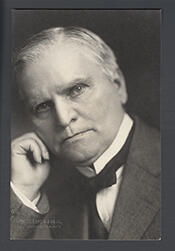
Here you will find contact information for Representative Rufus Hardy, including email address, phone number, and mailing address.
| Name | Rufus Hardy |
| Position | Representative |
| State | Texas |
| District | 6 |
| Party | Democratic |
| Status | Former Representative |
| Term Start | December 2, 1907 |
| Term End | March 3, 1923 |
| Terms Served | 8 |
| Born | December 16, 1855 |
| Gender | Male |
| Bioguide ID | H000198 |
About Representative Rufus Hardy
Rufus Hardy was a Democratic Representative from Texas who served in the United States Congress from 1907 to 1923, holding office for eight consecutive terms during a significant period in American history. Born in 1855, he belonged to a generation that came of age in the post–Civil War era and later helped shape national policy in the early twentieth century. His long tenure in the House of Representatives placed him at the center of major political and social developments as the United States transitioned into a modern industrial and international power.
Hardy’s early life unfolded in the decades following the Civil War, a time when Texas and the broader South were undergoing reconstruction and economic realignment. Growing up in this environment likely influenced his understanding of regional issues such as agriculture, land use, and the reintegration of Southern states into national political life. These formative experiences helped prepare him for a career in public service, in which he would later represent the interests of his constituents at the federal level.
In keeping with the expectations for public figures of his era, Hardy pursued an education that equipped him for the legal and political arenas. His studies would have emphasized the foundations of American law and government at a time when the nation was grappling with questions of federal authority, economic regulation, and civil rights. This educational background provided the intellectual framework for his later work in Congress, where knowledge of constitutional principles and legislative procedure was essential.
Before entering Congress, Hardy built a professional career that positioned him for national office. Like many future legislators of his time, he likely engaged in legal practice and local or state-level public service, gaining familiarity with the concerns of Texas communities and the workings of government. This experience helped establish his reputation and connections within the Democratic Party, paving the way for his election to the U.S. House of Representatives.
Hardy’s congressional service from 1907 to 1923 spanned eight terms in the House of Representatives, during which he participated actively in the democratic process and contributed to the legislative work of the nation. Serving as a member of the Democratic Party, he represented the interests of his Texas constituents through periods that included the Progressive Era, World War I, and the immediate postwar years. In this capacity, he took part in debates and votes on issues such as economic policy, agricultural concerns, infrastructure, and the evolving role of the federal government, reflecting both national priorities and the specific needs of his district.
During these sixteen years in Congress, Hardy’s work coincided with significant transformations in American society, including industrial expansion, increasing urbanization, and the country’s emergence as a global power. As a Representative, he was involved in shaping federal responses to these changes, helping to craft legislation that affected both his home state and the nation as a whole. His repeated reelection over eight terms indicates sustained support from his constituents and suggests that he was regarded as an effective advocate for their interests in Washington.
After leaving Congress in 1923, Hardy lived through the interwar period and the onset of the Great Depression, witnessing further changes in American political and economic life from outside the halls of national office. Although no longer a member of the House, his long experience in federal service and his perspective as a former Representative from Texas would have continued to inform his engagement with public affairs. Rufus Hardy died in 1943, closing a life that had spanned from the immediate aftermath of the Civil War through two world wars and that included a notable sixteen-year tenure in the United States House of Representatives.