Representative Rufus Ezekiel Lester
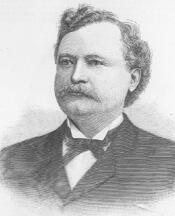
Here you will find contact information for Representative Rufus Ezekiel Lester, including email address, phone number, and mailing address.
| Name | Rufus Ezekiel Lester |
| Position | Representative |
| State | Georgia |
| District | 1 |
| Party | Democratic |
| Status | Former Representative |
| Term Start | December 2, 1889 |
| Term End | March 3, 1907 |
| Terms Served | 9 |
| Born | December 12, 1837 |
| Gender | Male |
| Bioguide ID | L000255 |
About Representative Rufus Ezekiel Lester
Rufus Ezekiel Lester (December 12, 1837 – June 16, 1906) was a Democratic U.S. Representative from Georgia who served nine consecutive terms in the United States House of Representatives from 1889 until his death in 1906. His long tenure in Congress spanned a significant period in American history marked by the aftermath of Reconstruction, the entrenchment of Jim Crow in the South, and the nation’s emergence as an industrial and imperial power. Over the course of his service, he participated in the legislative process and represented the interests of his Georgia constituents in the national legislature.
Lester was born near Waynesboro, Burke County, Georgia, on December 12, 1837, into the antebellum South’s plantation society, and he was a slave owner. He was educated in local schools before attending Mercer University in Macon, Georgia, from which he graduated in 1857. Following his graduation, he studied law and prepared for a legal career in a state whose political and economic life was deeply intertwined with slavery and agriculture.
In 1859, Lester was admitted to the bar in Savannah, Georgia, and commenced the practice of law in that city. With the outbreak of the Civil War in 1861, he entered the military service of the Confederate States Army and served throughout the conflict. After the Confederacy’s defeat in 1865, he returned to Savannah and resumed his legal practice. During the turbulent Reconstruction and post-Reconstruction years, he established himself as a prominent attorney and Democratic political figure in Georgia, participating in the reassertion of white Democratic control over state and local government.
Lester’s formal political career began in state government. He served as a member of the Georgia State Senate from 1870 to 1879, a period in which Georgia was redefining its political institutions after Reconstruction. During the last three years of his tenure in the State Senate, he served as president of that body, reflecting his growing influence within the state’s Democratic leadership. After leaving the Senate, he continued to be active in public affairs and legal practice in Savannah.
In 1883, Lester was elected mayor of Savannah, one of Georgia’s principal port cities and commercial centers. He served as mayor from 1883 to 1889, overseeing municipal governance during a time of urban growth and modernization in the postwar South. His administration in Savannah further elevated his public profile and positioned him for national office, as he became a leading Democratic figure in coastal Georgia.
Lester was elected as a Democrat to the Fifty-first Congress and to the eight succeeding Congresses, serving in the U.S. House of Representatives from March 4, 1889, until his death on June 16, 1906. Over these nine terms, he contributed to the legislative process during a transformative era that included debates over tariffs, monetary policy, expansionism, and federal regulation. He served as chairman of the Committee on Expenditures in the Department of State during the Fifty-second and Fifty-third Congresses, where he was responsible for overseeing and reviewing the financial administration of the Department of State. His long service made him a senior member of the Georgia delegation and a consistent representative of Democratic and Southern interests in Congress.
Lester’s life ended while he was still in office. Residing at The Cairo, a prominent apartment building in Washington, D.C., he died as the result of an accident on June 16, 1906. He had gone to the roof of the building to look for his two young grandchildren and apparently missed his footing, falling approximately thirty feet through a skylight and landing on the eleventh floor. He broke both legs and sustained severe internal injuries, which proved fatal. His death placed him among the members of the United States Congress who died in office in the early twentieth century.
Following his death in Washington, Lester was interred at Bonaventure Cemetery in Savannah, Georgia, a burial place for many of the city’s notable citizens. His career, spanning Confederate military service, state legislative leadership, municipal executive office, and nearly two decades in the U.S. House of Representatives, reflected the trajectory of many Southern Democratic politicians who helped shape Georgia’s political life from the Civil War through the early twentieth century.