Representative Rufus King Polk
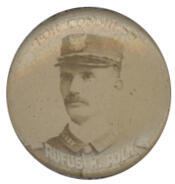
Here you will find contact information for Representative Rufus King Polk, including email address, phone number, and mailing address.
| Name | Rufus King Polk |
| Position | Representative |
| State | Pennsylvania |
| District | 17 |
| Party | Democratic |
| Status | Former Representative |
| Term Start | December 4, 1899 |
| Term End | March 3, 1903 |
| Terms Served | 2 |
| Born | August 23, 1866 |
| Gender | Male |
| Bioguide ID | P000410 |
About Representative Rufus King Polk
Rufus King Polk (August 23, 1866 – March 5, 1902) was a Democratic member of the U.S. House of Representatives from Pennsylvania who served from 1899 to 1902. Over the course of two terms in office, he represented his constituents in the United States Congress during a significant period in American history, contributing to the legislative process as a member of the House of Representatives and participating actively in the democratic governance of the nation.
Born on August 23, 1866, Polk came of age in the post–Civil War era, a time of rapid industrialization and political realignment in the United States. His early life unfolded in Pennsylvania, a state that was emerging as a center of industry, transportation, and political influence. This environment helped shape his understanding of public affairs and the needs of a growing and diversifying electorate, laying the groundwork for his later involvement in politics and public service.
Polk’s education prepared him for a career that combined public engagement with the practical concerns of his region and era. Coming from a period when higher education and professional training were increasingly important to public life, he developed the skills and background that would support his entry into political office. His formative years and education equipped him to navigate the complex economic and social issues that confronted Pennsylvania and the nation at the close of the nineteenth century.
Before entering Congress, Polk was associated with the civic and political life of his community in Pennsylvania, where he gained experience that would inform his work as a legislator. As the state’s economy expanded and its cities and towns grew, he became part of a generation of leaders who sought to address questions of infrastructure, commerce, and representation. This engagement provided him with a base of support and familiarity with local concerns that he carried with him to the national stage.
Polk was elected as a Democrat to the U.S. House of Representatives and began his congressional service in 1899. Serving from 1899 to 1903, and specifically recorded as a Democratic member of the House from 1899 to 1902, he completed two terms in office. His tenure coincided with the aftermath of the Spanish–American War, the country’s expanding international role, and domestic debates over economic policy, labor, and industrial regulation. Within this context, Polk participated in the legislative process, representing Pennsylvania’s interests and contributing to deliberations on issues that affected both his district and the broader United States.
As a member of the House of Representatives, Polk took part in the daily work of Congress, including committee activity, floor debate, and the consideration of bills and resolutions. He was part of the Democratic minority during a period when questions of imperial policy, tariffs, and economic development were central to national politics. In this role, he helped articulate the perspectives of his party and his constituents, ensuring that Pennsylvania’s concerns were heard in the federal legislative arena.
Rufus King Polk’s congressional service was cut short by his death on March 5, 1902, while still in office. His passing brought an early end to a career that had unfolded during a transformative era in American political and economic life. Although his time in Congress was relatively brief, he is remembered in the historical record as a Democratic representative from Pennsylvania who served two terms at the turn of the twentieth century, participating in the governance of the nation during a period of significant change.