Representative Rush Clark
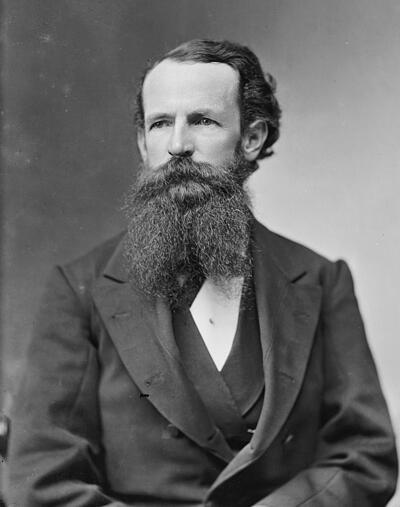
Here you will find contact information for Representative Rush Clark, including email address, phone number, and mailing address.
| Name | Rush Clark |
| Position | Representative |
| State | Iowa |
| District | 5 |
| Party | Republican |
| Status | Former Representative |
| Term Start | October 15, 1877 |
| Term End | March 3, 1881 |
| Terms Served | 2 |
| Born | October 1, 1834 |
| Gender | Male |
| Bioguide ID | C000450 |
About Representative Rush Clark
Rush Clark (October 1, 1834 – April 29, 1879) was a nineteenth-century politician and lawyer from Iowa who served as a Representative in the United States Congress and died on the floor of Congress in 1879. A member of the Republican Party, he was active during a significant period in American history, participating in the legislative process and representing the interests of his constituents in Iowa.
Clark was born on October 1, 1834, and came of age in the decades preceding the Civil War, a time of rapid national expansion and intensifying sectional conflict. Details of his early childhood and family background are sparse in the surviving record, but his later professional and political career indicates that he received a solid education for the period and pursued legal training that prepared him for public life. Like many lawyers of his generation, he likely read law under the supervision of established attorneys before entering practice, a common path into both the legal profession and politics in the mid-nineteenth century.
By the time he settled in Iowa, Clark had embarked on a career in law that would form the foundation of his public service. As a lawyer in a growing Midwestern state, he was part of a professional class that helped shape local institutions and civic life. His legal practice, combined with his alignment with the Republican Party, positioned him to participate in the political debates of Reconstruction and the postwar era, including questions of economic development, veterans’ affairs, and the integration of new states and territories into the national framework.
Clark’s prominence as a lawyer and Republican leader in Iowa led to his election to the United States House of Representatives. Rush Clark served as a Representative from Iowa in the United States Congress from 1877 to 1881, winning election as a Republican and contributing to the legislative process during two terms in office. His service in Congress occurred during a significant period in American history, as the nation grappled with the end of Reconstruction, the adjustment to a peacetime economy, and the challenges of rapid industrialization and westward expansion. As a member of the House of Representatives, Rush Clark participated in the democratic process and represented the interests of his constituents, taking part in debates and votes that reflected both national issues and the concerns of a developing agricultural state.
During his tenure in Congress, Clark worked within the Republican majority that dominated national politics in the late 1870s. Although detailed records of his specific committee assignments and sponsored legislation are limited in the brief surviving summaries, his role as a Representative from Iowa would have involved attention to matters such as railroad regulation, land policy, tariffs, and support for veterans of the Civil War, all central concerns for his region. His participation in the House contributed to shaping federal policy at a time when the balance between federal authority and state interests was being actively contested.
Clark’s congressional service was cut short by his sudden death. On April 29, 1879, while still in office, he died on the floor of Congress, an event that underscored the intensity and demands of public life in the era. His death brought an abrupt end to a career that had combined legal practice with national legislative service. Rush Clark’s life and work exemplified the trajectory of many nineteenth-century Midwestern Republicans who rose from the legal profession to positions of national responsibility during a transformative period in the history of the United States.